Resource Center — Long-Term Conditions
In-Motion Forearm Crutches: A Game-Changer for People with hEDS
In-Motion Forearm Crutches: A Game-Changer for People with hEDS
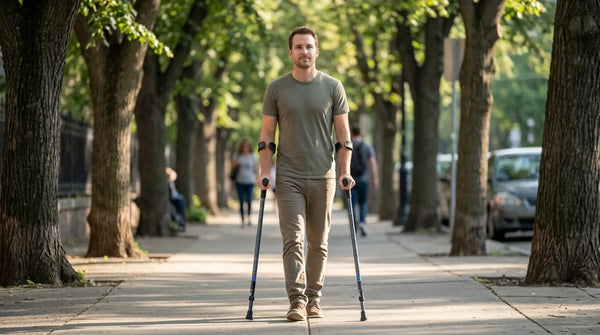
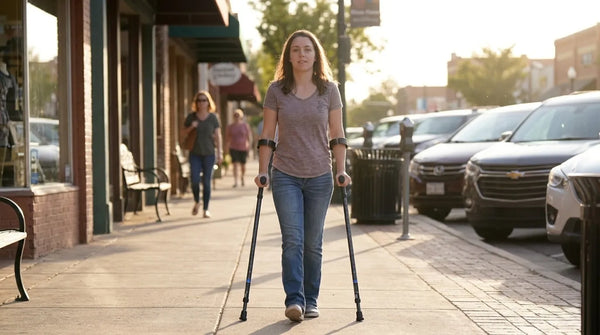
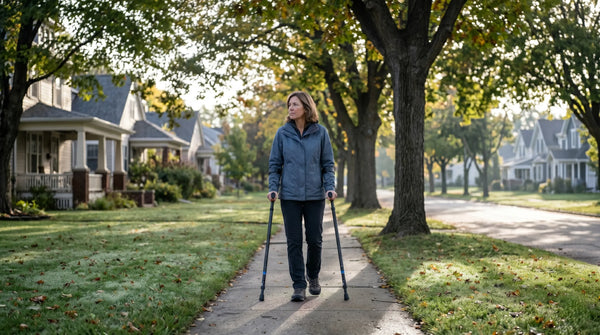
Living with hypermobile Ehlers-Danlos syndrome (hEDS) means navigating a world where connective tissue doesn’t quite do its job. Joints are unstable, pain is persistent, and fatigue can feel relentless. For many, mobility aids aren’t just helpful, they’re essential. But not all aids are created equal. That’s where In-Motion forearm crutches come in.
Understanding hEDS: Why Mobility Support Matters
Hypermobile Ehlers-Danlos syndrome is a genetic connective tissue disorder marked by:
- Generalized joint hypermobility
- Frequent dislocations and subluxations
- Chronic pain and fatigue
- Fragile, stretchy skin
- Autonomic dysfunction and proprioceptive challenges
- Shock Absorption = Joint Protection
- Built-in shock absorbers in the lower posts reduce impact on wrists, elbows, and shoulders.
- This is critical for hEDS users, who often experience joint instability and pain in these areas.
- Ergonomic Design = Reduced Strain
- The contoured forearm cuff and handgrip distribute weight evenly.
- This minimizes pressure on fragile joints and helps prevent nerve compression, common risks with traditional crutches.
- Improved Posture and Balance
- Unlike underarm crutches, forearm crutches promote upright posture.
- Better alignment reduces fatigue and supports proprioception, which is often impaired in hEDS.
- Smart Adjustability
- Height and cuff adjustments allow for personalized fit.
- This ensures optimal support without compromising mobility or causing collateral damage.
- Lightweight and Durable
- In-Motion crutches are made from high-grade aluminum, strong yet light.
- Ideal for users with fatigue or muscle weakness, common in hEDS.