Resource Center — Long-Term Conditions
Crutches and Cerebral Palsy: A Guide for Patients, Parents, and Caregivers
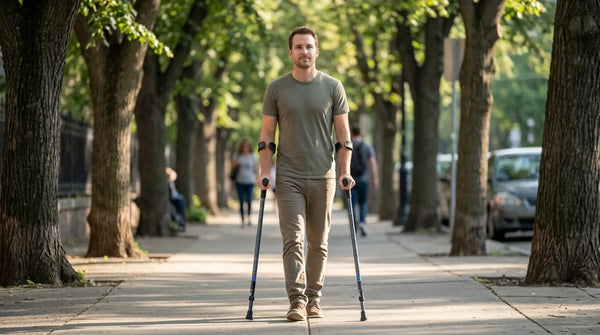
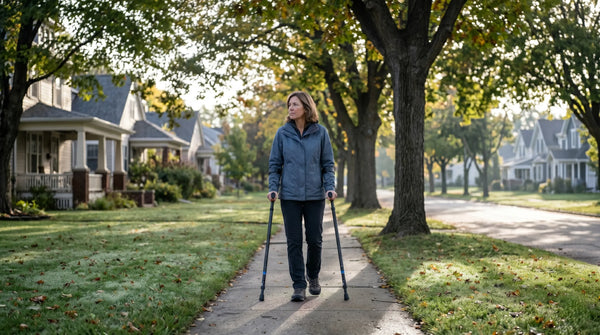
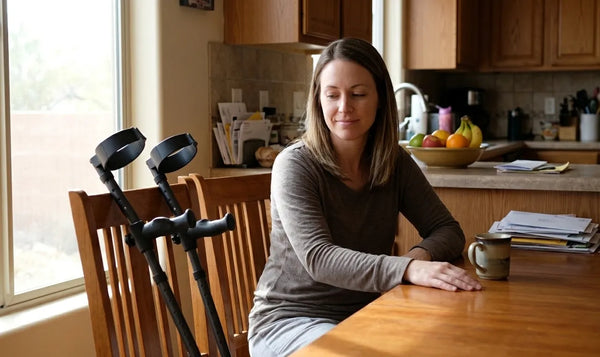
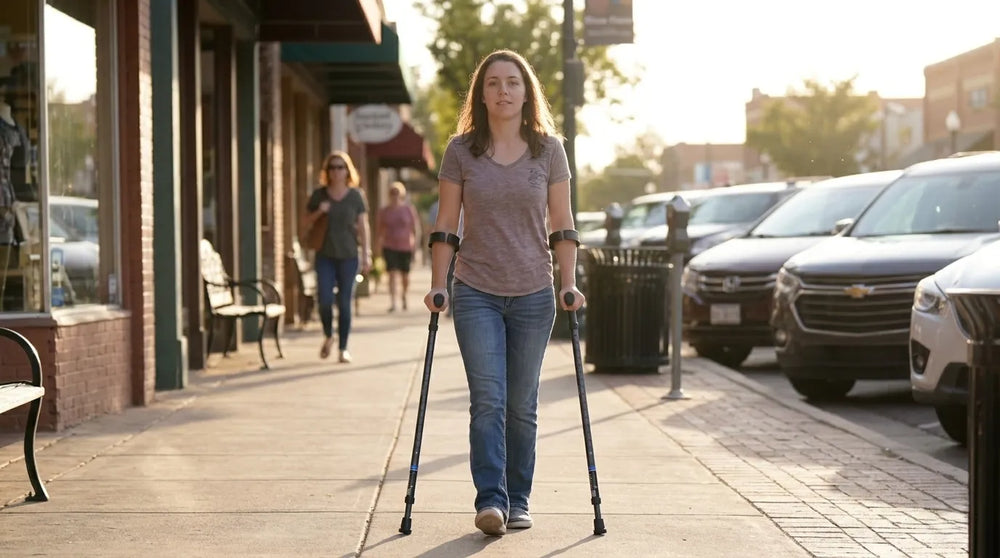
Forearm crutches and cerebral palsy have a longer relationship than most people realize. For many people with CP, forearm crutches are not a recovery tool. They are how walking happens. They're part of daily life from childhood onward. And the decisions you make about them: which type, which fit, which design, affect not just how you walk now, but how your joints hold up over years and decades.
That's a different conversation than the one most crutch guides have. Post-surgical crutch guides focus on weeks. This guide focuses on the long term. For people with CP, getting the forearm crutch selection right matters because they'll be using these tools for a lifetime, not a month.
This guide covers how cerebral palsy affects crutch use, how the GMFCS classification system predicts crutch needs, what changes as children with CP become adults, and why the ergonomic design of a forearm crutch matters more for long-term daily users than for almost anyone else.
New to this resource center? See our companion guides for Crutch Fitting for Physical Therapists and The Clinical Case for Ergonomic Crutches.
The Honest Answer to "What Crutches Does Someone with CP Need?"
It depends significantly on where they fall in the GMFCS classification system, which we'll explain below. But a few things are consistent across most ambulatory CP patients.
Standard underarm crutches are rarely appropriate for CP. Unlike post-surgical crutch use, which is short-term and involves a person with otherwise healthy joints and muscles, CP crutch use is lifelong. The cumulative effect of axillary crutch use on the shoulders, elbows, and wrists over years is well documented and includes nerve compression, joint overload, and early degenerative changes. Forearm crutches are the standard for CP for good reason.
The biggest factor in crutch needs for CP is which muscle groups are affected and how. Spastic CP involves increased muscle tone. Dyskinetic CP involves involuntary movements. Ataxic CP involves coordination and balance problems. Each creates a different gait pattern and a different set of demands on the crutch.
For parents of children with CP: the GMFCS level established in early childhood is generally predictive of long-term mobility status, but not perfectly so. Surgical interventions, intensive PT, and equipment changes can shift function. The goal of crutch use throughout childhood is to support ambulatory function while protecting the joints and muscles that will carry the person through adulthood.
Understanding GMFCS: The Five Levels of CP Mobility
The Gross Motor Function Classification System (GMFCS) is a five-level scale used to describe the severity of motor impairment in cerebral palsy. It's based on what the person actually does in their daily life, not their best performance in a clinical setting.
Level I: Walks without limitations. Speed and balance may be slightly reduced compared to peers, but full community ambulation is possible. Mobility aids are generally not needed for walking.
Level II: Walks with limitations. Stairs may require handrails. Some people at Level II use a single forearm crutch for longer distances or uneven terrain.
Level III: Walks using a hand-held mobility device. Forearm crutches (one or two) or a walker are used for indoor walking. Wheeled mobility may be used for community distances. This is the population most consistently served by forearm crutches.
Level IV: Self-mobility with limitations. Power wheelchairs or manual wheelchairs are the primary mobility mode.
Level V: Transported in a manual wheelchair. Independent mobility is very limited.
Most forearm crutch users with CP are at GMFCS levels II and III. For this guide, the most relevant population is Level III, though many of the equipment considerations also apply to Level II users.
Types of CP and How They Affect Crutch Use
Spastic CP is the most common type, accounting for roughly 80 percent of all CP cases. Spasticity affects movement in patterns that vary by which body parts are involved: hemiplegia (one side), diplegia (primarily legs), or quadriplegia (all four limbs). Forearm crutches for spastic CP users compensate for lower limb spasticity while managing the demands this places on upper limb function.
Dyskinetic CP involves involuntary movements including dystonia, athetosis, and chorea. Crutch use with dyskinetic CP is more complex because the involuntary movements affect grip stability and load transfer. Cuff design matters more here: a cuff that holds the forearm firmly without pinching or slipping accommodates the movement variability that dyskinetic CP creates.
Ataxic CP involves balance and coordination problems due to cerebellar involvement. The crutch serves primarily as a balance aid. Wider stance forearm crutches and designs with good forearm contact area help compensate for the balance instability this type creates.
What Happens to CP Mobility as Children Become Adults
This is the part of the conversation that doesn't get enough attention in CP literature aimed at parents. The brain injury in CP doesn't progress. The nervous system damage that occurred at or around birth stays static. But the body's response to that static injury is not static. It changes throughout life, in ways that have direct implications for crutch use.
In children and adolescents with CP, muscle imbalances from spasticity gradually change how joints develop. Crouch gait (excessive knee flexion during walking) becomes more pronounced in many GMFCS II and III patients as they grow. Crouch gait increases energy expenditure dramatically: studies estimate it costs three to five times the energy of normal walking. By the time someone with CP reaches their late teens or early twenties, the energy burden of walking may be substantially higher than it was in childhood.
Studies following adults with CP show a pattern of functional decline that begins around age 20 to 25. Weakness increases, pain increases, and the cumulative effect of years of abnormal joint loading begins to manifest as early degenerative joint disease. A second, more pronounced period of decline occurs around age 40 to 45, when joint degeneration, chronic pain, and fatigue become major factors in walking capacity.
One longitudinal study following adults with CP found that 39 percent were independent ambulators at age 20. By age 60, only 25 percent retained independent ambulation. That is not a reason to abandon the goal of ambulation. It is a reason to protect walking function proactively, starting with equipment that doesn't accelerate joint damage.
Why Forearm Crutch Design Matters More for CP Than for Post-Surgical Use
A post-surgical patient uses forearm crutches for four to eight weeks. An adult with CP may use them for 40 years. Equipment that's adequate for a six-week recovery can cause real long-term damage when used every day for decades.
Wrist loading is the primary concern. Standard forearm crutches concentrate load at the hand and wrist through a pistol-grip handle. Over years of daily use, that loading pattern contributes to carpal tunnel syndrome, wrist arthritis, and median nerve compression. These are well-documented overuse injuries in long-term forearm crutch users.
Elbow and shoulder loading follow. Every swing of a forearm crutch loads the elbow and shoulder. For people with CP who also have upper limb spasticity or weakness, that load is not evenly distributed across a healthy joint complex. Early intervention with equipment that reduces peak forces at the wrist and elbow can reduce the rate at which upper limb overuse problems develop.
Crutch weight is the other key variable. Lighter crutches reduce the energy cost of each swing. For CP patients already dealing with the high energy expenditure of crouch gait, every gram of crutch weight saved matters. Over a full day, swinging a lighter crutch thousands of times makes the difference between having energy left in the afternoon and not.
The Rules That Matter Most for CP Crutch Use
Get properly fitted by a PT who works with CP, and refit as your body changes. A fitting that was correct at age 14 may not be correct at age 30 when your posture, strength, and gait pattern have changed.
Choose a design built for long-term daily use, not post-surgical recovery. The requirements are different. An ergonomic forearm platform design that spreads load across the forearm rather than concentrating it at the wrist is worth considerably more over a lifetime than it is over six weeks.
Pay attention to early upper limb symptoms. Pain, tingling, or weakness in the hands, wrists, or elbows is a signal that something about your crutch use is creating overload. Address it before it becomes a chronic injury. This is especially true for CP patients in their 20s and 30s, when early signs of long-term crutch-related overuse often first appear.
Prepare for mobility changes at key life stages. Having a PT familiar with adult CP involved before the 20-25 and 40-45 transitions happen, rather than reactively, allows for proactive equipment and strategy adjustments.
Setting Up for Long-Term Forearm Crutch Use
For children: Involve them in crutch selection as early as they can meaningfully participate. Children who understand their equipment and feel ownership of it adapt to changes more readily. Recheck fit at every annual PT evaluation.
For adults: Assess your home for the cumulative demands it places on your crutch use. Stairs, soft flooring, and tight spaces all increase the physical cost of crutch use. Grab bars, firm flooring, and wide doorways reduce it. Keep a backup set of crutches at work or in the car so an equipment problem doesn't strand you.
Why Ergonomic Forearm Crutch Design Matters for CP
The In-Motion crutch was developed with a specific focus on the long-term biomechanical problems of standard forearm crutch use. Drawing on 34 medical studies over a three-year development process, it addresses the wrist and forearm loading problems that standard designs create for long-term daily users. Its contoured forearm platform distributes load across a larger surface area, reducing peak pressure at the wrist and carpal structures.
For CP patients who will use forearm crutches for decades, this isn't a preference. It's an investment in upper limb function over a lifetime of use. The difference in joint loading between a standard pistol-grip crutch and an ergonomic platform design compounds over years in ways that matter for long-term outcomes.
When to Call Your Physical Therapist or Physician
Any new pain, tingling, or numbness in the hands, wrists, or elbows should be addressed before it becomes chronic. A significant change in gait pattern that isn't explained by a known change in your CP management warrants a PT assessment. Increasing fatigue with the same level of walking activity may indicate that your gait pattern has changed or your crutch design is no longer appropriate.
For parents: any sign that a child's crutch fit is no longer correct (leaning excessively, complaining of arm pain, avoiding crutch use) should prompt a refitting. Children outgrow equipment fits faster than most parents expect. Adults with CP approaching the 20-25 and 40-45 age ranges should proactively schedule a functional assessment even without specific new symptoms.
The Bottom Line
For people with cerebral palsy, forearm crutches are not a temporary fix. They are part of the infrastructure of daily life. The quality of that infrastructure determines a great deal about how long and how well an ambulatory life with CP is sustained.
The most important things you can do are choose equipment designed for long-term daily use rather than post-surgical recovery, get proper fitting and refitting through your PT, and pay attention to upper limb symptoms before they become chronic problems. None of this requires waiting for a crisis. The best outcomes in CP mobility come from proactive decisions made before things get worse.
For parents of children with CP: the work you do now to get your child into well-fitted, appropriate equipment creates the foundation for their adult mobility. It is one of the highest-value interventions available.
Frequently Asked Questions
What GMFCS levels typically use forearm crutches?
GMFCS Level III most consistently relies on forearm crutches for indoor walking and short-distance community ambulation. Some Level II individuals use a single forearm crutch for balance on longer distances or uneven terrain. Levels IV and V typically require wheeled mobility as their primary mode of locomotion.
At what age do children with CP start using forearm crutches?
There's no single age. Many children at GMFCS Level III begin using forearm crutches between ages 3 and 7, often transitioning from a walker. Your pediatric PT will guide the timing based on your child's specific functional picture.
Why do forearm crutches work better than underarm crutches for CP?
For lifelong daily use, axillary crutches cause cumulative nerve and joint damage that becomes serious over years. Forearm crutches eliminate axillary compression entirely, allow more natural arm position, and fit the gait patterns common in CP. For lifelong users, the difference compounds significantly over time.
Can adults with CP who have never used crutches start using them?
Yes. Adults who walked independently at GMFCS Level I or II may find that increasing weakness, pain, and fatigue in their 30s or 40s makes crutches beneficial when they weren't previously needed. A PT experienced with adult CP can assess whether crutches would help and what transition plan makes sense.
How do I find the right forearm crutch size for my child?
The handle height should be set so that the elbow is bent approximately 20 to 30 degrees when standing in normal stance. The cuff should position about two-thirds of the way up the forearm. Recheck at every major growth period and at least annually. Your pediatric PT or orthotist should do this fitting as part of regular care.
What are the signs that a crutch is causing upper limb overuse problems?
Pain or tenderness in the wrist, hand, or elbow after crutch use. Numbness or tingling in the fingers, especially the palm-side of the thumb, index, and middle fingers (classic carpal tunnel distribution). Reduced grip strength. These symptoms should prompt a PT evaluation and possible crutch design or fit change.
Does CP get worse as people age?
The brain injury in CP is static. But the body's cumulative response to it changes over time. Functional decline in ambulation is documented beginning around age 20-25 and again around 40-45. Proactive management of gait, equipment, and joint health is standard best practice throughout adulthood.
Related Guides
- Crutch Fitting for Physical Therapists
- The Clinical Case for Ergonomic Crutches
- Returning to Work on Crutches
- Crutches and Ehlers-Danlos Syndrome
- Crutches and Multiple Sclerosis