Resource Center — Long-Term Conditions
Moving Forward With Hip Dysplasia: How In-Motion Crutches Support Mobility, Strength, and Confidence
Hip dysplasia is more common than most people realize, and for many adults, it becomes a daily challenge long after childhood screenings are over. Whether it shows up as persistent groin pain, instability, or difficulty walking, the condition can dramatically affect mobility and quality of life.
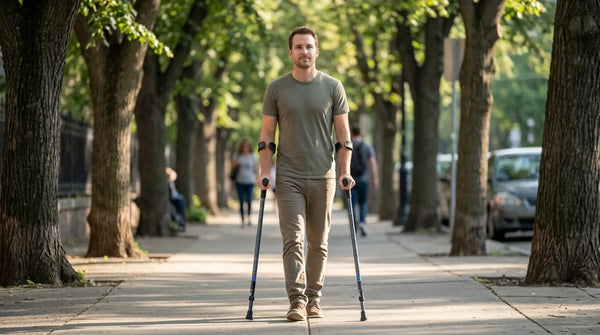
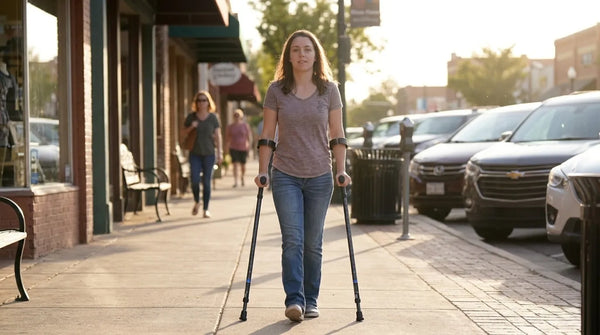
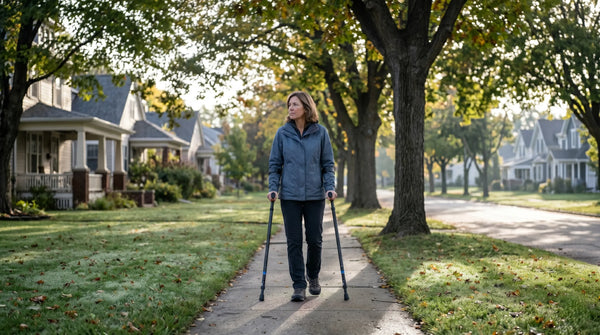
Fortunately, mobility aids have evolved far beyond the old, uncomfortable designs many people remember. For many individuals with hip dysplasia, high‑quality forearm crutches like the In‑Motion Crutches offer a powerful, practical way to stay active while protecting the joint.
This post breaks down what hip dysplasia is, why it causes so much trouble, and how modern forearm crutches can help people move with less pain and more confidence.
What Is Hip Dysplasia?
Hip dysplasia occurs when the hip socket doesn’t fully cover the ball of the upper thighbone. This shallow socket allows the joint to move improperly or even partially dislocate, leading to pain, instability, and long‑term cartilage damage. According to the Mayo Clinic, the poor fit between the ball and socket can cause the joint to wear down faster and may lead to labral tears or early osteoarthritis.
Common symptoms include:
- Groin or side‑hip pain
- A feeling of looseness or instability
- Limping or difficulty walking
- Pain that worsens with activity
- Catching or popping sensations in the hip
- Reduced Joint Load Without Sacrificing Activity
- Minimize pain during daily activities
- Prevent further cartilage wear
- Maintain cardiovascular fitness
- Keep leg muscles engaged without overloading the joint
- Shock Absorption That Protects the Body
- Ergonomic, Comfortable Design
- Ergonomic overall design and hand grips
- Adjustable height and forearm cuffs
- Spring assisted lower posts
- Lightweight but durable construction
- Improved Stability and Confidence
- A Path Back to Fitness
- Walk longer distances
- Maintain aerobic conditioning
- Strengthen upper‑body and core muscles
- Rebuild leg strength safely