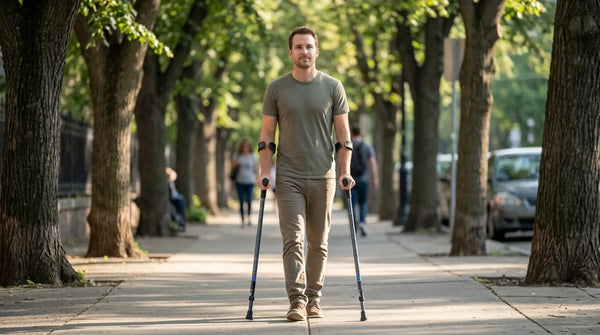
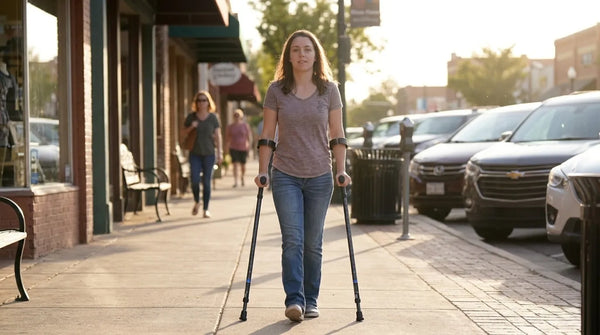
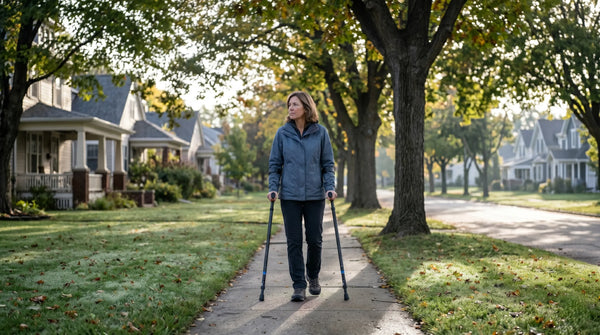
We recently talked with a customer who had a periacetabular osteotomy, the surgery most people just call PAO. She loves her crutches. More than that, she now tells other people facing the same surgery which crutches to get. That kind of word of mouth means a lot to us, and it is the reason we wanted to write this.
If you are about to have a PAO, or you are caring for someone who is, here is what to expect from the recovery, and why the right pair of crutches makes a bigger difference than most people realize.
What is a PAO, in plain terms
A periacetabular osteotomy is a hip preservation surgery. The surgeon cuts the bone around the hip socket and rotates it into a better position so the socket covers the ball of the joint the way it should. It is most often done for hip dysplasia, where the socket is too shallow. The goal is to protect the natural hip and put off, or avoid, a hip replacement later in life.
It is a real operation with a real recovery. Most people stay in the hospital two to three days, and physical therapy usually starts the day after surgery.
The part nobody warns you about: weeks on crutches
Here is the reality of PAO recovery. The bone needs time to heal in its new position, so you cannot put your normal weight on that leg for a while.
For the first six weeks or so, you walk with crutches and only partial weight on the surgical side. After that, most people move to a single crutch or cane for several more weeks. In most cases patients are on crutches for six to eight weeks total, and many are walking on their own around the eight week mark. Full weight bearing and a return to everyday activities usually lands somewhere around two to three months. Feeling fully recovered can take nine to twelve months.
Read that again. Six to eight weeks on crutches, every single day, for almost everything you do. Getting to the bathroom. Making coffee. Going to a follow up appointment. That is a long time to spend leaning on a pair of crutches, which is exactly why the pair you choose matters so much.
Why standard crutches make a hard recovery harder
The crutches a hospital hands you are usually the basic aluminum kind. They get the job done, but anyone who has lived on them for weeks knows the downside. Sore palms. Aching wrists. Bruised, tender armpits. Numb hands by the end of the day.
When you are bearing real weight through your arms and shoulders for two months straight, those small pains add up fast. They can slow you down, wear you out, and make an already tough recovery feel even longer.
What our PAO customer actually noticed
The customer we spoke with had used regular crutches before and switched to our
In-Motion Pro crutches for her PAO recovery. A few things stood out to her, and they line up with what we hear from other people healing from hip surgery.
The grips are easier on your hands and wrists. The In-Motion Pro uses an ergonomic handle with a slight downward angle that keeps the bones in your hand and arm in a more natural line. That takes pressure off the carpal tunnel area, which is the part of the wrist that usually starts screaming after a week on basic crutches.
The spring takes the jolt out of every step. Our spring-assist technology absorbs the impact as you plant the crutch and gives some of that energy back. So instead of every step sending a hard jolt up through your wrists and shoulders, the motion feels smoother. Over six to eight weeks, that is a lot of jolts you are not absorbing with your body.
The underarm cradle does not dig in. The reinforced cradle is made of soft polyurethane, so it supports you without jamming into your armpit. If you have ever finished a day on standard crutches with sore, tender underarms, you understand why this one matters.
They fold up. PAO recovery means car rides to physical therapy and follow up visits. The In-Motion Pro folds down for easy storage in a back seat or trunk.
Forearm or underarm: which is better for PAO?
Both styles work for PAO recovery, and the In-Motion Pro comes in each. The choice usually comes down to how long you will be on them and what your therapist recommends.
Underarm crutches feel familiar and offer a lot of stability early on, when you are still partial weight bearing and a little unsteady.
Forearm crutches put the load through your forearms instead of your underarms, which many people prefer for longer recoveries and for the transition phase when you are down to one crutch. A lot of PAO patients start with underarm crutches and like having a forearm option as they get stronger. Ask your surgeon or physical therapist what fits your plan.
How to get through your weeks on crutches
A few things make the crutch stretch easier, no matter which pair you use.
Set your crutches to the right height. Your hands should carry your weight, not your armpits, and there should be a couple of finger widths of space between the top of an underarm crutch and your armpit. Take care of your hands and wrists, since they do the real work. Good grips help, and so do short rests. Keep the path through your home clear of rugs and cords so you are not fighting obstacles on every trip. And follow your weight bearing restrictions exactly, because pushing too hard too soon can set your healing back.
The bottom line
You do not get to skip the crutches after a PAO. Six to eight weeks is six to eight weeks. What you do get to choose is how comfortable those weeks are. That is the whole reason patients keep recommending the In-Motion Pro to other people facing this surgery. Better grips, a spring that softens every step, and a cradle that does not dig in add up to a recovery that is a little easier on your body.
If you have a PAO on the calendar, take a look at the
In-Motion Pro forearm and
underarm crutches and set yourself up before surgery day. Your hands, wrists, and shoulders will thank you.
Frequently asked questions
How long will I be on crutches after a PAO?
Most people use crutches for six to eight weeks, starting with partial weight bearing and moving to a single crutch or cane before walking unaided. Many are walking on their own around eight weeks, with full activity around two to three months.
Can I put weight on my leg right after PAO surgery?
No. The bone needs time to heal in its new position, so you will be partial weight bearing at first. Always follow the exact restrictions your surgeon gives you.
Are forearm or underarm crutches better for hip surgery recovery?
Both work. Underarm crutches give more stability early on, and forearm crutches are popular for longer recoveries and the transition to one crutch. Ask your physical therapist what fits your case.
Why do regular crutches hurt my hands and armpits?
Basic crutches put hard pressure on your palms, wrists, and underarms with every step. Ergonomic grips, shock absorption, and a padded cradle, like the ones on the In-Motion Pro, reduce that pressure during a long recovery.
This article is general information about recovery from periacetabular osteotomy and is not medical advice. Always follow the weight bearing and recovery instructions from your own surgeon and care team.