Resource Center — Long-Term Conditions
Understanding Caudal Regression Syndrome: Navigating Life with Mobility Aids
Caudal Regression Syndrome (CRS) is a rare congenital disorder that affects the development of the lower (caudal) end of the spine. While the name sounds clinical and complex, the reality is a spectrum: some individuals experience minor changes to the tailbone, while others face significant differences in the formation of their hips, legs, and lower back.
Education is the first step toward building an inclusive world. By understanding how CRS affects movement, we can better appreciate the tools, like crutches, that provide independence and freedom.
What is Caudal Regression Syndrome?
CRS occurs during early fetal development, typically affecting the lower spine, sacrum, and lower limbs. Because the spine acts as the "highway" for the body's nervous system, CRS can impact:
-
Bone Structure: Partial or complete absence of the lower spine.
-
Motor Function: Reduced muscle strength or control in the legs.
-
Organ Systems: Potential challenges with kidney, bladder, or bowel function.
Every case is unique. Some people with CRS use wheelchairs for primary mobility, while others are "ambulatory," meaning they can walk with the assistance of braces or crutches.
The Power of the "Lofstrand" (Forearm) Crutch
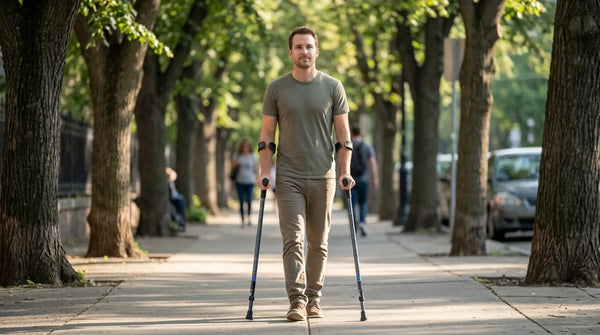
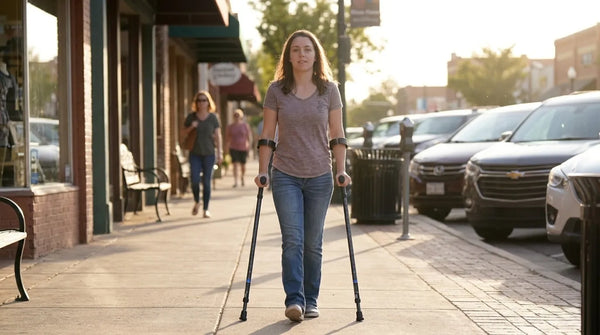
For many in the CRS community, forearm crutches (also known as Lofstrand or Canadian crutches) are the gold standard for mobility. Unlike the underarm crutches often used for temporary sports injuries, forearm crutches are designed for long-term, active use.
Why Crutches Matter for CRS:
Stability and Balance: Since CRS can affect the alignment of the hips and the strength of the lower legs, crutches provide two extra points of contact with the ground. This creates a wider "base of support," making it much easier to stay upright.
Energy Conservation: Walking with CRS can sometimes require more physical effort. Crutches allow the user to distribute their weight through their upper body, reducing the strain on the lower joints and allowing them to walk further without fatigue.
Maneuverability: In tight spaces, like a crowded cafe or a narrow hallway, crutches offer a level of agility that wheelchairs sometimes cannot. They allow users to navigate stairs and uneven terrain with greater confidence.
Promoting Independence: Most importantly, crutches are a tool for autonomy. They allow individuals to navigate their homes, workplaces, and schools on their own terms.
Living Beyond the Diagnosis
It is important to remember that a mobility aid is not a limitation; it is a bridge. People with Caudal Regression Syndrome are athletes, artists, parents, and professionals. The crutches aren't what define them, their resilience and perspective are.
"My crutches aren't 'attachments', they are my wings. They take me where I want to go and allow me to engage with the world at eye level."
How You Can Help
Being an ally to the CRS community is simple:
-
Focus on the person, not the aid: Speak to the individual, not their crutches or wheelchair.
-
Respect personal space: Never touch someone’s mobility aids without permission; they are considered an extension of their body.
-
Advocate for accessibility: Support ramps, wide doorways, and elevators in your local community.