Resource Center — Workers Comp
Crutches and Return to Work: Why Mobility Quality Matters
When you are hurt on the job, the goal everyone shares, you included, is a clean recovery and a return to work on your own two feet. It is easy to think of crutches as a minor detail in that. They are not. The quality of your mobility while you heal shapes how fast and how well you get back.
Rest is not the whole answer
The old instinct is to stay home and rest until you are fully healed. The current thinking, and what state workers' comp boards themselves tell injured workers, is that getting back to an active lifestyle helps you recover faster and protects your earnings, seniority, and standing. Active recovery beats sitting still, within your provider's restrictions. And being active depends on being able to move comfortably and safely, which is exactly what your crutches are for.
What bad mobility costs you
- Pain and fatigue that keep you sedentary. Crutches that hurt your hands, wrists, and shoulders make you sit more and move less.
- A real risk of a second injury. Leaning on underarm crutches can cause crutch palsy, a nerve injury that sets you back further.
- A slower, rockier path back. Arm and shoulder injuries are among the costlier and slower to resolve, so a secondary one is no small thing.
What good mobility gives you
Crutches that fit well and feel stable let you stay upright, keep your routine, and rebuild confidence on your feet. They reduce fatigue so you can do more in a day. They hold their footing on uneven ground, so you are not afraid of the driveway, the parking lot, or the stairs back at work. None of that is luxury. It is the difference between a recovery that moves and one that stalls.
Why everyone in your claim wants this too
Medical equipment is only a fraction of workers' comp costs. The bigger number is the time you are out of work. That means your interest in a fast, clean recovery and the system's interest in one point in the same direction. Asking for a crutch that keeps you mobile is not asking for a favor. It is aligned with how the whole thing is supposed to work.
What to look for in a recovery crutch
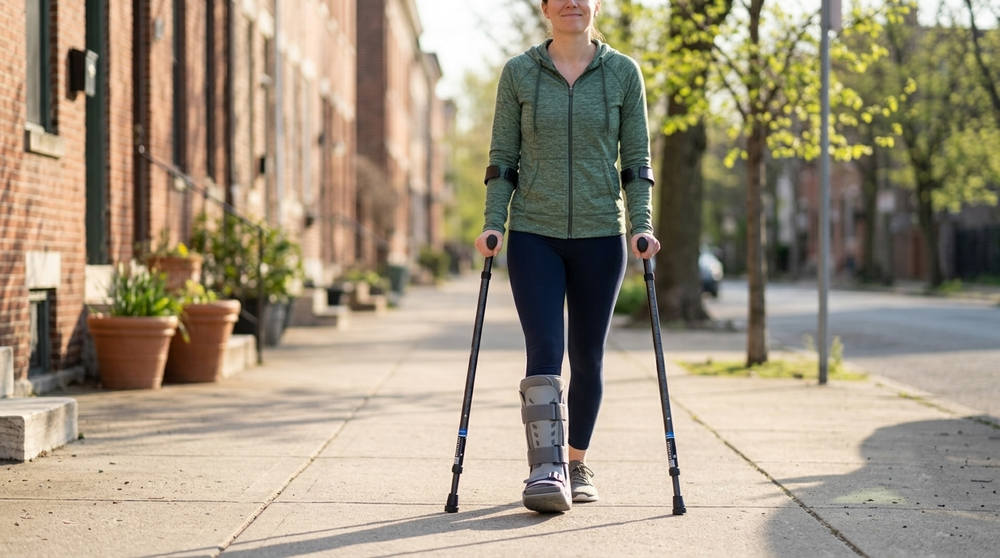
- Forearm design, to avoid armpit nerve pressure.
- Shock absorption, to cut shoulder, wrist, and elbow fatigue.
- Stable tips that grip uneven and outdoor surfaces.
- The right fit and adjustability for your height and frame.
- Light weight and a frame that breaks down for storage, for getting around.
The crutch built for the long version of recovery
The in-Motion Pro forearm crutch checks every one of those boxes. No underarm pressure, spring assist for fatigue, articulating tips that hold 75 to 100 percent ground contact on rough surfaces, two cuff sizes, 1.8 pounds each, a 350 pound capacity, and a frame that breaks down for storage. It was developed through 34 clinical studies and is trusted by physical therapists. And since crutches are covered durable medical equipment under workers' comp, choosing better usually costs you nothing.
Next step: ask your provider for the in-Motion Pro forearm crutch.
More in this series
- Does Workers' Comp Cover Crutches? Your 2026 Guide
- Crutch Palsy: The Hidden Injury That Can Turn One Work Injury Into Two
- How to Get the Crutches You Actually Want Through Workers' Comp
- Crutch HCPCS Codes: E0110 vs. E0117 for Work Injuries
- Best Crutches for a Work-Injury Recovery (and How to Get Them)
Frequently asked questions
Does staying active help recovery from a work injury? Generally yes. Active recovery is widely encouraged over prolonged rest, within your provider's restrictions.
Do better crutches actually help me get back to work faster? Indirectly, yes. Comfortable, stable crutches keep you mobile and lower the risk of a setback like a secondary nerve injury.
Why does mobility quality matter to my employer and insurer? Most workers' comp cost is lost-work time, so a faster, cleaner recovery benefits everyone.
What kind of crutch is best for a long recovery? Usually a forearm crutch with shock absorption, stable tips, and a good fit.
Will workers' comp cover a better crutch? Crutches are covered DME, and the forearm model is the reliably covered path.
Coverage note: Return-to-work timing and activity should always follow your treating provider's restrictions. This article is general education, not medical or legal advice. Coverage varies by state and claim; confirm details with your provider, adjuster, or state workers' compensation board.
This guide is part of our Workers' Comp Crutch Coverage hub, where you'll find every option for getting crutches covered.