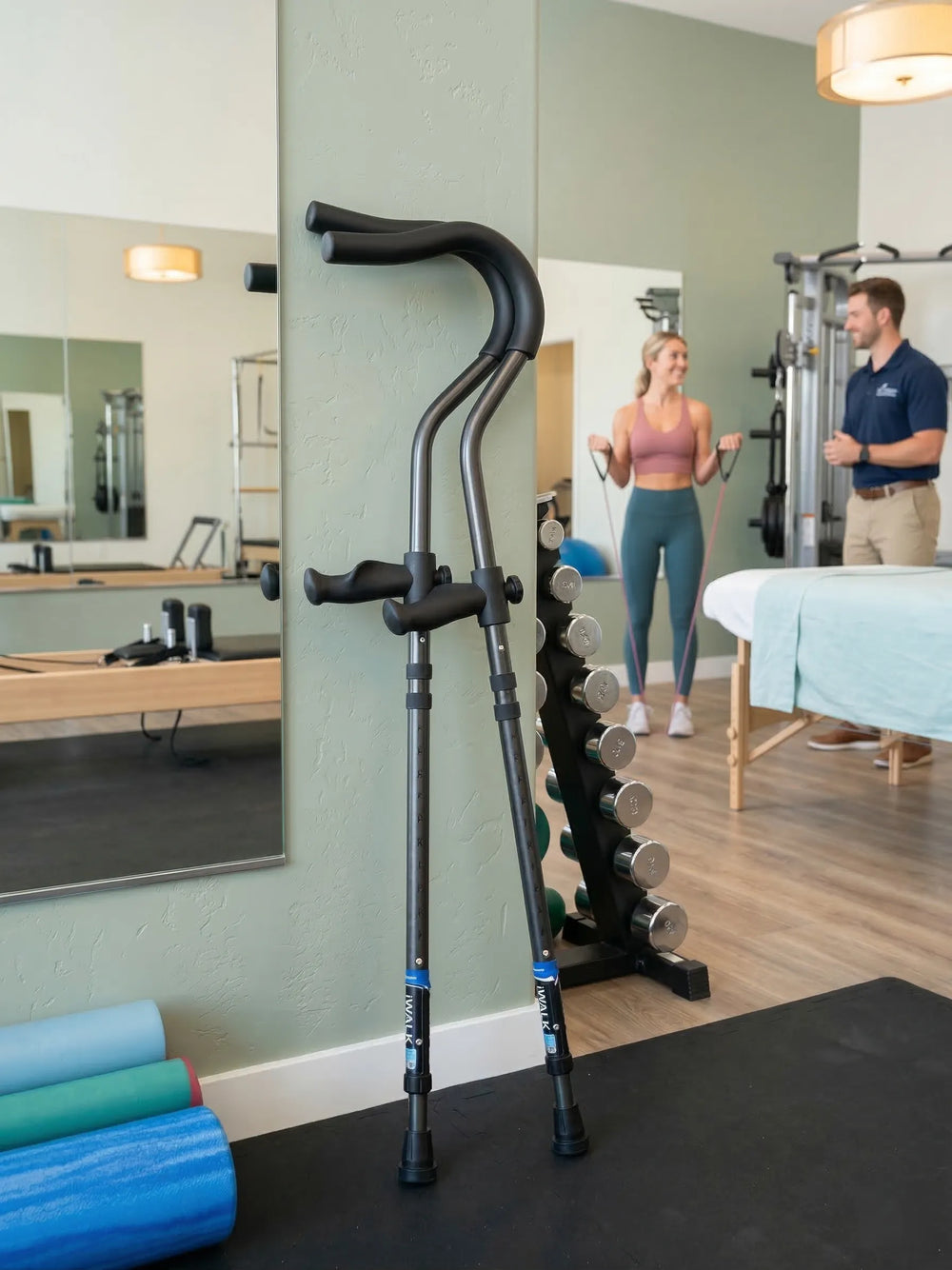
Gym equipment and two people exercising

Resource CenterMedical Solutions

Medical Solutions

How Orthopedic Offices Can Reduce Patient Crutch Complaints

If you work in an orthopedic office, you've heard it before. "These crutches are killing my armpits." "My wrists are killing me." "I can barely get around my house." "Is this really the best option?" Crutch complaints are one of the most consistent, and most overlooked,sources of patient dissatisfaction in orthopedic recovery. And the frustrating part? Most of those complaints aren't about the injury. They're about the equipment. The good news is that this is entirely fixable. Why Patients Complain About Crutches Traditional crutches haven't changed much in decades. The standard axillary (underarm) crutch design dates back over 70 years, and most of what gets dispensed today, whether from a hospital, surgery center, or orthopedic office, is a variation of that same basic design. The problems with traditional crutches are well documented:
  • Underarm pressure causes nerve compression, leading to numbness, tingling, and soreness, a condition sometimes called crutch palsy
  • Poor weight distribution forces the user to compensate with their shoulders and wrists, leading to fatigue and secondary pain
  • Rigid, unforgiving tips transfer the full shock of each step directly into the user's hands, arms, and joints
  • Awkward sizing leaves patients either hunched over or reaching upward, neither of which is ergonomically sound
For a patient already dealing with post-surgical pain and limited mobility, these issues aren't minor inconveniences. They slow recovery, reduce compliance with physical activity recommendations, and generate callbacks, follow-up complaints, and frustration for both the patient and your staff. The Connection Between Equipment and Patient Satisfaction Scores Patient satisfaction in orthopedic care is increasingly tied to the full recovery experience, not just the surgical outcome. When a patient associates their recovery with unnecessary pain or difficulty getting around, that perception colors everything, including how they rate your practice. Crutches are often the most-used piece of equipment in a patient's recovery. They interact with them for hours every day, in their home, their car, their workplace. If that experience is consistently uncomfortable, patients notice and they remember who gave them the equipment. Upgrading the crutches you recommend or dispense is one of the lowest-effort, highest-visibility improvements an orthopedic office can make to the patient experience. What to Look for in a Better Crutch Not all crutches are created equal. When evaluating options for your patients, look for these key features: Spring-assist or shock-absorbing technology This is the biggest single improvement over traditional designs. Crutches with built-in spring-assist mechanisms absorb impact energy with each step rather than transferring it directly into the user's joints. This dramatically reduces wrist fatigue, shoulder strain, and overall discomfort especially for patients who are on crutches for more than a few days. Ergonomic hand grips Angled grips that align with the natural position of the hand and wrist reduce the risk of repetitive strain and carpal tunnel pressure. Standard crutch handles are straight and flat.  Ergonomic grips make a measurable difference in comfort. Appropriate sizing range Crutches that accommodate a wide range of heights, including taller patients who are often poorly served by standard options, ensure every patient leaves your office properly fitted. Clinical validation Look for products backed by actual research, not just marketing claims. Millennial Medical's In-Motion crutches, for example, were developed through 34 medical studies examining the harmful effects of traditional crutch designs and engineered specifically to address those documented problems. A Simple Change with Real Impact Recommending or dispensing better crutches doesn't require a major operational overhaul. It's a product decision, one that takes minutes to implement and pays dividends in patient satisfaction, fewer complaint calls, and a reputation for going the extra mile in recovery care. Practices that make the switch consistently hear one thing from patients: "Why didn't anyone give me these sooner?" Interested in Stocking or Recommending Millennial Medical Crutches? We work directly with orthopedic offices, surgery centers, and physical therapy clinics to make it easy to get our crutches in the hands of patients who need them. Whether you want to stock them in-office, recommend them directly, or explore wholesale pricing, we'd love to talk. Contact us to request samples or discuss wholesale options Shop Easy Adjustable Crutches Direct from our website We offer both forearm and underarm crutches, new and refurbished, designed for ergonomic comfort and easy sizing.  Buy from directly from us and you will receive the best customer service in the world and experience durability, comfort and style when using our crutches!  We will support you wherever your adventures take you! Shop Now! Earn free crutches and help friends save 10% by signing up to be an in-Motion Mobility Ambassador Be kind. Be generous. Always pay it forward.   Support for Life’s Adventures