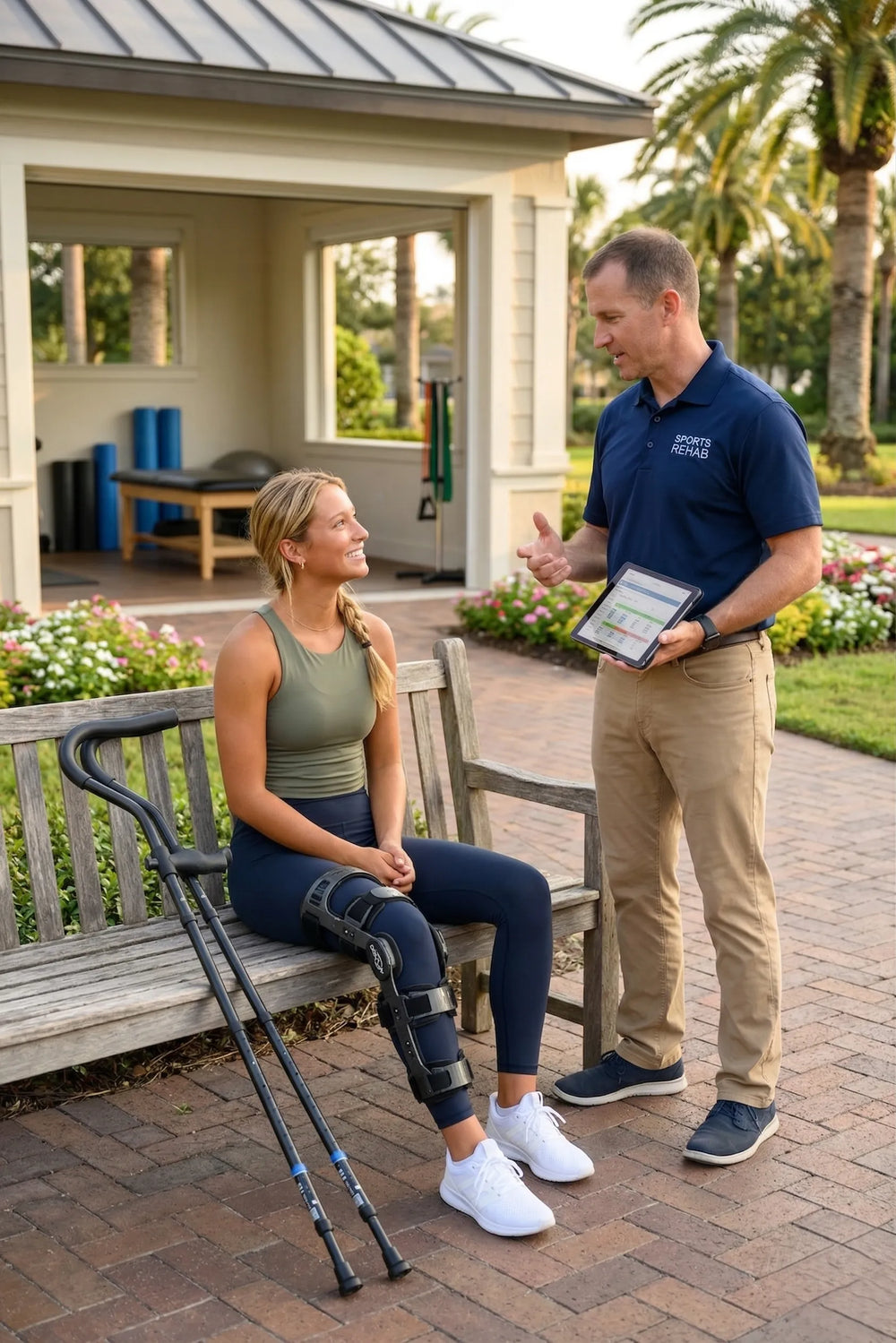
Woman in leg brace with therapist outdoors

Resource CenterMedical Solutions

Medical Solutions

How to Use Crutches After ACL Surgery: A Complete Recovery Guide

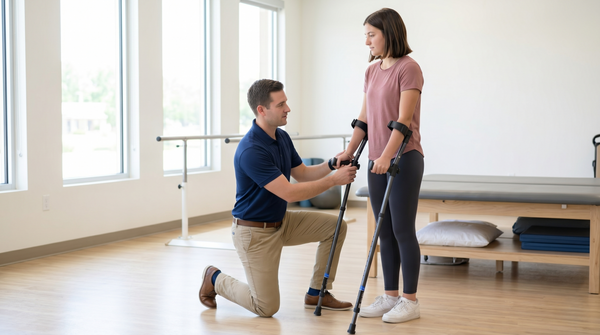
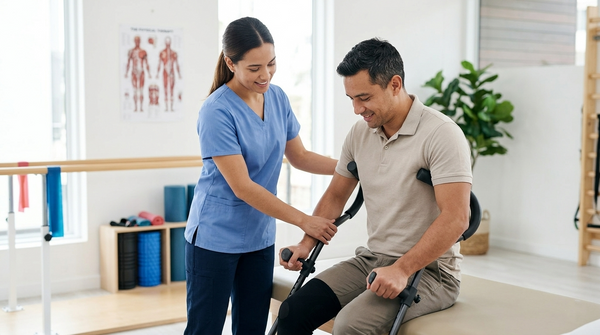
ACL surgery is one of the most common orthopedic procedures performed every year and one of the most demanding recoveries. The surgery itself takes about an hour. The recovery takes months. For most patients, crutches are a central part of the first phase of that recovery. How long you need them, how you use them, and what kind you're on can make a significant difference in your comfort, your progress, and your overall recovery experience. This guide covers everything you need to know. How Long Will You Need Crutches After ACL Surgery? The honest answer is: it depends on your surgeon, your graft type, and how your body responds. That said, most ACL patients are on crutches for anywhere from a few days to about two weeks for a standard reconstruction. Some protocols have patients bearing weight almost immediately. Others keep them non-weight-bearing longer to protect the graft during initial healing. Your surgeon's protocol is the final word here but knowing the general timeline helps you prepare. Days 1–3: This is typically the hardest phase. Swelling is at its peak, pain is highest, and simply getting from the bedroom to the bathroom is an accomplishment. Crutches are essential and you'll be using them almost constantly. Days 4–7: Swelling begins to decrease. Most patients start to feel more confident on their crutches and can handle short distances more comfortably. Physical therapy often begins during this window. Week 2 and beyond: Many patients transition to partial weight-bearing, using one crutch or weaning off entirely depending on their surgeon's protocol and how their knee is responding. The Most Common Crutch Mistakes ACL Patients Make Getting crutches wrong doesn't just make recovery uncomfortable it can slow your progress and create secondary problems. Here are the mistakes to avoid: Leaning on your armpits. This is the most common and most damaging mistake. Underarm crutches are not designed to bear weight through the armpit they're designed to bear weight through your hands and wrists. Resting your armpits on the pads compresses the axillary nerve and can cause numbness, tingling, and weakness in the hand and arm. Your armpits should clear the pads by about 1–2 inches when you're standing upright. Incorrect height adjustment. If your crutches are too short, you'll hunch forward and strain your back. Too tall, and you'll shrug your shoulders and compress your neck. Proper height means a slight bend at the elbow, around 15 to 30 degrees, when your hands are on the grips and you're standing straight. Looking down while you walk. It feels instinctive to watch your feet, but looking down throws off your balance and posture. Keep your eyes forward and let your body find its rhythm. Taking steps that are too long. Overreaching with your crutches or swinging too far forward destabilizes your balance and increases fall risk. Keep your steps controlled and moderate until you're fully confident. Skipping the practice time. Crutches feel awkward at first for almost everyone. Give yourself a day or two to get comfortable with the movement pattern before you attempt stairs, uneven surfaces, or crowded spaces. How to Actually Walk on Crutches The basic movement pattern for underarm crutches:
  1. Move both crutches forward together, about one step's length ahead of you
  2. Bear your weight through your hands and wrists, not your armpits
  3. Swing your body forward, landing on your good leg
  4. Repeat
For partial weight-bearing (when your surgeon clears you to put some weight on the surgical leg), the pattern shifts:
  1. Move both crutches forward
  2. Step forward with your surgical leg, placing partial weight as directed
  3. Follow through with your good leg
On stairs going up: Good leg first, then crutches and surgical leg together. Remember: "good goes to heaven" lead with the healthy leg going up. On stairs going down: Crutches and surgical leg first, then good leg. "Bad goes to hell" lead with the surgical leg going down. It sounds morbid. It works. Setting Up Your Home for Crutch Life The first week after ACL surgery is almost entirely spent at home, and your environment matters more than most people anticipate. Before your surgery date, take an hour to prepare: Clear your pathways. Rugs, cords, pet toys, and anything else on the floor are fall hazards. Remove them from your main routes: bedroom to bathroom, bedroom to kitchen, living room to anywhere. Set up a recovery station. Pick one comfortable spot, a recliner, a couch with good arm support, a bed with pillows, and stock it with everything you'll need: phone charger, water, medications, remote control, snacks. Getting up and down on crutches is exhausting at first, and minimizing unnecessary trips matters. Move essentials to counter height. Things stored low in cabinets or on the floor become nearly inaccessible when you're on crutches. Temporarily relocate anything you'll need frequently to a height you can reach without bending. Consider a backpack. Crutches occupy both hands, which means carrying anything, a glass of water, your phone, a snack, requires either a bag or a creative solution. A small backpack worn on your back is the most practical option. Put a shower chair in the bathroom. Showering on crutches is one of the more challenging parts of early recovery. A shower chair and a handheld shower head make it significantly safer and more manageable. Why Your Crutch Choice Matters More Than You Think Most ACL patients get whatever crutches the surgery center or hospital hands them at discharge. That's usually a standard axillary crutch which is functional, but not designed for the specific demands of someone who's going to be actively moving through recovery for days or weeks. The problem with standard crutches during ACL recovery specifically is impact transmission. Every time a crutch tip hits the ground, that force travels up through the frame and into your hands, wrists, and shoulders. Over hundreds of steps a day during the first week of recovery, that cumulative strain adds up fast, and it's entirely separate from the discomfort you're already managing in your knee. Crutches with spring-assist technology absorb and redistribute that impact rather than passing it straight through to your joints. The difference is noticeable within the first hour of use.  There is less vibration, less wrist fatigue, a smoother overall gait. For ACL patients who are already dealing with significant discomfort, that reduction in secondary strain is meaningful. Millennial Medical's In-Motion crutches were developed through 34 medical studies examining exactly these kinds of cumulative strain effects and designed specifically to address them. They're not a luxury upgrade. For anyone facing more than a few days of crutch use, they're simply a better tool for the job. Shop crutches for ACL recovery When to Call Your Surgeon Crutches are a recovery tool, not a diagnostic one. Call your surgeon if you experience:
  • Significant increase in knee swelling or pain beyond the first few days
  • Numbness or tingling in your hands or arms that doesn't resolve with adjusted crutch technique
  • Fever above 101°F, which can indicate infection
  • Any sensation that something is wrong with the surgical site
When in doubt, call. That's what the post-op line is for. The Bottom Line ACL recovery is a process, and crutches are a temporary but important part of it. Use them correctly, set up your environment thoughtfully, and don't settle for equipment that makes an already hard recovery harder than it needs to be. The goal isn't just to get through the crutch phase, it's to get through it in a way that sets your knee up for the best possible recovery ahead.

Related Recovery Guides

  Be kind. Be generous. Always pay it forward.   Support for Life’s Adventures