Resource Center — Recovery Guide
Stress Fracture Recovery: Why Patience Is the Whole Game
This guide covers general recovery ranges, not personal medical advice. Your surgeon's specific instructions always override anything you read here.
A stress fracture is a small crack in a bone caused by repetitive force rather than one big injury. Runners get them. So do dancers, hikers, military recruits, and anyone who ramped up their activity faster than their bones could adapt. The pain usually creeps in over days or weeks, gets worse with activity, and eases with rest, which is exactly why so many people push through it until they cannot.
Here is the thing that makes stress fractures different from a dramatic break: they are easy to underestimate and easy to make worse. The whole recovery comes down to one hard skill, which is backing off long enough to let the bone heal. This guide covers how long that takes, when you need crutches, and why the high-risk ones deserve extra respect.
If your pain came from a specific injury rather than building up over time, our guides on Broken Foot Recovery and Broken Ankle Recovery may fit better.
The Honest Answer to "How Long?"
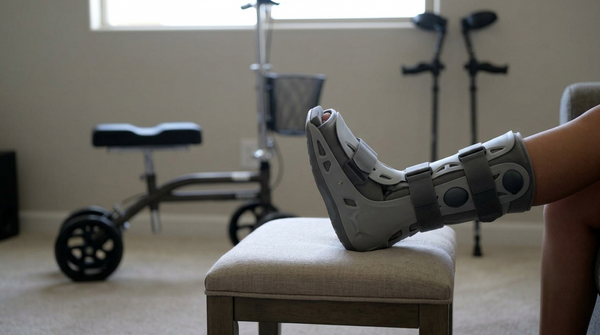
Most stress fractures take about 6 to 8 weeks to heal. Milder bone stress injuries can settle in as little as 3 weeks, while more severe ones, or ones in a bad location, can take 3 months or longer. A common conservative protocol is roughly 4 weeks of non-weight-bearing with crutches in a walking boot, then about 4 weeks of partial weight-bearing, then a gradual, careful return to activity.
The number that actually matters, though, is not the calendar. It is whether you truly offloaded the bone. A stress fracture that gets real rest heals on the shorter end. One that keeps getting loaded because the pain faded and you felt fine can drag on for months or turn into a full break.
The thing most people do not know going in: the pain quieting down is not the same as the bone being healed. Stress fractures feel better long before they are solid, and that gap is exactly where people re-injure themselves.
Not All Stress Fractures Are Equal
Location matters more with stress fractures than almost any other injury, because some sites have poor blood supply and heal slowly or unpredictably. Doctors sort them into low-risk and high-risk for this reason.
Low-risk stress fractures, like most in the shin bone or the outer metatarsals, usually heal well with rest and protected weight-bearing. These are the common ones, and they respond to patience.
High-risk stress fractures need more caution and sometimes surgery. These include the navicular bone in the midfoot, the femoral neck at the hip, the anterior part of the shin bone, and the base of the fifth metatarsal. Because of poor blood supply or high load, these can fail to heal or progress to a complete fracture, so they often mean strict non-weight-bearing on crutches, a boot, or an operation.
This is why you do not self-diagnose a stress fracture and tough it out. Which bone, and where on the bone, changes the whole plan, and the high-risk ones are genuinely worth getting imaged.
The Rules That Matter Most
Stress fractures heal on rest and gradual reloading. The recovery is not physically hard. The hard part is discipline, and the classic mistakes all come from cutting the rest short.
Offload the bone as your doctor directs, and take it seriously. If you are told non-weight-bearing on crutches, that is what heals a high-risk fracture. Cheating on it is how a crack becomes a break.
Do not return to activity on a schedule you invented. The bone tells you when it is ready through imaging and a pain-free progression, not through a race date on the calendar.
Come back gradually, not all at once. Even after the fracture heals, the return to running or high-impact activity is a slow ramp. Jumping straight back to your old volume is the fastest way to earn a second one.
Fix what caused it. Stress fractures come from doing too much too soon, and sometimes from low bone density, low energy availability, or a training error. If you do not address the cause, you will likely be back. This is worth a real conversation with your doctor, especially if you have had more than one.
Getting Through the Recovery
Stress fracture recovery is more about restraint than setup, but a few things help.
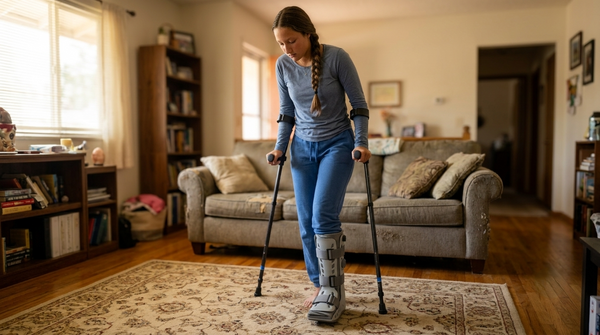
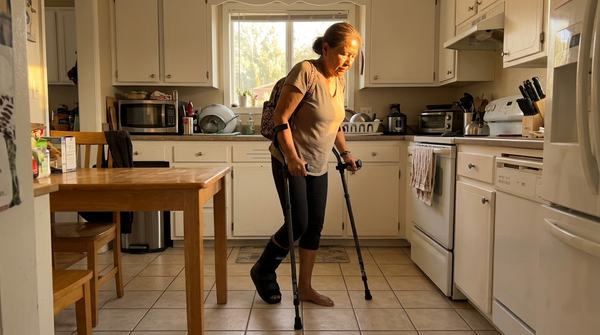
If you are on crutches or in a boot, use a backpack so your hands are free, and keep the most-used things in your day within easy reach so you are not tempted to overdo the walking.
Keep moving in ways that do not load the bone. Many people stay fit during a stress fracture with activities their doctor clears, like swimming or pool running, which protects your fitness and your sanity without stressing the healing bone.
Track your pain honestly. A simple rule many clinicians use is that if an activity brings the pain back, you have done too much. Let that guide your progression rather than how motivated you feel on a good day.
Why Crutch Choice Matters
If your stress fracture calls for crutches, you could be on them for a month or more, and that is long enough for the crutches to become their own problem. All the weight you are keeping off the bone has to go somewhere, and on standard crutches it goes into your hands, wrists, and shoulders. Within a couple of weeks, sore palms and aching shoulders are common, along with the tingling that comes from leaning on the underarm pads.
This is where the In-Motion crutch comes in. The spring-assist post built into the lower shaft absorbs the impact of each step and returns some of that energy on the upswing, so your hands and shoulders take less of a beating. The contoured hand grips are angled to keep your wrist in its natural position instead of kinking it back, which is where a lot of hand and wrist pain starts. It holds up to 350 pounds and comes in forearm and underarm models, so you can match it to how long you will need it.
For a recovery where the whole point is to keep load off one bone, it helps to move on crutches that do not punish the rest of you for it. Shop crutches for stress fracture recovery →
When to Call Your Doctor
See your doctor to get a suspected stress fracture confirmed, and reach out again if:
- The pain is in a high-risk area like the hip, the midfoot, or the front of the shin, or it is sharp and localized to one spot on the bone.
- The pain returns or worsens as you try to increase activity, which means the bone is not ready.
- You are not improving after several weeks of genuine rest and offloading.
- You have had more than one stress fracture, which is worth investigating for underlying causes like bone density or nutrition.
The Bottom Line
A stress fracture is a small injury with an outsized ability to punish impatience. Most heal in about 6 to 8 weeks if you actually offload the bone, but the high-risk ones deserve real caution and sometimes surgery. The recovery is not hard on your body. It is hard on your discipline.
The pain fading is a trap, not a finish line. Let imaging and a pain-free, gradual return be your guide, fix whatever caused the fracture in the first place, and you give yourself the best shot at healing once and not repeating it.
Frequently Asked Questions
How long does a stress fracture take to heal?
Most take about 6 to 8 weeks. Milder ones can heal in around 3 weeks, while severe or high-risk fractures can take 3 months or longer. A common approach is about 4 weeks off the bone on crutches, then partial weight-bearing, then a gradual return.
Do you need crutches for a stress fracture?
Often yes, at least for a while, to keep weight off the bone until the pain settles. High-risk stress fractures, like those in the hip, midfoot, or front of the shin, may require strict non-weight-bearing on crutches or a boot, and sometimes surgery.
Can I walk on a stress fracture?
Only as much as your doctor allows, and for high-risk fractures the answer is often no for a period. Walking through a stress fracture because the pain faded is the most common way it turns into a complete break.
How do I know if my pain is a stress fracture?
Stress fractures usually build gradually, get worse with activity, ease with rest, and are tender at one specific spot on the bone. The only way to confirm one is imaging, so if that pattern sounds familiar, get it checked rather than pushing through.
Why do I keep getting stress fractures?
Repeated stress fractures often point to an underlying cause: ramping up activity too fast, a training error, low bone density, or low energy availability. If you have had more than one, it is worth a real workup with your doctor rather than just resting and hoping.
Can I still exercise with a stress fracture?
Usually yes, in ways that do not load the injured bone. Many people keep their fitness with activities their doctor clears, such as swimming or pool running. The key is protecting the healing bone while staying active everywhere else.
Related Recovery Guides
- Broken Foot Recovery on Crutches
- Broken Ankle Recovery: A Patient's Guide to the Crutch Phase
- Plantar Fasciitis and Offloading a Painful Heel