Resource Center — Recovery Guide
Calcaneus (Heel) Fracture Recovery: One of the Longest Crutch Phases in the Foot
This guide covers general recovery ranges, not personal medical advice. Your surgeon's specific instructions always override anything you read here.
A broken heel bone is a bigger deal than most people expect. The calcaneus is the large bone at the back of your foot, and it takes an enormous amount of force to break, usually a fall from a height or a hard landing. Because it carries so much of your body weight and sits at a complicated joint, a calcaneus fracture is one of the slowest foot injuries to heal and one of the longest stretches you will ever spend on crutches.
This guide is honest about that. It walks through what a realistic recovery looks like, why the non-weight-bearing period is so long, and how to get through months on crutches without wearing out the rest of your body.
If your injury is elsewhere in the foot, our guides on Broken Foot Recovery, Broken Ankle Recovery, and Foot and Ankle Surgery may fit better.
The Honest Answer to "How Long?"
Plan on staying off the heel for a long time. Many calcaneus fractures require a cast or boot for six to eight weeks or longer, and weight-bearing is commonly delayed to somewhere around eight to twelve weeks, sometimes more if the bone is badly shattered. Fractures treated without surgery are often kept in a cast for ten to twelve weeks. You will not be cleared to put weight on the foot until the bone has healed enough to take it.
Complete recovery takes much longer than the crutch phase. It can be many months, and for serious fractures, a full year or more before the foot feels as good as it is going to get. Some people are left with lasting stiffness or aching, especially with fractures that involve the joint. This is a real injury, and going in with realistic expectations makes the long recovery easier to handle.
The thing most people do not know going in: the heel takes your weight with every single step, so it cannot be rushed. Putting weight on it too soon can move the bone pieces out of place and land you in surgery, so the non-weight-bearing rule here is not a suggestion.
Surgical vs. Non-Surgical: Two Long Paths
Your surgeon's specific instructions take priority over any general timeline. The right path depends on the fracture.
- Non-surgical treatment: used for many fractures that have not shifted, especially those outside the main joint surface. These are often managed in a cast for about ten to twelve weeks with strict non-weight-bearing until the bone heals.
- Surgical treatment (ORIF): used for displaced fractures, particularly those that break into the joint. Surgeons realign the bone and hold it with plates and screws. Even after surgery, the non-weight-bearing period is long, often eight to twelve weeks, while the bone consolidates.
One thing worth knowing: because calcaneus fractures usually come from a fall or a hard landing, doctors also check for injuries higher up, including the spine and the other foot. If you hurt your back in the same fall, tell your care team.
A Realistic Timeline
Your surgeon's plan takes priority. This is a common path for a calcaneus fracture:
- Weeks 1 to 2: Splint, cast, or boot. Strict non-weight-bearing on crutches. A lot of swelling and pain early on, and elevation matters more here than almost anywhere. If you had surgery, stitches usually come out around two weeks.
- Weeks 2 to 8: Continued immobilization and strict non-weight-bearing. This is the long, patient stretch. Gentle motion exercises may begin on your surgeon's schedule.
- Weeks 8 to 12: Repeat imaging checks healing. If the bone is ready, protected weight-bearing begins and slowly increases. Crutches phase out during this window.
- Months 3 to 6: Out of the boot and into supportive shoes, often with a cushioned heel. Physical therapy focuses on motion, strength, and walking mechanics.
- Months 6 to 12 and beyond: Continued improvement. Many people walk well, though stiffness and some aching can persist, especially with joint-involved fractures.
The Rules That Matter Most
A heel fracture heals on a simple principle: protect the bone completely until it can carry load, then add weight slowly. Almost everything that goes wrong comes from loading it too early.
Non-weight-bearing means non-weight-bearing, for the full period. The heel takes tremendous force with each step, and even a brief stand on it can shift the healing bone. This is one of the injuries where cheating on the rule has the biggest consequences.
Elevate more than you think you need to, especially the first few weeks. Heel fractures swell dramatically, and swelling that is not controlled can delay surgery, slow healing, and cause skin problems. Keep the foot above heart level as much as you possibly can early on.
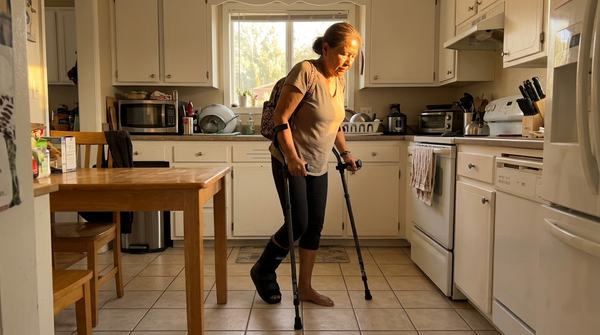
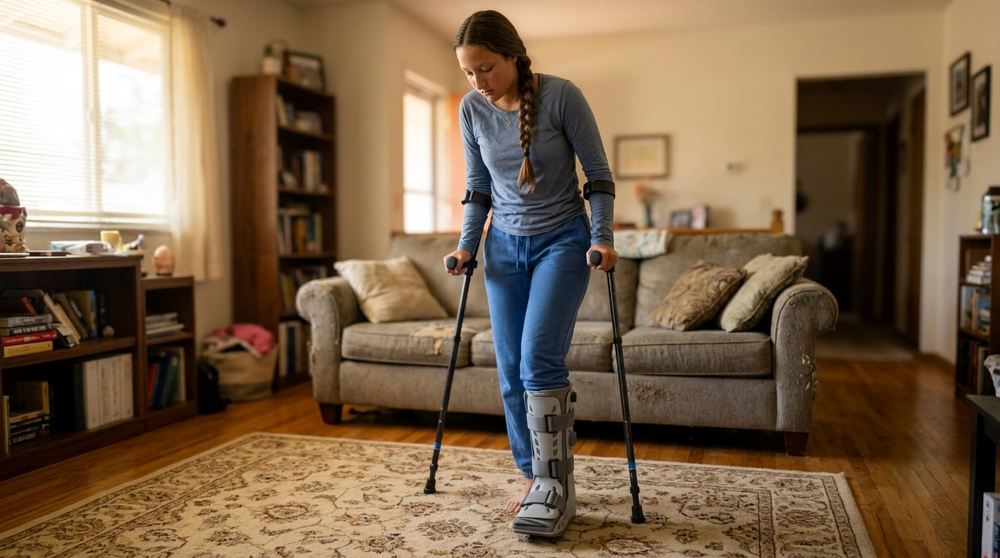
Use both crutches, every step. A fall onto a healing heel is a serious setback, and this is not the injury to hop or freehand across a room.
Do the motion work your surgeon prescribes. The joints around the heel stiffen quickly during months of immobilization, and gentle exercises help preserve the movement you will need to walk normally later.
Do not judge readiness by pain. The foot can feel better long before the bone is solid. Your follow-up imaging is the only thing that tells you it is safe to start loading the heel.
Setting Up Your Home for a Long Recovery
A calcaneus fracture can keep you on crutches for two to three months or more, so a serious home setup pays off more than for almost any other foot injury.
Get your daily life onto one floor. Stairs on crutches with a foot you cannot load are slow and risky, and this is a long stretch to be navigating them. Set up a base downstairs if your bedroom is up.
Make the bathroom safe. A shower chair, a non-slip mat, and a handheld shower head take the danger out of getting clean on one foot.
Build a real command center with elevation built in. A recliner is ideal here because you will be keeping the foot up for weeks. Keep water, a charger, medications, and whatever you use during the day within reach.
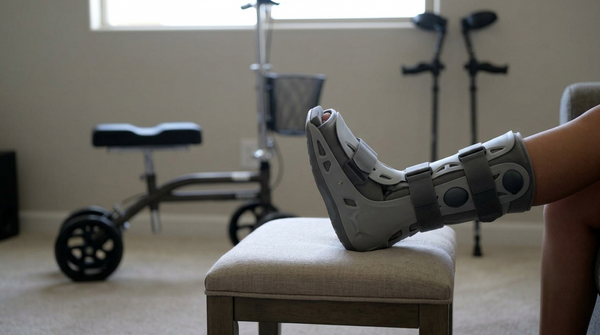
Use a backpack for carrying and clear your paths of rugs and cords, so you are not managing trip hazards on crutches. A knee scooter is worth considering for longer distances, since months on crutches is genuinely tiring.
Why Crutch Choice Matters More Over Months
A heel fracture puts you on crutches for one of the longest stretches in all of foot recovery, and over those months the crutches themselves become a real problem. All the weight your foot used to carry now runs through your hands, wrists, and shoulders, thousands of times a day. Standard underarm crutches were built to be cheap and universal, not to carry a person comfortably for months, and by a few weeks in, a lot of patients have sore palms, aching shoulders, and nerve irritation from leaning on the pads.
That is the gap we set out to close with the In-Motion crutch. The spring-assist post built into the lower shaft absorbs the impact of each step and returns some of that energy on the upswing, so your hands and shoulders take less of a beating over a long recovery. The contoured hand grips are angled to keep your wrist in its natural position instead of kinking it back, which is where a lot of the hand and wrist pain starts. It holds up to 350 pounds and comes in forearm and underarm models, so you can match it to your recovery.
When your recovery is measured in months, the crutches are not a detail. They are what you live on every day until the heel is ready. Shop crutches for heel fracture recovery →
When to Call Your Surgeon
Call your surgeon or seek care right away if you notice:
- Calf pain, swelling, warmth, or tenderness. This can signal a deep vein thrombosis, a blood clot, and immobilized lower-limb patients are at higher risk.
- Sudden shortness of breath or chest pain. Call 911. This can mean a pulmonary embolism.
- Severe or increasing pain, tightness, numbness, or tingling, especially early on. This can be a sign of dangerous pressure in the foot that needs urgent care.
- Blistering, or new redness, warmth, or drainage from a surgical incision. Skin problems and infection at the heel need prompt attention.
- A color change in the foot or toes, or fever above 101 degrees Fahrenheit.
The Bottom Line
A calcaneus fracture is a serious injury with one of the longest recoveries in the foot, and the honest truth is that the crutch phase alone can run two to three months or more. The heel carries your weight with every step, so it has to be fully protected before it can be loaded, and your imaging, not your pain level, is what clears you to walk.
This is a marathon, not a sprint. Protect the heel, keep it elevated, take the non-weight-bearing window completely seriously, and do the motion work. Recovery is slow and can leave some lasting stiffness, but most people get back to walking, and going in with patience makes the long road easier.
Frequently Asked Questions
How long will I be on crutches with a broken heel?
A long time compared to most foot injuries. Weight-bearing is commonly delayed to around eight to twelve weeks, and sometimes longer for badly shattered fractures. You stay non-weight-bearing on crutches until your imaging shows the bone has healed enough to take weight.
Can a calcaneus fracture heal without surgery?
Yes, many that have not shifted are treated without surgery, often in a cast for about ten to twelve weeks with strict non-weight-bearing. Displaced fractures, especially those that break into the joint, usually need surgery to realign the bone.
Why does a heel fracture take so long to heal?
Because the calcaneus takes tremendous force with every step and often involves a joint, so it has to be fully healed and stable before it can carry your weight. Complete recovery can take many months, and for serious fractures a year or more.
Will I be able to walk normally after a calcaneus fracture?
Most people return to walking, but some are left with stiffness or aching, particularly with fractures that involved the joint. Physical therapy and supportive, cushioned footwear help you get the best result. Your recovery depends on the fracture and how well it healed.
Why is elevation so important with a heel fracture?
Heel fractures swell dramatically, and uncontrolled swelling can delay surgery, slow healing, and cause skin and blister problems. Keeping the foot above heart level as much as possible, especially early on, is one of the most useful things you can do.