Resource Center — Recovery Guide
Bunion Surgery Recovery: What the Crutch Phase Really Looks Like
This guide covers general recovery ranges, not personal medical advice. Your surgeon's specific instructions always override anything you read here.
Bunion surgery has a reputation for being minor. It is not major surgery, but the recovery is longer and more involved than most people expect when they schedule it. You are fixing the alignment of a bone in your foot, and that bone needs to heal in its new position before it can carry your weight again. Rush that, and you can undo the whole correction.
How much time you spend off the foot depends almost entirely on the type of surgery you have. Some modern techniques let you put weight down in a stiff post-op shoe within days. Others keep you off the foot for weeks on crutches or a knee scooter. This guide walks through the differences, what a realistic recovery looks like, and how to get through the crutch phase without beating up the rest of your body.
Recovering from something else? Try our companion guides for Foot and Ankle Surgery, Broken Foot Recovery, and Plantar Fasciitis.
The Honest Answer to "How Long?"
Full recovery from bunion surgery usually takes several months, and it often runs up to six months before your foot feels fully normal, with some swelling lingering even longer. Follow-up with your surgeon can continue for up to a year. That is the part that surprises people. The incision heals in a couple of weeks, but the bone and the soft tissue take much longer.
The weight-bearing timeline is where the real variation lives. With some newer and minimally invasive techniques, you may be non-weight-bearing for only about two weeks, then move to partial weight-bearing in a protective shoe. With more traditional procedures, you can be looking at closer to six weeks of staying off the foot, then a stretch of heel-only walking, with a return to full weight-bearing around twelve weeks.
The thing most patients do not know going in: whether you are on crutches for a few days or a few weeks is decided by the specific procedure your surgeon chose, not by how the foot feels. Ask before surgery which technique you are having and exactly how long you will be off the foot. The answer shapes everything you need to prepare.
The Type of Surgery Changes the Path
Your surgeon's specific instructions take priority over any general timeline. A few broad categories are worth understanding.
- Minimally invasive procedures: done through small incisions, and often paired with early protected weight-bearing in a stiff post-op shoe. Crutches may be needed only briefly, mostly for balance.
- Traditional open procedures (osteotomy): the bone is cut and shifted, then held with screws or a plate. These often need a longer non-weight-bearing or heel-weight-bearing period before full weight is allowed.
- Lapidus procedure (fusion of a midfoot joint): used for larger or recurring bunions. Because a joint is being fused, the protected period is often the longest of the three, and your surgeon sets the pace based on healing.
So two people who both had "bunion surgery" can be on very different schedules. The single most useful question you can ask is which procedure you are having and how much weight you can put on the foot, and when.
A Realistic Timeline
Your surgeon's plan takes priority. This is a common path for a traditional bunion correction:
- Days 1 to 7: Bandaged foot in a surgical shoe or boot. Weight off the foot or heel-only, depending on your surgeon. Crutches or a knee scooter to get around. Keep the foot elevated as much as possible.
- Weeks 2 to 6: Continued protection in the shoe or boot. Stitches usually come out around two weeks. Protected weight-bearing progresses on your surgeon's schedule. Crutches gradually phase out.
- Weeks 6 to 12: Transition toward regular supportive shoes, often roomy ones at first. Most patients reach full weight-bearing during this window. Physical therapy and gentle motion work begin.
- Months 3 to 6: Swelling slowly resolves and activity returns. Many patients are back to normal walking, though the foot can stay puffy at the end of the day for a while.
The Rules That Matter Most
A bunion correction heals on a simple principle: the bone has to knit in its new alignment before it carries load. Almost every serious setback comes from loading it too soon.
Do not put weight down before you are cleared. Putting weight on the foot too early can shift the corrected bone and undo the surgery, which is one of the few complications that can send you back to the operating room. When your surgeon says heel-only or non-weight-bearing, they mean it literally.
Wear the surgical shoe or boot exactly as prescribed, even when it feels like overkill. It is holding your foot in the position it needs to heal in.
Elevate, elevate, elevate, especially the first two weeks. Foot surgery swells a lot, and swelling is the main thing that makes the early weeks miserable and slows you down. Get the foot above heart level whenever you sit or lie down.
Keep the dressing dry and do not pick at it. Follow your surgeon's instructions on when you can get the foot wet, since incisions on the foot are slow to heal and prone to problems if rushed.
Do not judge your progress by pain alone. The foot can feel usable before the bone is solid. Your follow-up visits and imaging are what tell you it is safe to progress, not a good afternoon.
Setting Up Your Home Before Surgery
Bunion surgery is planned, which means you have time to set up. Use it. A little preparation makes the first few weeks far easier.
Sort out the bathroom before the day of surgery. A shower chair, a non-slip mat, and a handheld shower head make getting clean on one foot safe rather than scary, and you will be keeping the dressing dry for a while.
Set up an elevation station. A spot on the couch or a recliner with a stack of pillows, within reach of water, a charger, and whatever you need, so you can keep the foot up without getting up constantly.
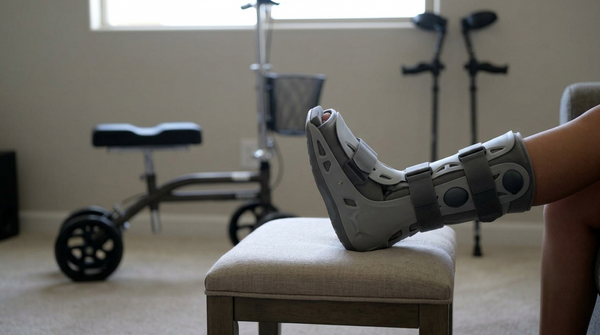
Decide on crutches, a knee scooter, or both. Many bunion patients like a knee scooter for getting around the house and crutches for tight spaces and stairs. Have your mobility aid fitted and ready before surgery, not after.
Stock up ahead of time. Pre-cook a few meals, move everyday items to counter height, and clear rugs and cords from your main walking paths so you are not navigating trip hazards on one foot.
Why Crutch Choice Matters
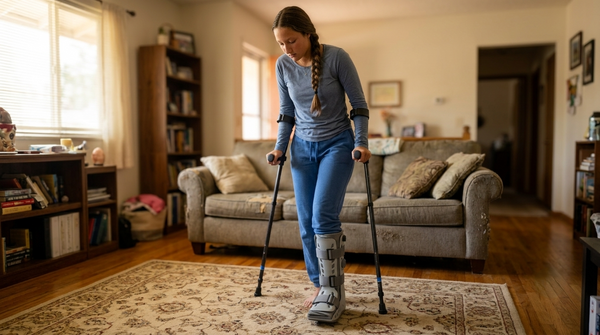
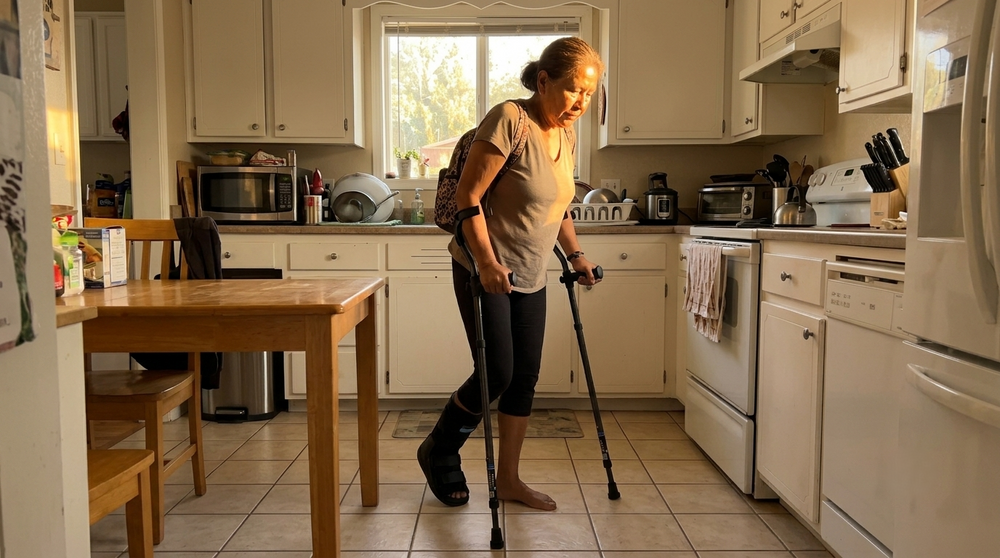
Bunion surgery patients often skew a little older, and the crutch phase can be genuinely rough on the hands, wrists, and shoulders. All the weight that used to go through your foot now runs through your arms, and standard underarm crutches were built to be cheap and universal, not to carry someone comfortably for weeks. By the second week, sore palms, aching shoulders, and the tingling that comes from leaning on the underarm pads are common. That underarm pressure can even irritate a nerve, a problem known as crutch palsy.
That is the gap we set out to close with the In-Motion crutch. The spring-assist post built into the lower shaft absorbs the impact of each step and returns some of that energy on the upswing, so your hands and shoulders take less of a beating. The contoured hand grips are angled to keep your wrist in its natural position instead of kinking it back, which is where a lot of the hand and wrist pain starts. It holds up to 350 pounds and comes in forearm and underarm models, so you can match it to your recovery.
Whether you use them the whole time or alongside a knee scooter, the crutches you lean on for weeks are worth getting right. Shop crutches for bunion surgery recovery →
When to Call Your Surgeon
Call your surgeon or seek care right away if you notice:
- New redness, warmth, or drainage from the incision, or a foul smell. Foot incisions are prone to infection and need prompt attention.
- Calf pain, swelling, warmth, or tenderness. This can signal a deep vein thrombosis, a blood clot, which is a risk when a foot is immobilized.
- Sudden shortness of breath or chest pain. Call 911. This can mean a pulmonary embolism.
- Numbness, tingling, or a color change in the toes, which can mean a dressing or boot is too tight.
- Fever above 101 degrees Fahrenheit, or pain that spikes rather than slowly settling.
The Bottom Line
Bunion surgery is not major, but the recovery is a real one, measured in months rather than weeks. The bone needs to heal in its new position, and the patients who do best are the ones who respect the protected phase and resist the urge to test the foot early.
The crutch phase is the hardest stretch, and it is temporary. Stay off the foot as directed, keep it elevated, and let your follow-up visits be your green light. Do that, and most people come through bunion surgery with a straighter, more comfortable foot and are glad they had it done.
Frequently Asked Questions
How long will I be on crutches after bunion surgery?
It depends heavily on the procedure. With some minimally invasive techniques you may be off crutches within a couple of weeks, while more traditional corrections can keep you off the foot for closer to six weeks before you progress to full weight. Ask your surgeon which technique you are having.
When can I walk normally after bunion surgery?
Most people reach full weight-bearing somewhere around twelve weeks with a traditional correction, then keep building toward normal walking over the following months. Full recovery, including swelling settling, often takes up to six months.
Can I put weight on my foot right after bunion surgery?
Only if your surgeon specifically clears you for it, usually in a stiff protective shoe. Putting weight on the foot too early can shift the corrected bone and undo the surgery, so follow your weight-bearing instructions exactly.
Is a knee scooter better than crutches after bunion surgery?
Many patients use both. A knee scooter is easier for longer distances and keeps weight off the foot without loading your arms, while crutches handle stairs and tight spaces. If you are on crutches for any real length of time, comfortable, well-fitted ones make a big difference.
Why is my foot still swollen months after bunion surgery?
Foot and toe swelling after bunion surgery is normal and can linger for months, often worse at the end of the day. Keeping the foot elevated, wearing supportive shoes, and following your surgeon's guidance all help it resolve over time.