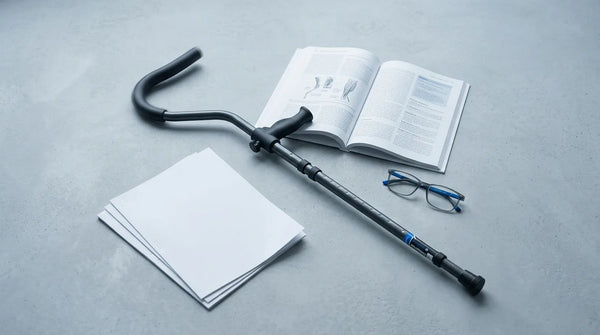
If you've heard the term "Lofstrand crutch" and had no idea what it meant, you're not alone. It sounds technical, maybe a brand name. But it's actually pretty simple: Lofstrand crutches are forearm crutches. Same thing, different name.
The name stuck around from the 1940s when a guy named A.R. Lofstrand Jr. invented and patented the forearm crutch design. These days most people call them forearm crutches or elbow crutches, but "Lofstrand" still shows up in medical settings and on prescription paperwork, which is usually what sends people to Google in the first place.
So let's break down what they actually are, how they compare to standard crutches, and whether they might be the right choice for you.
What Makes a Crutch a "Lofstrand" Crutch
The defining feature is the forearm cuff, a metal or plastic band that wraps around your forearm, just below the elbow. You grip a handle lower down and use both the grip and the cuff together to bear weight and stay balanced.
Standard crutches (the kind you get from the hospital after a sprain or surgery) tuck up under your armpit. Lofstrand crutches don't touch your armpit at all. The weight goes through your forearm and hands instead.
The other thing that sets them apart is the cuff design itself. It's open at the top, which means you can slip your arm out quickly, to open a door, grab something off a shelf, catch yourself. With underarm crutches, you're either leaning them against the wall or dropping them. With forearm crutches, they stay on your arm when you let go of the grip. That sounds like a small thing until you've been on crutches for three months and you're trying to do everything one-handed.
A Brief History (Worth Knowing)
Before 1945, crutches were essentially just wooden poles with a padded armpit rest. They got the job done for short-term use, but long-term crutch users, people with polio, spinal conditions, or permanent mobility impairments, had very few good options.
Lofstrand's design changed that by moving the load off the armpit and onto the forearm. Less nerve compression, better posture, more natural gait. The design spread quickly through rehabilitation medicine and has barely changed since. In most of Europe and Australia, forearm crutches are just "crutches", the underarm kind is the unusual one.
Forearm Crutches vs. Standard Underarm Crutches
This is what most people actually want to know. The short version: if you need crutches for a few weeks, either one works. If you're going to be on them for months, or indefinitely, forearm crutches are usually the better call. Here's why:
|
Forearm (Lofstrand) |
Standard Underarm |
| Weight goes through |
Forearm and hands |
Armpits and hands |
| Best suited for |
Long-term or permanent use |
Short-term recovery (weeks) |
| Armpit pressure |
None |
Constant, nerve risk over time |
| Hands-free moments |
Yes, cuff keeps crutch on arm |
No, must lean or set down |
| Learning curve |
A few days to get comfortable |
Intuitive for most people right away |
| Walking pattern |
More natural stride |
Pronounced swing-through |
| In-Motion Pro option |
✓ In-Motion Pro Forearm Crutch |
✓ In-Motion Pro Underarm Crutch |
The one real downside of forearm crutches is the learning curve. They take a little more balance and coordination up front. Most people feel completely comfortable with them within two to three days, but the first day can be awkward. If you're only going to need crutches for two or three weeks and you've used underarm crutches before, it might not be worth the adjustment period. If you're looking at months of use, the learning curve pays off fast.
Who Should Be Using Forearm Crutches
There's no official rule that says forearm crutches are only for certain people. But in practice, they tend to be a much better fit for some situations than others.
- You're going to be on crutches for more than 6–8 weeks. Underarm crutches start causing problems after that, numbness in the hands, soreness in the armpits, tingling in the fingers. That's the axillary nerve getting compressed. Forearm crutches don't do that.
- You use crutches permanently. Anyone relying on crutches as a long-term mobility aid, whether from a spinal cord injury, MS, post-polio syndrome, or something else, is almost always better served by forearm crutches.
- You're active and want to stay that way. Forearm crutches let you move faster, navigate stairs more easily, and use your hands more freely. If you're the type who wants to get back to your life rather than shuffle around cautiously, they fit that mindset.
- You've already had numbness or tingling from standard crutches. That's a warning sign. It means the radial nerve running through your armpit is getting pinched. Switching to forearm crutches takes that pressure off entirely.
How to Get the Fit Right
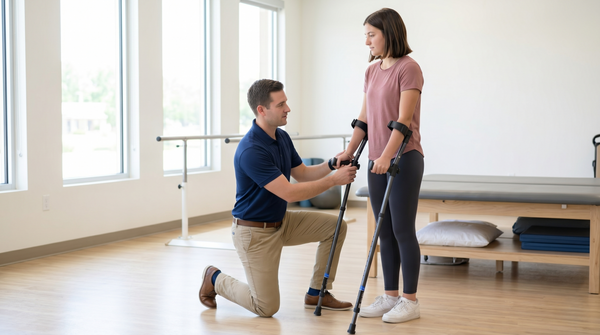
A poorly fitted forearm crutch is uncomfortable in different ways than a poorly fitted underarm crutch, but it's just as bad. There are three things to get right:
Crutch height
Stand in the shoes you'll actually be wearing. The crutch tip should sit about 6 inches out to the side and in front of your foot. The hand grip should line up with the crease of your wrist when your arm hangs relaxed at your side. When you're bearing weight on the grip, your elbow should have a slight bend, about 15 to 30 degrees. A straight, locked elbow means the crutch is too tall.
Forearm cuff position
With your hand on the grip, the cuff should sit 1 to 1.5 inches below your elbow. If the cuff is pressing against your elbow joint or sitting above it, it'll be uncomfortable and restrict your movement. If it's too far down your forearm, you lose control. You want it snug but not tight, you should be able to slide one finger between the cuff and your arm.
Elbow angle under load
This is the check most people skip. Once you've got the crutch set up, put weight on it and look at your elbow. It should be slightly bent, not locked straight, not noticeably bent. If someone's watching from the side, it should look relaxed. A locked straight elbow means the crutch is too tall and you're going to end up with shoulder pain.
| What to check |
What you're looking for |
How to check it |
| Cuff position |
1" to 1.5" below elbow |
Hand on grip, crutch tip on floor |
| Elbow angle while bearing weight |
15° to 30° of bend |
Have someone look at your elbow from the side |
| Grip height |
Lines up with wrist crease |
Stand relaxed, arm at side |
| Cuff snugness |
Snug, one finger fits between cuff and arm |
Check with your free hand |
Using Forearm Crutches on Stairs
The rule is simple: lead with your good leg going up, lead with your crutches going down. People remember it as "good news goes up, bad news goes down."
Going up
- Start at the bottom step with both crutches on the lower level.
- Step up with your stronger leg first.
- Press through the grips and bring your weaker leg and the crutches up to join it.
- One step at a time, there's no prize for rushing.
Going down
- Lower the crutches to the step below first.
- Step down with your weaker leg, following the crutches.
- Bring your stronger leg down to meet it.
- Use the handrail whenever it's there. That's what it's for.
The open cuff on forearm crutches actually helps on stairs, if you need to grab the railing with both hands for a moment, you can. The crutch stays on your arm while your hand lets go of the grip.
What to Look for in a Forearm Crutch
Not all forearm crutches are built the same. The cheap ones from a pharmacy or online marketplace work fine for a few weeks. For anything longer than that, you start noticing the difference.
The In-Motion Pro Forearm Crutch from Millennial Medical was designed specifically for people who use crutches regularly, not just for a month post-surgery. A few things that stand out:
- The lower post has a built-in spring that absorbs impact when the tip hits the ground and pushes back to help propel you forward. Over the course of a full day on your feet, that adds up. Your arms don't get as tired.
- The crutch tips pivot to stay flat against the ground regardless of the angle you're walking at. Tile, carpet, uneven pavement, they grip. Standard rubber tips don't do this.
- The hand grips are contoured and left/right specific. Most forearm crutch grips are just a straight cylinder. The In-Motion Pro grips are shaped for the actual anatomy of your hand, which matters when you're using them for hours.
- The forearm cuff and hand grip adjust independently. Most crutches adjust as one unit, which means if the grip height is right, the cuff placement might be off, and vice versa. Being able to dial in both separately makes a real difference.
- It folds flat without losing your height settings. Fits in the overhead compartment on a plane, the backseat of a car, or a backpack.
Frequently Asked Questions
Are Lofstrand crutches the same as forearm crutches?
Yes, they're the same thing. "Lofstrand" comes from the inventor who patented the design in 1945, A.R. Lofstrand Jr. You'll also hear them called elbow crutches or Canadian crutches. The design is identical regardless of what name you see on the prescription or in the medical notes.
How do I know if I should use forearm or underarm crutches?
If you're recovering from something and you'll be off crutches in four to six weeks, either type works fine. If you're looking at months of use, or if you need crutches permanently, forearm crutches are almost always worth the switch. They don't put any pressure on the armpit, which matters a lot once you're past the first few weeks of use. Underarm crutches can cause nerve compression and hand numbness when used for extended periods.
Do forearm crutches require more strength than underarm crutches?
A little more forearm and wrist engagement, yes. But it's not as significant as people expect. Most people adjust within a few days. If you have specific concerns about wrist or forearm strength due to an injury or condition, it's worth asking your physical therapist before you switch.
How do I know if my forearm crutches are fitted correctly?
The cuff should sit 1 to 1.5 inches below your elbow. When you're putting weight on the grip, your elbow should have a slight bend, not locked straight. The grip height should roughly line up with your wrist crease when your arm hangs at your side. If you're getting wrist pain or your shoulders are aching after a short time on the crutches, the fit is off.
Can I use forearm crutches permanently?
Absolutely. That's what they were originally designed for. Many people who use crutches as a permanent mobility aid prefer forearm crutches specifically because they're more practical for daily life, hands are freer, the gait is more natural, and there's no long-term nerve compression risk like you'd get with underarm crutches used indefinitely.
Are forearm crutches covered by FSA or HSA?
Yes. Forearm crutches are FSA and HSA eligible medical equipment. You can use your FSA or HSA card directly at checkout on millennialmedical.com, no special forms or reimbursement process needed.