Resource Center — Medical Solutions
Why Surgery Centers Should Rethink the Crutches They Dispense
There's a moment that happens in surgery centers dozens of times a week.
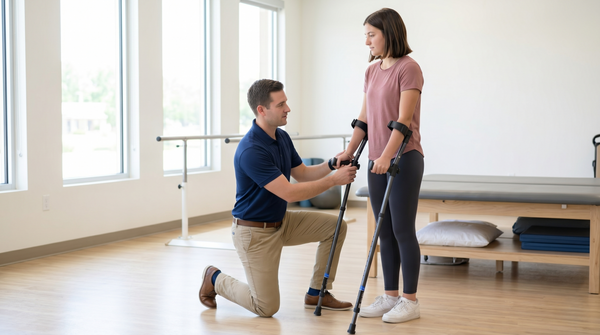
A patient comes out of recovery, groggy and sore, and someone hands them a pair of crutches. A quick fitting. A brief tutorial. And then they're out the door, expected to navigate the rest of their recovery on equipment that was designed before color television existed.
Most surgery centers don't think twice about this moment. They should.
The Crutch Problem Nobody Talks About
Surgery centers invest heavily in surgical outcomes. The equipment in the OR is state of the art. The anesthesia protocols are refined. The post-op care is carefully managed.
And then patients go home on crutches that haven't meaningfully changed since the 1950s.
The standard axillary crutch, the kind most facilities dispense, transfers body weight through the armpit and hands using a rigid, unforgiving frame. The design has three well-documented problems:
Nerve compression. Prolonged pressure on the axillary nerve can cause numbness, tingling, and weakness in the hand and arm, a condition known as crutch palsy. It's more common than most patients realize, and entirely avoidable with the right equipment.
Joint strain from impact. Every step on traditional crutches sends a jolt of force up through the tips, into the hands, wrists, elbows, and shoulders. For a patient already in recovery, this cumulative strain adds unnecessary pain and fatigue to an already difficult experience.
Poor ergonomic fit. Standard crutches are designed around an average body, which means they fit almost nobody perfectly. The result is compensatory postures that strain the back, neck, and shoulders over days and weeks of use.
These aren't edge cases. They're predictable, documented outcomes of a design that simply hasn't kept up with modern ergonomic science.
Why This Is a Surgery Center Problem, Not Just a Patient Problem
When a patient struggles with their crutches, they don't think "these crutches are poorly designed." They think "my recovery is harder than it should be." And they associate that experience with the facility that discharged them.
This matters for three concrete reasons:
Patient satisfaction scores. Post-surgical satisfaction surveys capture the full recovery experience, not just the procedure itself. Crutch-related discomfort is a consistent but invisible drag on scores that most facilities never connect back to the equipment they dispense.
Complication callbacks. Wrist pain, shoulder soreness, and mobility difficulty generate follow-up calls that consume staff time and create unnecessary concern. Many of these calls are equipment problems wearing the mask of medical problems.
Reputation and referrals. Patients talk. A difficult recovery, even one caused entirely by poor equipment, gets attributed to the facility. A smooth recovery gets remembered the same way. The crutches you send patients home with are part of your reputation whether you think of them that way or not.
What Better Crutches Actually Look Like
The technology exists to dramatically improve the crutch experience. Here's what separates a well-designed crutch from the standard issue:
Spring-assist shock absorption. Rather than transferring impact directly into the user's joints, spring-assisted crutches absorb and return energy with each step. The result is a dramatically smoother gait, less fatigue, and significantly reduced strain on the wrists, shoulders, and arms.
Ergonomic grip design. Properly angled hand grips align the bones of the wrist and hand naturally, reducing pressure on the carpal tunnel area. This is particularly important for patients who will be on crutches for more than a week.
Extended sizing range. Crutches that fit patients across a wide height range, including taller individuals who are routinely underserved by standard options, ensure a proper fit for every patient, not just average-height ones.
Clinical backing. Millennial Medical's In-Motion crutches were developed through 34 medical studies specifically examining the harmful side effects of traditional crutch design. That research is built into every aspect of the product, it's not a marketing claim, it's the foundation of the design.
Making the Switch Is Simpler Than You Think
Surgery centers often assume that upgrading dispensed equipment means a complicated procurement process, new vendor relationships, and staff retraining. In practice, switching to better crutches is straightforward.
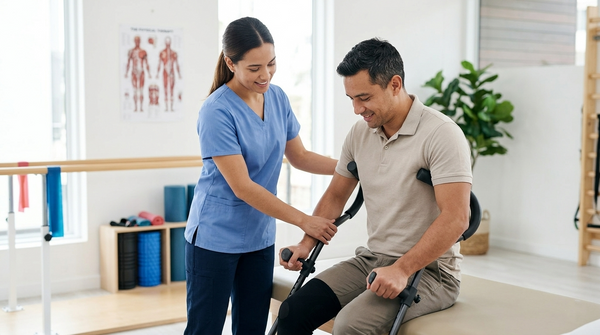
Millennial Medical works directly with surgery centers to make the transition easy, including wholesale pricing, sample programs, and direct support for staff who fit and dispense crutches to patients. The equipment change takes minutes to implement. The improvement to patient experience starts immediately.
The crutches you send patients home with are the last thing they experience at your facility and one of the first things they use every day during recovery. That moment deserves the same attention you give everything else.
Ready to Upgrade What You Dispense?
We'd love to show you what in-Motion crutches from Millennial Medical crutches can do for your patients' recovery experience. Request a sample set, ask about wholesale pricing, or schedule a quick call with our team.
Join Our Vendor Community - Millennial Medical
Shop Easy Adjustable Crutches Direct from our website
We offer both forearm and underarm crutches, new and refurbished, designed for ergonomic comfort and easy sizing. Buy from directly from us and you will receive the best customer service in the world and experience durability, comfort and style when using our crutches! We will support you wherever your adventures take you!
Shop Now!
Be kind.
Be generous.
Always pay it forward.
Support for Life’s Adventures