Are Crutches FSA and HSA Eligible? Yes. Here's What to Know
Yes, crutches are FSA and HSA eligible. This is not a gray area or a technicality you need to argue with your plan administrator. Crutches are durable medical equipment (DME), they are explicitly covered under IRS Publication 502, and no prescription is required to make the purchase.
What most people miss is how much this actually saves them. If you are in a 22% tax bracket and spend $139 on a pair of crutches, you do not actually spend $139. You spend closer to $108 in real dollars. The difference is the tax you already paid on that money, which you get to skip entirely when you use your FSA or HSA. For a lot of people, that savings covers the full cost of the cheaper option they were going to settle for.
This guide breaks down why crutches qualify, how each account type works, and what documentation you need to keep.
These numbers assume you are using pre-tax dollars that you would otherwise have paid income tax on. Most working adults with an employer-sponsored FSA or an HSA tied to a high-deductible health plan fall into the 22% to 32% range.
For context, a single urgent care visit with insurance often runs $75 to $150 in co-pays. A premium pair of crutches costs about the same as one of those visits, bought with money that would otherwise have gone to taxes.
The Short Answer: Yes, Crutches Are Eligible
The IRS defines eligible medical expenses in Publication 502. That publication includes durable medical equipment, which covers devices needed for medical reasons that can withstand repeated use. Crutches fit this definition directly. They are not a borderline case. The one thing that used to make people hesitate was the prescription requirement. Before 2020, some FSA and HSA plans required a doctor's prescription before reimbursing a medical device purchase. The CARES Act changed that. Since January 1, 2020, you no longer need a prescription to use FSA or HSA funds for medical devices, including crutches. You can purchase them directly, without a prescription, and the purchase is fully eligible. If you have a doctor's recommendation in writing, keep it. It strengthens your documentation if your account is ever audited. But it is not required.What "Eligible" Actually Means for Your Wallet
When people say a product is FSA or HSA eligible, what they mean is that you can pay for it with pre-tax dollars. That is where the real savings show up. Here is how it works: money contributed to your FSA or HSA is not subject to federal income tax. When you use that money to buy something eligible, you effectively get a discount equal to your tax rate. For a pair of in-Motion crutches at $139:| Tax Bracket | Effective Cost After Tax Savings |
|---|---|
| 22% | $108.42 |
| 24% | $105.64 |
| 32% | $94.52 |
FSA Eligibility for Crutches
A Flexible Spending Account (FSA) is an employer-sponsored benefit. You elect a contribution amount at the start of the plan year, and that money is deducted from your paycheck before taxes. The full elected amount is typically available to you on day one of the plan year, even if you have not yet contributed all of it. Crutches are a fully eligible expense under any FSA that covers medical expenses (sometimes called a Health Care FSA or General Purpose FSA). There is no ambiguity here. The most important thing to know about FSAs: they are use-it-or-lose-it. If you do not spend the money by your plan's deadline, you forfeit it. Most FSA plans run on a calendar year with a December 31 deadline. Some employers offer a 2.5-month grace period, which extends the deadline to around March 15. Others offer a rollover option that lets you carry up to $640 (the 2025 IRS limit) into the following year. Check your plan documents to know which option your employer uses. If you are sitting on FSA funds that are about to expire, crutches are an excellent eligible purchase, especially if you are recovering from surgery or an injury, or if you want to have a quality pair on hand. How to pay: Most plans issue an FSA debit card that draws directly from your account balance. You can use it like a Visa or Mastercard at checkout, including for online purchases. If you pay out of pocket first, you can reimburse yourself by submitting a receipt through your plan's portal.HSA Eligibility for Crutches
A Health Savings Account (HSA) works differently from an FSA in a few important ways. To contribute to an HSA, you must be enrolled in a High Deductible Health Plan (HDHP). You own the account, not your employer, which means the money stays with you when you change jobs. The tax advantage of an HSA is often described as "triple tax advantaged":- Contributions are tax-deductible (or pre-tax if made through payroll)
- Earnings and interest grow tax-free
- Withdrawals for eligible medical expenses are tax-free
What Documentation You Need
FSA and HSA administrators may audit your purchases. If you are selected for an audit, you will need to show that the expense was a legitimate medical purchase. Here is what to keep:- An itemized receipt showing the merchant name, date of purchase, item description, and total amount paid
- Your order confirmation email if you purchased online (screenshot it and save it somewhere you can find)
- Any doctor recommendation or prescription if you have one, even though it is no longer required
The Crutch Worth Using Your FSA or HSA On
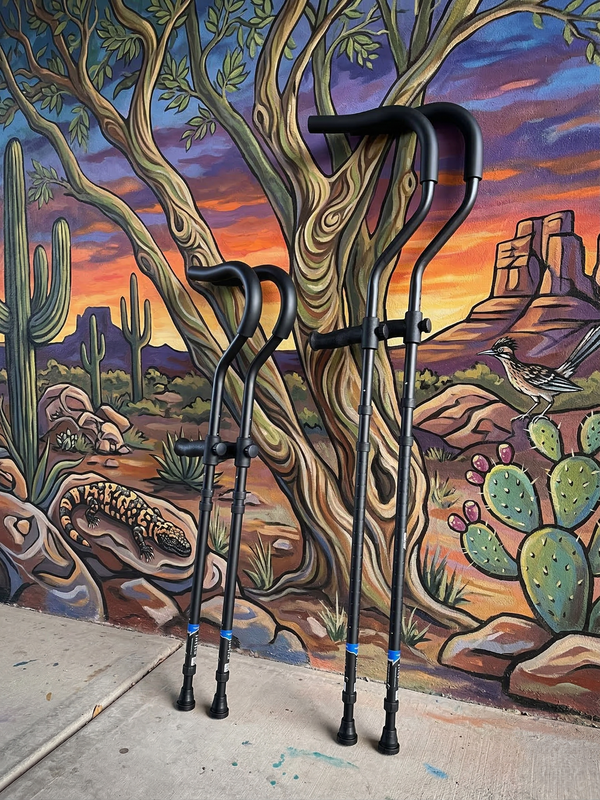
If you are going to spend tax-free dollars, spend them on something that actually works. The in-Motion crutch from Millennial Medical is not a standard aluminum crutch. The forearm model (HCPCS E0110) features an ergonomic grip, shock-absorbing design, and weight distribution that significantly reduces fatigue and upper-body strain. The spring-assisted underarm model (HCPCS E0117) provides mobility support with the same focus on long-term comfort. These crutches are clinically studied, designed for people who need to stay mobile through recovery, and built to last. At $139 per pair before your tax savings, the forearm model costs about what you would pay for a single specialist visit, and far less than losing weeks of function because standard crutches wore you out. You worked to earn that FSA and HSA money. Spend it on equipment that earns it back. Shop in-Motion Crutches at Millennial MedicalMore in This Series
Part of Millennial Medical's guide to using FSA and HSA dollars on crutches:
- Are Crutches FSA and HSA Eligible? Yes. Here's What to Know (you are here)
- How to Pay for Crutches With Your FSA or HSA Card
- FSA vs. HSA for Crutches: Which Account Saves You More?
- FSA Expiration: Don't Let Your Tax-Free Dollars Go to Waste on the Wrong Crutches
- HSA and Crutches: Why Quality Mobility Aids Are a Smart HSA Purchase
- Best Crutches to Buy With FSA or HSA Dollars (2026 Guide)
This guide is part of our FSA and HSA Resource Hub, where you'll find every option for getting crutches covered.