How to Pay for Crutches With Your FSA or HSA Card (Step by Step)
Most people have had an FSA or HSA card in their wallet for years and have never used it to buy something online. The process feels uncertain. Will the card work? Do you need a prescription? What if something goes wrong?
It turns out the process is simple, and crutches are one of the cleanest FSA and HSA purchases you can make. They are explicitly eligible durable medical equipment. There is no ambiguity, no pre-approval required, and no prescription needed.
Here is exactly how to do it, from start to finish.
Step 1: Confirm the Crutch Is Eligible (It Is)
Before spending tax-free dollars on any medical product, it is worth confirming eligibility. For crutches, the answer is definitive. Crutches qualify as durable medical equipment under IRS Publication 502. That is the IRS document that governs what FSA and HSA funds can legally be spent on. Durable medical equipment means a device that is medically necessary, durable enough to withstand repeated use, and not generally used in the absence of illness or injury. Crutches meet all three criteria. Since the CARES Act took effect on January 1, 2020, you no longer need a doctor's prescription to use FSA or HSA funds on a medical device. You can purchase crutches directly and the transaction is fully eligible. If your doctor gave you a recommendation or a prescription anyway, keep it. It is good supporting documentation, but it is not a requirement. The in-Motion crutch models from Millennial Medical carry the HCPCS codes used for DME billing: the forearm model is E0110 and the spring-assisted underarm model is E0117. These codes confirm their status as recognized durable medical equipment.Step 2: Choose Your Crutch Before the Deadline
If you have an FSA: check your deadline before you buy. FSA funds do not roll over the way HSA funds do. Most plans run on a calendar year with a December 31 cutoff. Some employers add a 2.5-month grace period (extending to around March 15), and some allow a limited rollover of up to $640 per year. If you are unsure which option your plan uses, log in to your FSA portal or check your benefits documents. If you are approaching the end of a plan year with unspent FSA funds, crutches are a legitimate, practical use of that money, especially if you are recovering from surgery, dealing with a chronic condition, or just want a quality pair on hand for emergencies. If you have an HSA: there is no deadline. Your funds roll over indefinitely. You can buy now or wait. That said, if you need crutches today, there is no reason to pay out of pocket when the tax-free money is already sitting in your account.Step 3: Pay With Your FSA or HSA Debit Card
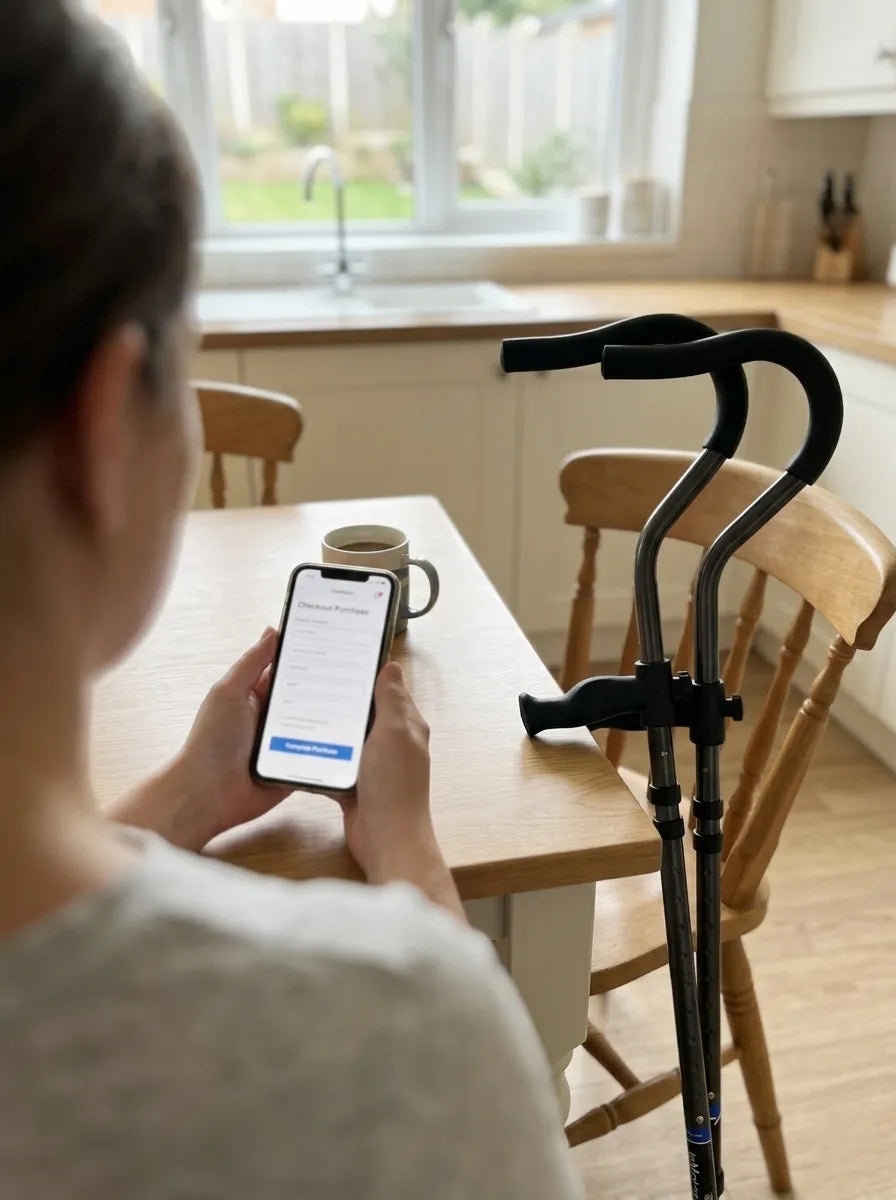
Your FSA or HSA plan issues a debit card linked to your account balance. It works exactly like a Visa or Mastercard at checkout. At millennialmedical.com, you can use your FSA or HSA debit card at checkout as you would with any standard debit card. Enter the card number, expiration date, and CVV when prompted. The charge is drawn directly from your FSA or HSA balance. You do not need to enter any special codes, submit documentation ahead of time, or contact your plan administrator before making the purchase. The card handles the transaction automatically. The merchant category code for a medical equipment retailer typically signals to FSA and HSA networks that the purchase is eligible. Most transactions process without any friction.What If Your Card Gets Declined?
It happens occasionally, and it does not mean you have done anything wrong. Here are the two most common reasons and how to resolve each one. Reason 1: Merchant category code mismatch. Some FSA and HSA networks use the SIGIS (Special Interest Group for IIAS Standards) system to automatically approve purchases at eligible merchants. If a merchant is not in the SIGIS database or if there is a mismatch in the merchant category code, the card may decline even for an eligible purchase. Reason 2: Insufficient balance. Your FSA balance may be less than you expected, particularly near the end of the year. HSA accounts only have access to funds that have actually been deposited, not the full annual election. What to do: pay out of pocket with a regular debit or credit card, and then submit for reimbursement through your plan's portal. This is a standard process and fully allowed. Here is how it works:- Complete your purchase normally and save your receipt
- Log in to your FSA or HSA administrator's online portal or app
- Find the "Submit Claim" or "Request Reimbursement" section
- Upload your receipt and fill in the purchase details (date, amount, item description)
- Select your bank account for the reimbursement
- The reimbursement typically arrives in 3 to 5 business days
What Documentation to Save
FSA and HSA administrators can audit purchases, even ones made with the debit card. The IRS can also request documentation if it questions a deduction. Here is what to hold onto:- Your itemized receipt, showing the merchant name, date, item description, and total amount. If you purchased online, this is typically your order confirmation email.
- A screenshot of your order confirmation page. Save it to a folder on your computer or cloud storage the same day you buy.
- Any doctor's recommendation, if you have one. Not required, but useful if questions arise.
The in-Motion Crutch: An Easy FSA and HSA Purchase
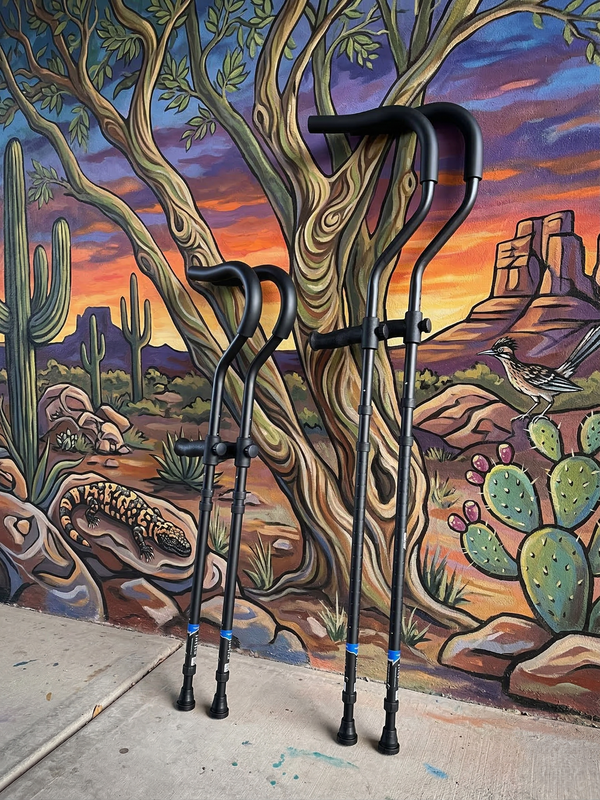
If you are going to use your tax-free dollars on medical equipment, use them on something worth having. Standard hospital crutches are uncomfortable by design. They are made to move inventory, not to support long recoveries. The in-Motion crutch is built differently. The forearm model (HCPCS E0110) features an ergonomic arm cuff, shock-absorbing construction, and a grip design that reduces wrist and shoulder strain. The spring-assisted underarm model (HCPCS E0117) provides the same quality engineering in a traditional underarm format. These are crutches clinically studied for real-world use. They are HCPCS coded, FSA and HSA eligible, and available directly from Millennial Medical. At $139 per pair before your tax savings, they are one of the most practical uses of pre-tax healthcare dollars you will find. You already set aside that FSA money. You already made your HSA contributions. This is exactly what that money is there for. Shop in-Motion Crutches at Millennial MedicalMore in This Series
Part of Millennial Medical's guide to using FSA and HSA dollars on crutches:
- Are Crutches FSA and HSA Eligible? Yes. Here's What to Know
- How to Pay for Crutches With Your FSA or HSA Card (you are here)
- FSA vs. HSA for Crutches: Which Account Saves You More?
- FSA Expiration: Don't Let Your Tax-Free Dollars Go to Waste on the Wrong Crutches
- HSA and Crutches: Why Quality Mobility Aids Are a Smart HSA Purchase
- Best Crutches to Buy With FSA or HSA Dollars (2026 Guide)
This guide is part of our FSA and HSA Resource Hub, where you'll find every option for getting crutches covered.