Best Crutches Medicare Will Help Pay For (and How to Get the Ones You Actually Want)
Best Crutches Medicare Will Help Pay For (and How to Get the Ones You Actually Want)
Why standard hospital crutches work against older adults, what makes a crutch genuinely better for long-term use, and the exact coverage pathway that puts a premium model in reach.
When a hospital hands you a pair of crutches on the way out the door, they are almost always basic aluminum underarm crutches. Medicare covers them. They are cheap, they are available everywhere, and they are widely considered to be one of the least comfortable mobility aids for anyone who needs them for more than a few days.
What is wrong with standard underarm crutches
Underarm crutches, also called axillary crutches, are the style most people picture. They are widely available and inexpensive. They also have well-documented drawbacks for long-term or older users:
- Nerve compression. Resting body weight on the underarm pad presses on the nerves in the armpit. This can cause temporary or lasting numbness and weakness in the hand, a condition sometimes called crutch palsy.
- Hand and wrist strain. The repetitive load through the hands and wrists leads to soreness and fatigue, which is especially problematic for people with arthritis or reduced grip strength.
- Fall risk. Crutches demand upper-body strength and coordination. Older adults may not have the torso strength to use them safely, and the forward-lean posture they require can be unstable.
Why forearm crutches are better for the long haul
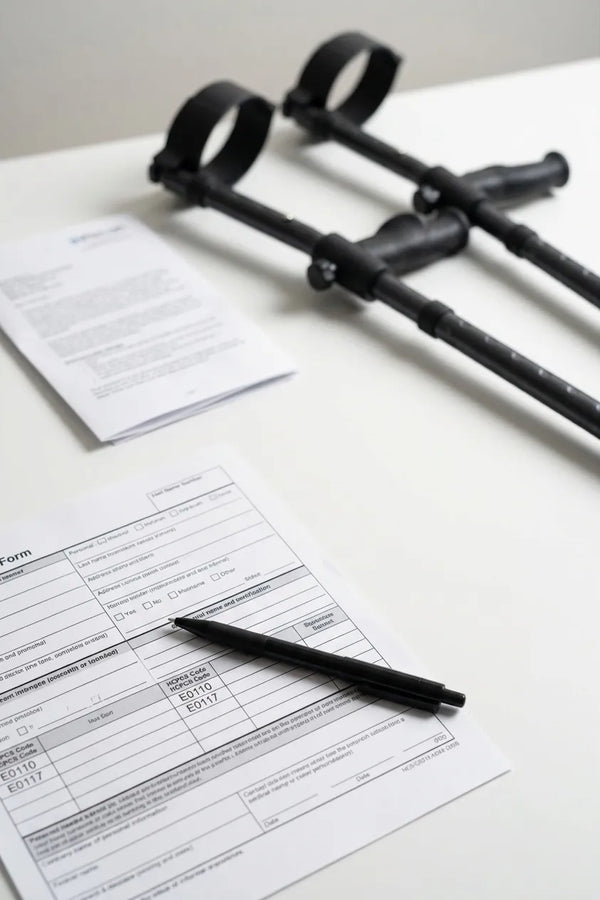
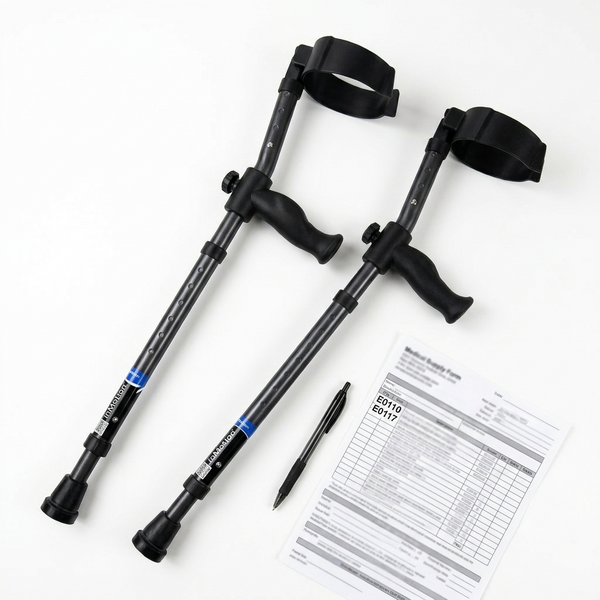
For anything beyond a short recovery, forearm crutches are widely considered the better choice. They avoid pressure on the underarm nerves, put the user in a more upright posture, and are lighter and easier to maneuver. Because the forearm cuff bears the weight rather than the wrist and hand alone, they are also more comfortable for people with arthritis or hand weakness.
Forearm crutches are not perfect either. Because more load goes through the hands and forearms, grip comfort and cuff design matter. The quality difference between a basic forearm crutch and a well-engineered one shows up in longer use.
Where in-Motion fits
Millennial Medical's in-Motion crutches were developed through 34 clinical studies to reduce the load and impact on the upper body compared with standard crutches. The forearm model is engineered to further reduce hand and wrist fatigue. For a Medicare patient, the practical playbook looks like this: the forearm model is the covered path, so you get Medicare coverage and a better crutch than the hospital default.
For a Medicare patient, the practical playbook looks like this: the forearm model is the covered path, so you get Medicare coverage and a better crutch than the hospital default. If you also have Medicaid, the dual-eligibility pathway may open access to the spring-assisted underarm model that Medicare won't cover on its own.
Frequently asked questions
What are the best crutches for seniors?
For anything beyond short-term use, forearm crutches are generally easier on the body than underarm crutches, since they avoid underarm nerve pressure and are lighter and more maneuverable. Comfort-focused designs like the in-Motion line further reduce hand and wrist strain.
Will Medicare pay for more comfortable crutches?
Medicare covers forearm crutches as standard equipment, which are already more comfortable for long-term use than basic underarm crutches. For premium models, ask about the ABN upgrade pathway.
Are in-Motion crutches covered by Medicare?
The in-Motion forearm model fits the covered forearm code. The spring-assisted underarm model is usually an upgrade option, though the dual-eligibility pathway may cover it for patients with both Medicare and Medicaid.
This article is general education, not a guarantee of coverage. Medicare and Medicaid rules change and vary by plan, state, and region. Always confirm coverage and costs with your plan and your supplier before you receive equipment.
Be kind. Be generous. Always pay it forward.
Part 1: Does Medicare Cover Crutches? A Complete 2026 Guide
Part 2: How Much Do Crutches Cost With Medicare? (2026 Out-of-Pocket Breakdown)
Part 3: How to Get Crutches Through Medicare: A Step-by-Step Guide
Part 4: Crutch HCPCS Codes Explained: E0110 vs. E0117 (and Why It Matters)
Part 5: Does Medicaid Cover Crutches? Coverage, Prior Authorization & Dual Eligibility
Part 6: Best Crutches Medicare Will Help Pay For (and How to Get the Ones You Actually Want)
See also our companion Veterans Benefits series on crutch coverage through the VA and TRICARE.
More in This Series: Medicare & Crutches
- Does Medicare Cover Crutches? A Complete 2026 Guide
- How Much Do Crutches Cost With Medicare? (2026 Out-of-Pocket Breakdown)
- How to Get Crutches Through Medicare: A Step-by-Step Guide
- Crutch HCPCS Codes Explained: E0110 vs. E0117 (and Why It Matters)
- Does Medicaid Cover Crutches? Coverage, Prior Authorization & Dual Eligibility
This guide is part of our Medicare and Medicaid Crutch Hub, where you'll find every option for getting crutches covered.