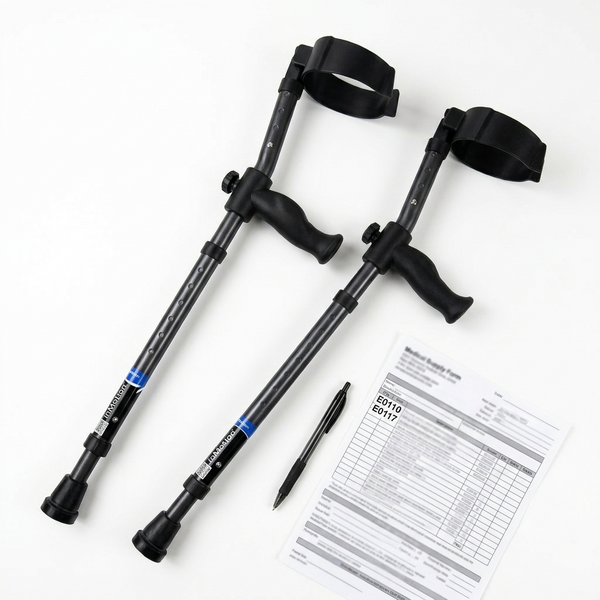
Does Medicaid Cover Crutches? Coverage, Prior Authorization & Dual Eligibility
Does Medicaid Cover Crutches? Coverage, Prior Authorization & Dual Eligibility
How Medicaid covers crutches, why prior authorization matters, and the dual-eligibility pathway that can pay for a premium model Medicare won't touch.
Medicaid covers crutches in most states, but the process looks different from Medicare, and it varies depending on your state and the type of crutch you need. The short version: yes, you can usually get crutches through Medicaid, but you will want to know the prior authorization rules before you expect the claim to go through.
The short answer
Yes, Medicaid generally covers crutches as durable medical equipment. Crutches, canes, and walkers are typically listed as covered items in state Medicaid manuals. The coverage pathway usually requires a provider order, a finding of medical necessity, and in many states, prior authorization from the Medicaid program before delivery.
The typical Medicaid process
Across most states, getting crutches covered by Medicaid follows a recognizable path:
- Face-to-face evaluation. Your provider examines you and determines that crutches are medically necessary for use in your home.
- Detailed written order. The provider issues an order that specifies the equipment, your diagnosis, and the expected duration of use.
- Prior authorization. For many items, the supplier must request prior authorization from your state Medicaid program before delivering the crutches. Delivering without prior authorization often means the claim will be denied.
- Delivery by an approved supplier. You obtain the crutches from a supplier enrolled in your state's Medicaid program.
How states define crutch coverage
State manuals often spell out when each type of crutch is covered. As one representative example, Mississippi's Medicaid manual covers underarm crutches for short-term use but specifies forearm crutches for long-term mobility needs. Your state may have similar distinctions.
Because of this variation, the most reliable move is to confirm your own state's rules, or have your supplier verify coverage before the order is placed.
The dual-eligibility pathway
Here is the part that matters most for getting a better crutch. If you have both Medicare and Medicaid, Medicaid acts as secondary payer for items Medicare covers. But for items Medicare denies outright, Medicaid evaluates coverage on its own terms. The spring-assisted underarm crutch (code E0117) is a good example: Medicare generally won't pay for it, but some state Medicaid programs will cover it after the Medicare denial, especially when medical necessity is well documented.
This is exactly the route that can pay for a spring-assisted underarm crutch (code E0117) that Medicare generally will not reimburse. The path is: Medicare denial, Medicaid prior authorization request, Medicaid approval, delivery by an enrolled supplier.
If you are denied
If Medicaid denies coverage, you should receive a written explanation of the reason and information on how to appeal. The most common reasons for denial are lack of prior authorization, insufficient medical necessity documentation, or the item falling outside the state's covered equipment list. Each of these has a potential remedy.
Frequently asked questions
Does Medicaid cover crutches?
In most states, yes. Crutches are generally covered as durable medical equipment, though rules and prior authorization requirements vary by state.
Does Medicaid require prior authorization for crutches?
Often yes. Many states require the supplier to obtain prior authorization before delivering crutches, especially for forearm or customized models.
Can I get a spring-assisted crutch if I have Medicare and Medicaid?
Possibly. If Medicare denies the spring-assisted code, Medicaid may cover it where your state allows, using the denial as the basis for review.
This article is general education, not a guarantee of coverage. Medicare and Medicaid rules change and vary by plan, state, and region. Always confirm coverage and costs with your plan and your supplier before you receive equipment.
Be kind. Be generous. Always pay it forward.
Part 1: Does Medicare Cover Crutches? A Complete 2026 Guide
Part 2: How Much Do Crutches Cost With Medicare? (2026 Out-of-Pocket Breakdown)
Part 3: How to Get Crutches Through Medicare: A Step-by-Step Guide
Part 4: Crutch HCPCS Codes Explained: E0110 vs. E0117 (and Why It Matters)
Part 5: Does Medicaid Cover Crutches? Coverage, Prior Authorization & Dual Eligibility
Part 6: Best Crutches Medicare Will Help Pay For (and How to Get the Ones You Actually Want)
See also our companion Veterans Benefits series on crutch coverage through the VA and TRICARE.
More in This Series: Medicare & Crutches
- Does Medicare Cover Crutches? A Complete 2026 Guide
- How Much Do Crutches Cost With Medicare? (2026 Out-of-Pocket Breakdown)
- How to Get Crutches Through Medicare: A Step-by-Step Guide
- Crutch HCPCS Codes Explained: E0110 vs. E0117 (and Why It Matters)
- Best Crutches Medicare Will Help Pay For (and How to Get the Ones You Actually Want)
This guide is part of our Medicare and Medicaid Crutch Hub, where you'll find every option for getting crutches covered.