A Caregiver's Guide to Supporting Someone Who Uses Crutches
When someone you love is suddenly on crutches, the job lands on you whether you signed up for it or not. You are the one moving furniture, watching them wobble toward the bathroom at night, and biting your tongue when they refuse help they clearly need. It is a strange kind of work, equal parts logistics and emotion.
Most of it comes down to a balance. You want to keep the person safe without taking over their life, because the goal is not to do everything for them. The goal is to help them get back to doing things for themselves. That line moves day to day, and reading it well is most of the skill.
This guide covers the practical safety work, how to help without smothering, and how to take care of yourself while you do it.
If you are also setting up a home or learning the basics, our guide to walking safely on crutches and the crutch sizing guide are good companions to this one.
The honest answer to “how much should I be doing?”
Less than your instinct says, and more than they will admit they need. Early on, the person leans on you more, for steadying, for carrying, for the things their hands are no longer free to do. As they get steadier, your job shifts from doing to spotting, and then to simply being nearby.
The thing most caregivers learn the hard way is that over-helping slows recovery. Every task you take over is a rep they do not get to practice. Safety first, always, but within that, let them struggle a little with the things that are safe to struggle with. That is how independence comes back.
Make the home safe first
This is the highest-value thing you can do, and you can knock most of it out in an afternoon. Walk the route the person travels most, from bed to bathroom to kitchen to the door, and remove the hazards.
- Take up throw rugs and reroute or tape down any cords across walkways. Loose rugs are one of the most common causes of falls on crutches.
- Keep floors dry and clean up spills immediately, especially in the kitchen and bathroom.
- Add grab bars in the bathroom and a nonslip mat in the tub or shower. The bathroom is where many falls happen, because the space is tight and the surfaces are slick.
- Move daily items to waist height so the person is not reaching, stretching, or balancing on one crutch.
- Place a sturdy chair with armrests where they will rest, so sitting and standing have a solid anchor.
- Light the path, including a night light on the route to the bathroom, since nighttime trips are high risk.
Check the equipment, then check it again
Bad fit and worn parts cause a lot of preventable trouble, and the person using the crutches often cannot see the problem themselves. You can.
- Handgrips should sit at wrist height when the arms hang relaxed, so the elbows bend slightly when gripping. Weight goes through the hands, not the armpits.
- For underarm crutches, there should be a gap of one to two inches between the top pad and the armpit. Leaning into the pad can pinch nerves and cause hand weakness.
- Inspect the rubber tips often. When the tread wears smooth, replace them. Worn tips slip, and a slip is a fall.
- Make sure shoes are supportive with backs, laced or strapped. No loose slippers and no socks on hard floors.
How to help without taking over
This is the emotional core of caregiving, and it is harder than the furniture moving. The person may feel embarrassed, frustrated, or like a burden, and how you help shapes how they feel about themselves.
- Ask before you act. “Want a hand with that?” respects their judgment. Lunging in to grab their arm can throw off their balance and their dignity at the same time.
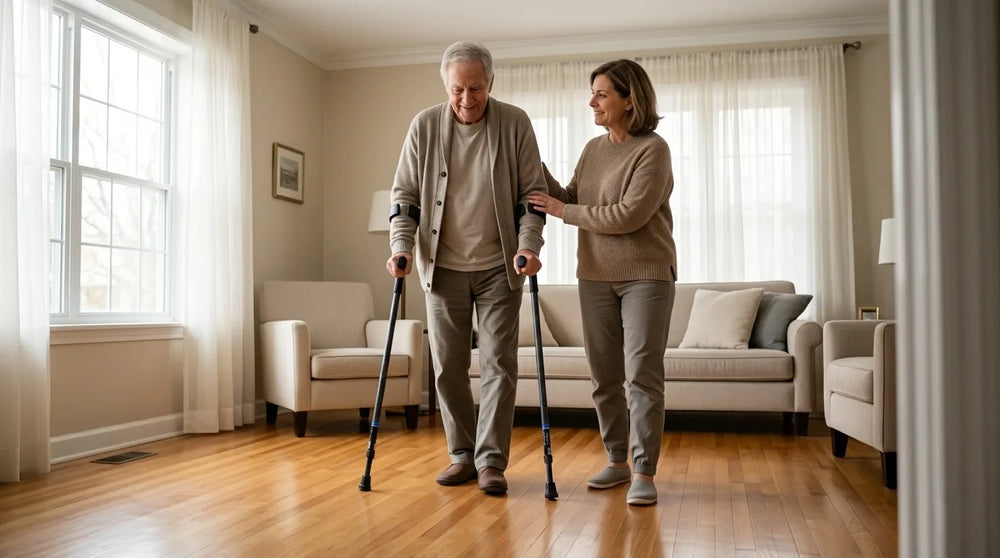
- Spot, do not steer. Walk slightly behind and to the weaker side where you can catch a stumble, rather than holding on and controlling the pace.
- Hand them the win. Let them do the safe tasks even when it is slower. Carrying their own plate to the table is a small victory worth protecting.
- Be the cheerleader. Notice progress out loud. Confidence builds safety, and your encouragement is part of the treatment.
Helping with stairs and getting up
Two moments deserve extra attention, because they carry the most fall risk.
Standing up and sitting down
Teach the person to back up until they feel the seat against their legs, hold both crutches in one hand, reach for the chair arm or a stable surface with the other, and lower themselves under control. Reverse it to stand. Be nearby for the first while.
Stairs
Stairs take strength and balance, and many people want a spotter at first, which is wise. The general pattern is up with the stronger leg leading and down with the crutches leading, with a hand on the railing whenever one exists. Practice together on a few steps before they try a full flight alone.
Why the right crutches make your job easier
If the crutches hurt or force a hunch, the person uses them less, moves less, and leans on you more. Good equipment is quietly one of the best things for both of you, because it keeps the person mobile and independent, which is the whole point.
Forearm crutches let the person free a hand to hold a railing or carry a small item, which reduces how often they need you for the little things. The In-Motion forearm crutch grew out of more than three years of development and 34 medical studies on how crutches load the hands and wrists. The contoured forearm platform and spring-assisted step ease the strain of daily use, which matters most for anyone who will be on crutches for a long stretch. You can compare options at the In-Motion shop.
When to call the doctor
- New numbness, tingling, or weakness in the hand or arm, which can mean a crutch is pressing on a nerve.
- A calf that is swollen, red, warm, or tender, or any sudden shortness of breath or chest pain. These can signal a blood clot, which is a medical emergency. Call for help immediately.
- A fall, especially one with new pain, a head bump, or swelling that was not there before.
- Pain that keeps getting worse, or a person who has stopped moving around because they are afraid to.
Take care of yourself too
You cannot pour from an empty cup, and caregiver burnout is real. Protect your own back when you help with lifts and transfers by keeping the load close and bending at the knees. Accept help from others when it is offered, and ask for it when it is not. Build in breaks. The steadier and more rested you are, the safer and more patient you can be, and the person you are caring for feels that.
The bottom line
Good caregiving on crutches is mostly two jobs done well. Make the environment safe, then help in a way that hands independence back rather than taking it away. Clear the floors, check the equipment, ask before you act, and celebrate the small progress.
Your steady presence, more than any single task, is what gets the person you love back on their feet. And taking care of yourself is part of taking care of them.
Frequently asked questions
How do I help someone on crutches without making them feel helpless?
Ask before you act, spot rather than steer, and let them do the tasks that are safe to do on their own even when it is slower. Your role shifts over time from doing things for them to simply being nearby. Independence is the goal, so protect the small wins.
What are the most important home safety changes?
Remove throw rugs and loose cords, keep floors dry, add grab bars and a nonslip mat in the bathroom, move daily items to waist height, and put a sturdy chair with arms where the person rests. Light the path to the bathroom for nighttime trips.
How can I tell if the crutches fit correctly?
Handgrips should sit at wrist height with the arms relaxed, so the elbows bend slightly, and weight should go through the hands rather than the armpits. For underarm crutches, leave one to two inches below the armpit. Check the rubber tips often and replace them when worn.
Should I help with stairs?
Yes, especially at first. Many people want a spotter for stairs, which is sensible. Stand to support a stumble, keep a hand free, and have the person use the railing. The pattern is up with the stronger leg and down with the crutches. Practice on a few steps together first.
How do I avoid caregiver burnout?
Protect your own body during transfers by keeping loads close and bending at the knees, accept and ask for help, and build in real breaks. Burnout makes you less safe and less patient. Caring for yourself is part of caring for them, not separate from it.