Choosing Crutches Later in Life: Aging, Balance, and Staying Active
Choosing a mobility aid in your sixties, seventies, or beyond is a different decision than it was at twenty. Your priorities have changed. You want to stay active and independent, you want to avoid a fall, and you do not want a piece of equipment that makes you feel older than you are. Crutches can absolutely be part of that picture, but the honest truth is that they are right for some older adults and wrong for others.
This guide is here to help you make that call clearly. We will be straight about who does well on crutches later in life, who is better served by a different aid, and how to stay active and safe whichever way you go. No hard sell. A crutch you cannot use safely is worse than no crutch at all.
Weighing your options more broadly? Our guides to walking safely on crutches and crutch sizing pair well with this one.
The honest answer: are crutches right for you?
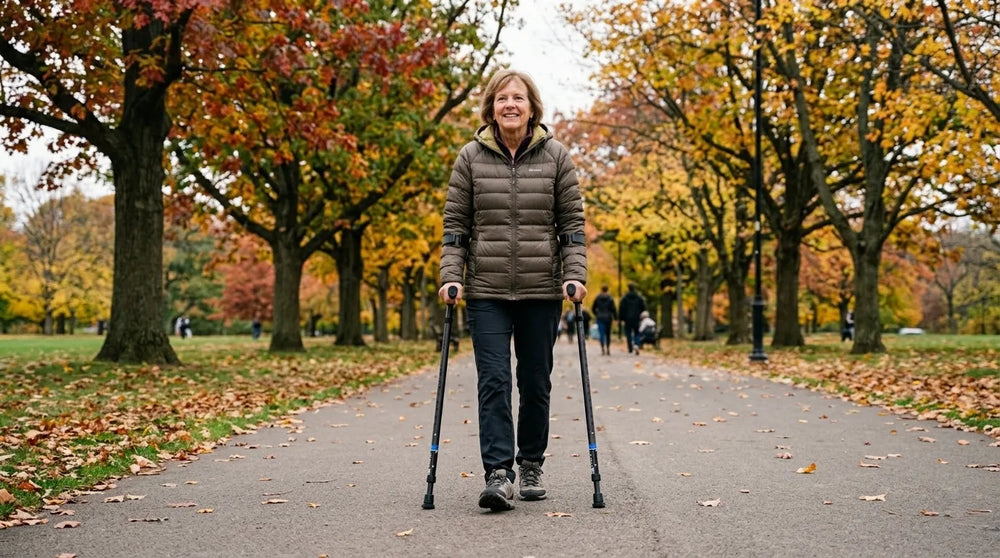
It comes down to two things, upper body strength and balance. Crutches, and forearm crutches in particular, ask your arms and shoulders to do real work and they ask your trunk to stay steady. If you have kept reasonable strength and your balance is decent, crutches can give you something most other aids cannot, which is an upright and natural way of moving.
If your arms have lost significant strength, or your balance is unreliable, crutches may not be the safe choice, and that is not a verdict on you. It is just physics. In that case a rollator or a cane may serve you better. The most useful thing you can do is talk this through with a physical therapist, who can assess your strength and balance and match you to the right aid rather than guessing.
Matching the aid to the need
Different aids solve different problems. Here is the plain version.
Crutches
Best when you need to keep weight off a leg or you want active, upright mobility and you have the upper body strength and balance to manage them. Forearm crutches suit longer-term use better than underarm ones, because they protect the armpit and let you free a hand.
A cane
Best for mild balance help or to take a little load off one leg. Lighter and simpler than crutches, but it gives less support.
A rollator
Best when balance is the main concern and leg strength is limited. It gives a wide, stable base and a seat to rest on. The trade-off is that it is bulkier, it does not handle stairs, and it is not for keeping full weight off a leg. One honest caution: rollators reduce some fall risks but introduce others if used incorrectly, so proper setup and a little training matter.
There is no shame in any of these, and many people use different aids for different situations. The right tool is the one that keeps you moving safely, full stop.
If crutches are a good fit, set them up right
Fit matters even more as you age, because the margin for error is smaller. Get these right before you rely on them.
- Handgrips at wrist height when your arms hang relaxed, so your elbows bend slightly. Your weight goes through your hands, not your armpits.
- For forearm crutches, the cuff sits one to two inches below the elbow and holds your arm without pinching.
- Larger, well-treaded rubber tips add stability. Check them often and replace them when the tread wears down.
- Supportive shoes with backs and good soles. Skip the slippers and never walk in socks on hard floors.
Staying active and safe
The whole point of the right aid is to keep living your life, not to shrink it. A few habits keep you moving with confidence.
- Keep up gentle strength work, especially for the arms and shoulders, since that is what crutches draw on. Even light, regular exercise pays off.
- Plan your routes. Know where the railings and rest spots are, and favor those paths when you can.
- Mind the high-risk surfaces. Wet floors, ice, loose rugs, and gravel deserve a slower pace and extra care.
- Light your home well, add grab bars in the bathroom, and clear the clutter. Most falls happen at home, and most are preventable.
Why crutch quality matters more as you age
When strength is more precious, the effort each step costs you matters. Heavy crutches with hard grips burn energy and ache the hands, which can be the difference between a walk you take and one you skip. Lighter, better-cushioned crutches let you do more with the strength you have.
This is where the In-Motion forearm crutch earns its place. It came from more than three years of development and 34 medical studies on how crutches load the hands and wrists, with a contoured forearm platform and ergonomic grip that spread pressure, plus a spring-assisted step that softens impact and returns a little energy on each stride. For an older adult with the strength and balance for crutches, that lighter, gentler ride can extend how far and how comfortably you move. See the options at the In-Motion shop. If crutches are not the right fit for your strength or balance, please do not force it, and ask your physical therapist about a cane or rollator instead.
When to talk to your doctor or physical therapist
- Before choosing any aid, ideally, so a professional can match it to your strength and balance.
- If you feel unsteady, have near-falls, or have actually fallen. That is a signal the current aid is wrong, not that you should push harder.
- New numbness, tingling, or weakness in the hands or arms, which can mean a crutch is loading a nerve.
- A calf that is swollen, red, warm, or painful, or any sudden shortness of breath or chest pain. These can signal a blood clot, which is a medical emergency. Get help right away.
The bottom line
Choosing crutches later in life is really about matching the aid to your body honestly. If you have the upper body strength and the balance, crutches can keep you upright and moving naturally, and a lighter ergonomic pair makes the most of the strength you have. If you do not, a cane or rollator may keep you safer, and choosing that is wisdom, not defeat.
Get a professional opinion, set the equipment up properly, keep doing gentle strength work, and make your home a safe place to move. The aim is the same at any age. Stay independent, stay active, and stay on your feet.
Frequently asked questions
Are forearm crutches good for seniors?
They can be, if you have reasonable upper body strength and balance, because they keep you upright and let you move actively. They are not the right choice for everyone, since they ask the arms and trunk to do real work. A physical therapist can assess whether crutches or another aid suits you best.
Crutches, a cane, or a rollator: which is safest for me?
It depends on your strength and balance. Crutches suit active users with good upper body strength, a cane helps with mild balance needs, and a rollator gives a stable base and a seat when leg strength is limited. There is no single answer, so have a professional match the aid to you.
Will using a mobility aid make me weaker?
Used correctly, the right aid keeps you moving, which protects your strength rather than draining it. The bigger risk is moving less because you feel unsteady. Pair your aid with gentle, regular strength work for your arms and shoulders to stay capable.
How do I prevent falls at home?
Clear throw rugs and clutter, light your home well including the path to the bathroom, add grab bars and a nonslip mat in the bathroom, and keep floors dry. Wear supportive shoes indoors. Most falls happen at home, and most of these fixes are quick.
My balance is not great. Should I still consider crutches?
Be cautious and get a professional opinion first. If balance is unreliable, a rollator or cane may keep you safer than crutches. There is no shame in choosing the more stable aid. The right tool is the one that keeps you moving without falling.