Dealing With Stares, Questions, and Unsolicited Help
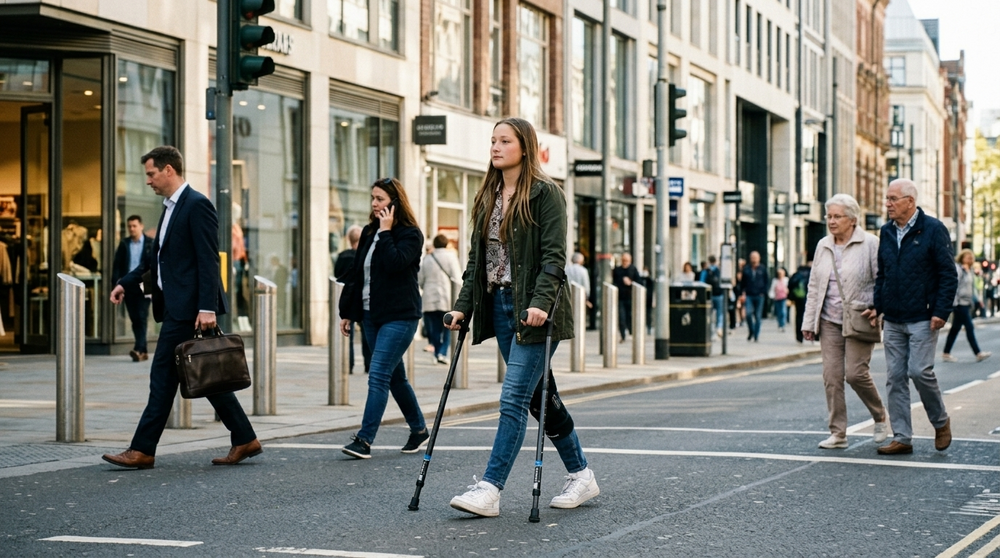
Nobody warns you about this part. The crutches you can learn. The thing that catches people off guard is everyone else: the stranger who stares a beat too long, the checkout clerk who asks what happened, the well-meaning person who grabs your arm without asking and nearly knocks you over helping.
It can wear on you. Some days you barely notice it, and some days it feels like you are walking around with a spotlight on you. Both reactions are normal. The good news is that you can get better at handling all of it, and a lot of the weight comes off once you decide, in advance, how much of yourself you are willing to hand over to strangers. The answer can be very little.
This is a guide to the stares, the questions, and the help you did not ask for, with words you can actually use and a way to think about it that keeps the power where it belongs, with you.
If the emotional side is heavy right now, our piece on mobility and mental health is a kind companion to this one, and finding a support community can remind you that you are not the only one dealing with it.
The honest answer to “does this ever stop?”
The attention never fully disappears, but your relationship to it changes completely. Early on, every glance feels personal, like a verdict. Over time, most people find that the stares fade into background noise, not because the world got more polite, but because you stopped handing strangers the power to set your mood.
Here is the reframe that helps most. Most stares are not judgment. They are curiosity, awkwardness, or a brain noticing something unfamiliar and not knowing where to look. That does not make it comfortable, but it does make it less of an attack. You are not doing anything wrong by existing in public. They are the ones who have not figured out how to act.
Stares
A stare is the most common and the easiest to defuse, because it asks nothing of you. You get to choose your response, and all of these are valid.
- Ignore it. You owe a stranger nothing, and looking right past someone is a complete and acceptable response.
- Meet their eyes and offer a small, neutral nod. Often the person realizes they were staring and looks away, a little embarrassed, which is fine.
- Smile, if you feel like it. A friendly look turns an awkward moment into a human one and tends to end the staring fast.
With kids, who stare hardest and hide it least, a simple smile or a quick honest line works wonders. Children are not being cruel, they are curious, and a calm answer teaches them that a mobility aid is nothing to fear.
Questions
The questions are trickier, because they ask you to respond, and they range from kind curiosity to startling rudeness. The most important thing to know is this: you decide how much to share, every time, and you do not owe anyone your medical history.
It helps to have a few responses ready so you are not caught flat-footed. Pick the one that matches your energy that day.
- The short deflection: “Long story.” said with a smile, then change the subject. Polite and final, and nobody's business.
- The brief honest answer, if you do not mind sharing: “I have a condition that affects my walking.” That is plenty. You can stop there.
- The boundary, for when a question crosses a line: “I would rather not get into it, thanks.” Kind but clear, and you do not need to apologize for it.
You are allowed to give different answers on different days. Sharing freely one afternoon and shutting it down the next does not make you inconsistent. It makes you a person with moods and limits, like everyone else.
Unsolicited help
This is the one that can actually be dangerous, because someone grabbing your arm or your crutch without warning can throw off your balance and put you on the ground. It also tends to come from genuinely kind people, which makes it awkward to push back.
The move is to redirect the kindness without crushing it. A grab is a safety issue, so it is fair to be direct.
- Head it off: “Thanks, I have got it, but I will ask if I need a hand.” This honors the offer and keeps you in control.
- If someone is already reaching: “Please do not grab me, it affects my balance.” Said firmly, this protects you, and most people pull back and apologize.
- When help would actually be useful, take it and be specific: “Actually, yes, could you hold that door?” Giving a clear task is easier for both of you than a vague hover.
You are not obligated to accept help that does not help, and protecting your footing is not rude. A real friend of the moment will be glad you told them what you needed.
Protecting your energy
Even handled well, all of this adds up, and on a hard day it can leave you raw. A few habits keep it from accumulating.
- Decide your defaults ahead of time, so you are not making fresh decisions about strangers all day. Knowing your go-to line frees up your mind.
- Let yourself have off days. If you do not have it in you to educate anyone today, a flat “long story” and a walk-away is a perfectly good answer.
- Debrief with people who get it. Telling a friend or a support group about the absurd thing someone said turns a frustrating moment into a shared laugh.
A note on confidence and the gear
Confidence is contagious, and so is its opposite. When you move smoothly and look at ease, people relax around you and the staring drops off. Equipment that fits well and moves with you is part of that, which is one reason long-term users tend to invest in better crutches. The In-Motion forearm crutch is built for that easy, upright movement, and you can see the options at the In-Motion shop. The crutches are not the point of this post, but feeling steady on your feet makes everything else easier to shrug off.
When it is more than annoyance
Stares and questions are draining, and sometimes they tip into something heavier that is worth taking seriously.
- If you find yourself avoiding going out because you dread the attention, that is worth talking to someone about. Isolation makes everything harder.
- If the comments are feeding persistent low mood, anxiety, or harsh self-talk, a counselor can help you build tools to carry it.
This is a sensitive area, and if any of it is hitting close to home, please consider reaching out to a trusted person or a professional. You do not have to white-knuckle the emotional part alone.
The bottom line
The stares, the questions, and the unasked-for help are part of the deal, and they say far more about other people than about you. Decide in advance how much you will share, keep a few easy responses in your pocket, and protect your balance and your energy without guilt.
You are not a problem to be solved or a story to be explained. You are a person getting where you are going, and the more you carry yourself that way, the more the world takes its cue from you.
Frequently asked questions
How do I respond when strangers ask what happened to me?
However you want to. You do not owe anyone your medical history. A friendly “long story” and a subject change is complete, a brief “I have a condition that affects my walking” is plenty if you feel like sharing, and “I would rather not get into it” is a fair boundary. You can answer differently on different days.
What do I do when someone grabs my arm to help without asking?
Speak up, because a grab can throw off your balance. Something like “Please do not grab me, it affects my balance” is fair and clear, and most people apologize and step back. When help would actually be useful, accept it and give a specific task, like holding a door, which is easier for both of you.
How should I handle kids who stare or point?
Gently. Children stare out of curiosity, not cruelty. A smile or a simple, honest line puts them at ease and teaches them that a mobility aid is nothing to be afraid of. Parents usually appreciate it when you respond kindly rather than with discomfort.
Do the stares ever stop?
The attention does not fully disappear, but your relationship to it changes. Most people find the stares fade into background noise over time, not because the world changes, but because they stop handing strangers the power to set their mood. Confidence and moving with ease speed that up.
Is it rude to refuse help?
No. You are not obligated to accept help that does not actually help, and protecting your footing is a safety matter, not rudeness. You can decline warmly, and you can always ask for help on your own terms when you do need it.