Dating and Relationships When You Use Crutches
Dating is nerve-wracking for everyone. Add crutches, and a whole new set of questions piles on. When do I bring it up? Will it scare people off? Can I even get into that restaurant? Is anyone going to see past the equipment?
Here is the truth that long-term users land on again and again. The crutches are rarely the actual problem. The confidence around them usually is, right up until it is not. The right person does not tolerate your disability like a flaw they are willing to overlook. To them it is simply part of you, the same way your laugh is, or your taste in music, or how you take your coffee.
This guide covers the parts that actually come up: when and how to mention it, dating apps, planning dates that work, intimacy, and how to carry yourself so the right people lean in and the wrong ones filter themselves out.
Confidence is the throughline here, and our pieces on living visibly and handling stares and questions pair well with this one.
The honest answer to “will my crutches scare people off?”
Some people, yes. And that is a feature, not a bug. Anyone who walks away because you use a mobility aid was never going to be your person, and they did you a favor by showing you early. You want to spend your energy on people who are genuinely interested in you, not on convincing someone to look past a core part of your life.
What actually moves the needle is how you feel about your own situation. When you are at ease with your crutches, dates take their cue from you and relax too. When you treat them as a shameful secret, you teach the other person to see them that way. You cannot control who is attracted to you, but you have real influence over the energy you bring, and that matters more than the equipment.
When and how to bring it up
If you use crutches in person, there is often nothing to disclose, because it is visible the moment you meet. The bigger question is your dating profile, and you have options, each with a logic.
- Show it in your photos. A picture with your crutches answers the question before it is asked and quietly filters out anyone who is not interested. It saves you energy and screens for the right mindset up front.
- Mention it in your bio, lightly. A simple, matter-of-fact line normalizes it and signals confidence. It does not have to be the headline of who you are, just a true detail among others.
- Bring it up in conversation before meeting, if it is not visible in your profile. A casual heads-up avoids surprise and gives you a read on how they respond.
There is no single correct moment. The useful question to ask yourself is which approach gives you the best balance of honesty and emotional ease while keeping you safe. Whatever you choose, lead with it as a fact about your life, not an apology for it.
Planning a date that actually works
A little logistics up front saves a lot of awkwardness later, and it is something you can quietly handle so the date feels smooth.
- Suggest the venue, or at least vet it. Picking a place you already know is accessible takes the guesswork out and lets you relax.
- Check the basics ahead of time: parking, steps at the entrance, and whether there is somewhere comfortable to sit. A quick look at photos or a call to the venue does it.
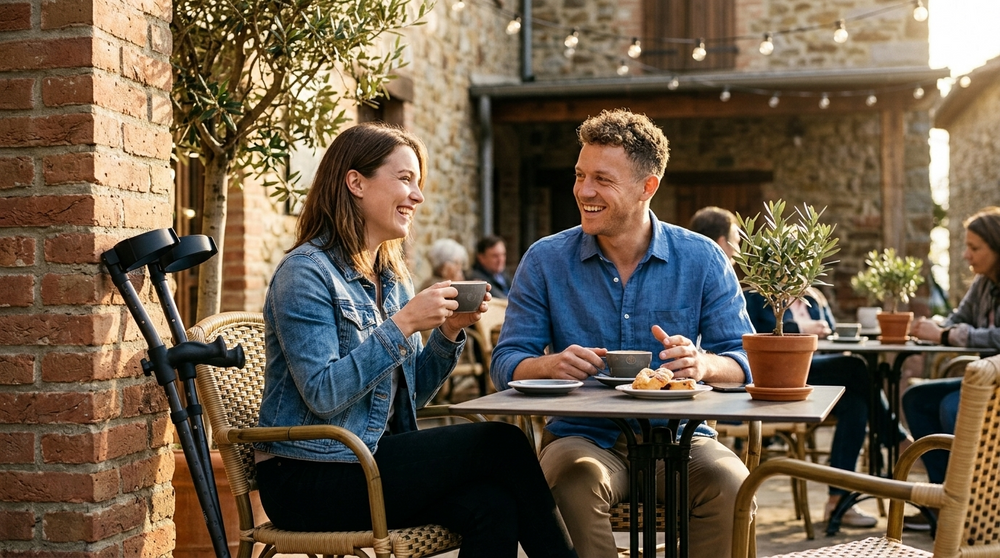
- Favor settings that suit conversation over a lot of walking, at least early on. A coffee, a meal, or a relaxed spot beats a long museum trek for a first meeting.
None of this means your world shrinks. It means you set the date up to succeed, the same way a thoughtful person plans any good evening.
Confidence is the real magnet
People are drawn to ease. If you can talk about your situation without flinching, treat your crutches as ordinary, and keep the focus on the connection, most of the awkwardness simply never forms. You do not have to fake a confidence you do not feel, but you can practice the basics until they feel natural.
- Have a relaxed, short way to talk about your situation if it comes up, so a question does not derail you.
- Accept small gestures of help gracefully when they are genuinely helpful, and decline the rest warmly. Both are confident moves.
- Keep the conversation where it belongs, on getting to know each other. Your crutches are part of your life, not the topic of the evening.
Intimacy and longer-term relationships
As things get closer, the questions get more practical, and they are very answerable. Honest, low-key communication does almost all the work. A partner worth keeping wants you to be comfortable and will happily figure things out with you rather than tiptoe around them.
Talk plainly about what works for your body, what you need, and what you would rather avoid. The fear that a mobility aid makes you less desirable is common and almost always louder in your own head than in reality. The right partner is not doing you a favor by being with you. They are with you because they want to be.
A quick word on the gear
Feeling good about how you move feeds the confidence this whole thing runs on. Crutches that fit well and move smoothly help you carry yourself with ease, which is part of why long-term users tend to upgrade from whatever they were first handed. The In-Motion forearm crutch is built for that natural, upright movement, and you can see the options at the In-Motion shop. The gear is a small piece of this, but feeling steady never hurts.
When the hard feelings need more than a pep talk
Dating can stir up real insecurity, and for some people it touches deeper feelings about their body and worth that are worth tending to.
- If you find yourself avoiding dating entirely out of shame rather than choice, that is worth exploring with a counselor.
- If rejection lands far harder than it should and feeds harsh self-talk, support can help you separate one person's preference from your value.
This is a tender area for a lot of people. If it is weighing on you, please consider talking with a trusted person or a professional. You deserve to feel good about being out there.
The bottom line
Crutches change the logistics of dating, not your worthiness of it. Decide how you want to share, set up dates that work for your body, and bring the kind of ease that lets a real connection form. The people who matter will see you, crutches included, and the ones who cannot were never the right fit.
You are not looking for someone who will put up with your disability. You are looking for someone to whom it is simply, unremarkably, part of the person they are lucky to be with.
Frequently asked questions
Should I mention my crutches on my dating profile?
It is a good idea, and you have options. A photo with your crutches answers the question up front and filters out anyone who is not interested, and a light mention in your bio signals confidence. If it is not in your profile, a casual heads-up before meeting avoids surprise. Lead with it as a fact, not an apology.
When is the right time to tell a date about my disability?
There is no single right moment. If you use crutches in person it is visible from the start, so there may be nothing to disclose. Otherwise, choose the timing that gives you the best balance of honesty and ease while keeping you safe, whether that is in your profile, before a first date, or in early conversation.
How do I plan a first date around accessibility?
Suggest or vet the venue yourself. Pick somewhere you know works, check parking, steps at the entrance, and seating ahead of time, and favor relaxed settings built for conversation over a lot of walking early on. Handling this quietly lets the date feel smooth and takes the pressure off you.
What if someone loses interest because of my mobility aid?
Then they were not your person, and they showed you early, which saves you time. You cannot make someone attracted to you, and you would not want to spend energy convincing them. Focus on the people who are genuinely interested in you, crutches and all.
How do I handle intimacy with a partner?
With honest, low-key communication. Talk plainly about what works for your body, what you need, and what you would rather avoid. A partner worth keeping wants you comfortable and will figure things out with you. The fear is almost always louder in your head than it is in reality.