Gout in Your Foot: When to Rest, Offload, and Ride Out a Flare
This is general information, not personal medical advice. If your symptoms are severe or not improving, talk to your doctor about your situation.
If you have ever been woken up at 2 a.m. by a big toe that feels like it is on fire, red and swollen and too painful to let a bedsheet touch it, you know gout. It is one of the most painful things that can happen to a foot, and it tends to show up fast and hit hard. The good news is that a flare does end. The tricky part is getting through the few days when even standing on the foot feels impossible.
Most people with gout do not need crutches. But a severe flare in the foot can genuinely make walking unbearable for a stretch, and taking weight off the joint is one of the things that helps. This guide is honest about both sides: how a flare runs its course, what actually helps you through it, and when offloading the foot is worth it.
If your foot pain came from an injury rather than a sudden inflammatory flare, our guides on Broken Foot Recovery and Stress Fracture Recovery may fit better.
The Honest Answer to "How Long?"
A gout flare is temporary, which is the most reassuring thing to know when you are in the middle of one. Left alone, an acute flare usually lasts somewhere between three days and two weeks, and many resolve on their own within about seven to ten days. The worst of the pain is often in the first day or two, then it slowly eases.
Treatment can shorten a flare and take the edge off, especially if you start it early. The sooner you calm the inflammation down, the less time you spend at the painful peak. That is why acting quickly, within the first day, tends to work better than waiting to see if it passes.
The thing worth knowing: gout is not really a foot injury, it is a whole-body condition. The flare in your foot is the visible part, but the real fix is managing the uric acid that causes it over the long term. That is a conversation with your doctor, and it is what keeps flares from coming back and doing lasting damage to the joint.
Do You Actually Need Crutches?
For most flares, no. Gout is managed with medication, rest, and time, not mobility aids. Reaching for crutches for a mild flare is usually overkill.
There is a real exception, though. When a flare hits a weight-bearing part of the foot hard (the big toe joint, the midfoot, or the ankle), it can be too painful to put weight on for a couple of days. In that situation, crutches or even a post-op style stiff shoe can let you stay mobile without forcing painful, limping steps that aggravate the joint and throw off the rest of your body. Think of it as a short-term tool to get through the peak, not a treatment for the gout itself.
As the flare settles and the pain eases, you move off the crutches and back to normal walking, usually within days rather than weeks. The goal is to protect the angry joint while it calms down, then get moving again.
What Actually Helps a Flare
Gout flares respond to a few consistent things, and starting early makes all of them work better.
Rest the joint and take weight off it. Trying to push through and walk normally on an actively inflamed joint tends to prolong the misery. Give it a break, and offload it if walking is genuinely painful.
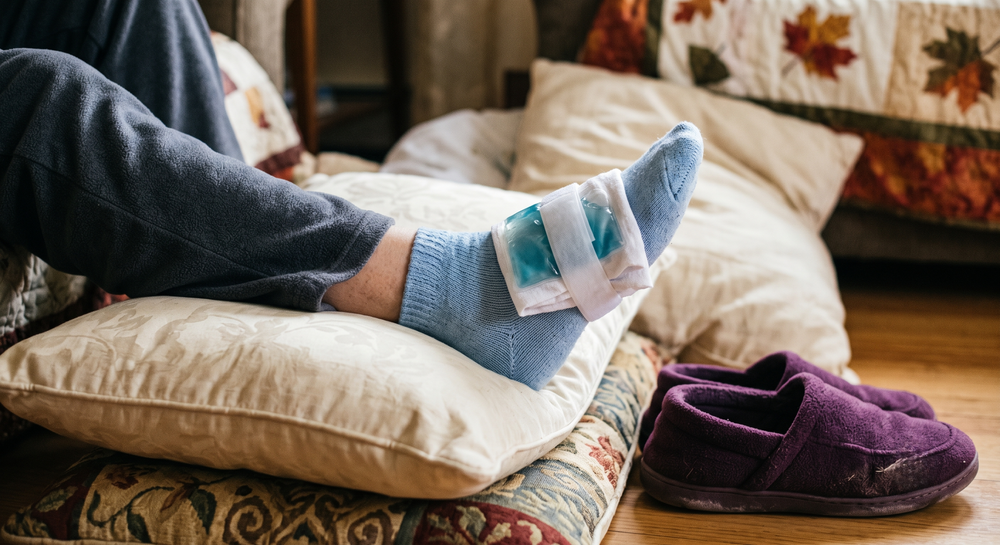
Elevate and cool it. Raising the foot and applying a cold pack to the joint can bring down some of the swelling and pain. Keep anything heavy, including bedsheets, off the sore spot.
Start anti-inflammatory treatment early, as your doctor directs. Over-the-counter anti-inflammatory medication like ibuprofen or naproxen can reduce pain and swelling during a flare, and your doctor may prescribe something specific for gout. Starting within the first day of a flare works better than waiting.
Stay hydrated and go easy on flare triggers. Drinking plenty of water and easing off known triggers like alcohol and rich foods during a flare can help, though this is about riding out the current attack, not the long-term fix.
See your doctor about prevention. If you are getting flares, there are medications that lower uric acid and keep them from coming back. This is the part that actually protects your joints over time, and it is worth a real conversation rather than just treating each flare as it comes.
Getting Through the Worst Days
When a foot flare is at its peak, a few adjustments make daily life bearable.
Keep the foot elevated and set up a spot where you can rest it comfortably, with your medications, water, and a cold pack within reach.
If you are offloading with crutches or a stiff shoe, use a backpack so your hands are free, and plan your movements so you are not making extra trips across the house.
Wear something roomy and soft on the foot, or nothing at all over the sore joint. Tight shoes and pressure on an inflamed toe are their own kind of misery.
If You Do Need to Offload, the Crutches Matter
If a bad flare puts you on crutches for a few days, the crutches themselves make a difference. All your weight suddenly shifts to your hands and shoulders, and cheap rigid crutches send the shock of every step straight into your palms. Even a few days of that can leave your hands sore on top of the foot you are already nursing.
This is where the In-Motion crutch comes in. The spring-assist post built into the lower shaft absorbs the impact of each step and returns some of that energy on the upswing, so your hands and shoulders take less of a beating. The contoured hand grips are angled to keep your wrist in its natural position instead of kinking it back, which is where a lot of hand and wrist pain starts. It holds up to 350 pounds and comes in forearm and underarm models, so you can match it to how long you will need it.
You may only need them for the worst days of a flare, but even then they go better on crutches built for comfort. Shop crutches for offloading and recovery →
When to See a Doctor
Gout is usually manageable, but see a doctor if:
- This is your first flare and you are not sure what it is. Several other problems, including a joint infection, can look like gout, and an infection needs urgent treatment.
- The joint is intensely red, hot, and swollen and you have a fever. This can point to an infected joint rather than a simple flare, which is a medical emergency.
- Your flares are becoming more frequent, lasting longer, or hitting more joints. That is a sign the underlying condition needs long-term management.
- A flare is not improving after several days of treatment, or the pain is unbearable and nothing is helping.
The Bottom Line
A gout flare is brutal while it lasts, but it does pass, usually within a week or two, and faster if you treat it early. Rest the joint, elevate and cool it, start anti-inflammatory treatment quickly, and take weight off the foot if walking is too painful.
Most people never need crutches for gout, but when a foot flare is severe enough that every step is agony, offloading for a few days is a reasonable way to get through the peak. And once the flare settles, the most important step is talking to your doctor about keeping the next one from happening, because that is what protects your joints for the long run.
Frequently Asked Questions
Do you need crutches for a gout flare?
Usually not. Most flares are managed with medication, rest, and time. But a severe flare in a weight-bearing part of the foot can be too painful to walk on for a couple of days, and crutches or a stiff shoe can help you offload the joint until the worst passes.
How long does a gout flare in the foot last?
Left untreated, an acute flare usually lasts about three days to two weeks, and many resolve on their own within seven to ten days. Starting treatment early tends to shorten the flare and reduce the peak pain.
What is the fastest way to calm a gout flare?
Start anti-inflammatory treatment as soon as the flare begins, as your doctor directs, and rest, elevate, and cool the joint. Acting within the first day works better than waiting. Keeping pressure off the sore joint, including bedsheets, also helps.
Should I walk on a gout flare or stay off it?
Rest the joint during the worst of a flare, and take weight off it if walking is genuinely painful, since pushing through tends to prolong the misery. As the pain eases, get back to normal movement. This is short-term protection, not long-term treatment.
How do I stop gout flares from coming back?
That takes long-term management of the uric acid that causes gout, which usually means medication and some lifestyle changes guided by your doctor. Treating each flare as it comes helps you get through it, but prevention is what protects your joints over time.