Crutches for Kids: A Parent's Guide to Fit, Safety, and Confidence
Your kid needs crutches, and you are the one who has to make this work. Maybe it is a broken leg and six weeks. Maybe it is something longer. Either way, the crutches you were handed may not fit, your child may be nervous or frustrated, and you are the person who has to keep them safe and moving every day.
Here is the good news. Children usually adapt to crutches faster than adults do. They are closer to the ground, they bounce back, and they tend to figure out the rhythm once the equipment actually fits them. The hard part is mostly on you in the first week. Get the fit right, set up the house, and coach the early wobbles, and most kids settle in quickly.
This guide walks you through choosing the right crutches, fitting them to a growing body, keeping your child safe, and building the confidence that makes the whole thing easier.
Raising a child with a longer-term condition? Try our companion guides for forearm crutches and what they are, crutch sizing, and walking safely indoors and out.
The honest answer to “will my child actually be okay on these?”
Almost always, yes. Most children eight and older who can already walk but need help with balance or weight-bearing can learn crutches in a few days of practice. Younger kids can sometimes use them too, but it depends on coordination and strength, and that call belongs to your child's care team.
The single biggest factor in whether crutches go well is fit. Crutches that are too tall, too short, or the wrong style cause sore hands, bad posture, and falls. The thing most parents do not know going in is that the pair sent home from the clinic is often a rough size, set fast on a busy day. Before your child takes real trips around the house, check the fit yourself.
Forearm or underarm? What usually works for kids
There are two main styles, and for children they are not equal.
Underarm crutches
These are the familiar tall crutches that tuck under the arm. They are fine for short-term injuries and they feel stable at first. The catch is that kids tend to rest their weight right into the armpit, which is exactly what you do not want. Leaning on the underarm pad can press on nerves and cause tingling or weakness in the hand. If your child uses underarm crutches, teach them to carry the weight through their hands, not their armpits.
Forearm crutches
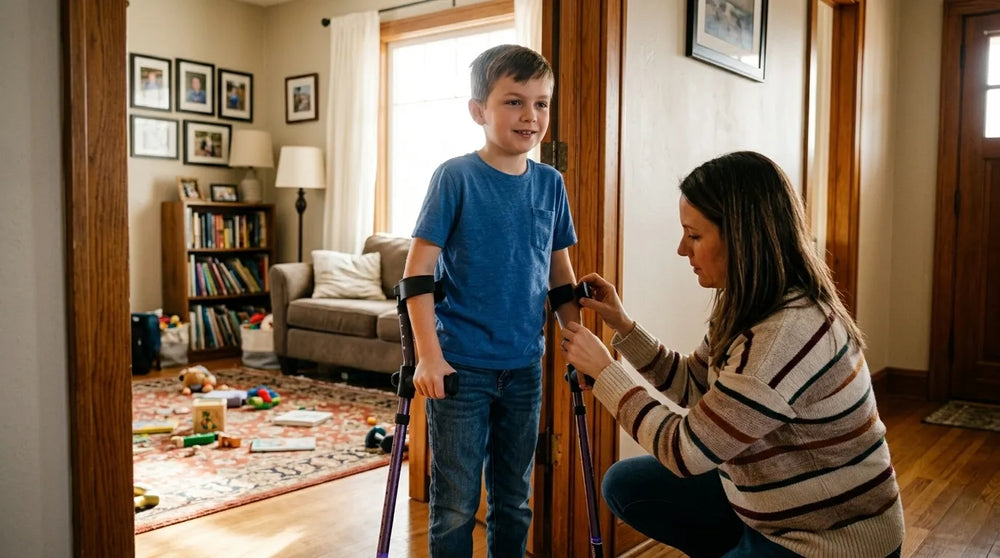
Forearm crutches, sometimes called elbow crutches, use a cuff that wraps around the forearm just below the elbow plus a handgrip. For most children, and especially for any child who will use crutches for more than a few weeks, these are the better choice. They encourage upright posture, they let a child release a hand to open a door or hold a railing without dropping the crutch, and they keep pressure off the armpit. Pediatric clinicians generally point families toward forearm crutches for this reason.
What to expect over the first days and weeks
Your child's care team's specific instructions take priority over any general timeline here. With that said, this is the shape of it for most families.
Days 1 to 3
Expect wobble and frustration. Practice on flat, open floors first. Short trips only. Keep a hand nearby for the first few attempts so your child feels safe, then back off as they steady.
Days 4 to 10
Most kids find their rhythm here. Now is the time to practice the harder things in a calm setting: turning around, sitting down and standing up, and a single step or two with you spotting them.
Week 2 and on
Confidence climbs. Stairs, school hallways, and uneven ground start to feel possible. If your child will be on crutches long-term, this is when you fine-tune the fit again, because kids grow and a cuff that fit in spring will sit wrong by fall.
The rules that matter most
A handful of things decide whether this goes smoothly. Get these right and most of the daily drama disappears.
Check the fit before real use. With your child standing tall in their normal shoes, the handgrips should sit at wrist height when their arms hang loose at their sides, so the elbows bend slightly when holding the grips. For underarm crutches, leave about two finger-widths between the top pad and the armpit. For forearm crutches, the cuff sits one to two inches below the elbow.
Weight goes through the hands. This is the habit that protects your child. Hands carry the load, not the armpits and not the elbows.
Shoes that stay on. Sneakers with a back, laced or strapped. No flip-flops, no loose slippers, no socks on hard floors.
Slow on slick ground. Wet tile, polished floors, leaves, and ice are the usual culprits. Teach your child to spot them and slow down rather than power through.
Replace worn tips. The rubber tip is the only thing between the crutch and a slide. Check both tips often and swap them when the tread wears smooth.
Setting up your home for a child on crutches
A little prep removes most of the hazards before they happen. Walk the path your child uses most, from bed to bathroom to kitchen to door, and clear it.
- Roll up throw rugs and tape down or reroute any cords across walkways.
- Wipe up spills right away and keep high-traffic floors dry.
- Move the things your child reaches for to waist height so they are not stretching or balancing on one crutch.
- Add a small backpack or a crutch bag so your child can carry a water bottle, a snack, and a tablet hands-free.
- Put a sturdy chair with arms where your child will rest, so sitting down and getting up have a safe anchor.
Why the crutch you choose matters more for a child
Children put their crutches through more than adults do. They move fast, they play, and a kid on crutches for a chronic condition may be on them for years while their body is still developing. Cheap, heavy crutches with hard grips make all of that worse. Sore hands and bad posture are not just uncomfortable, they teach a child to dread the equipment that is supposed to free them.
This is the thinking behind the In-Motion forearm crutch. It came out of more than three years of development and the review of 34 medical studies on how crutches load the hands and wrists. The contoured forearm platform and ergonomic grip spread pressure across a wider area instead of digging into one spot, and the spring-assisted design softens the impact of each step. For a growing child who may live on these for a long time, that difference adds up. You can see the kids and adult sizing options at the In-Motion shop.
When to call your child's doctor
Crutches themselves rarely cause emergencies, but a few signs are worth a prompt call.
- Numbness, tingling, or new weakness in the hand or arm, which can mean the crutch is loading a nerve and the fit or technique needs to change.
- Pain that is getting worse rather than better, or new swelling in the injured leg.
- A calf that is swollen, red, warm, or painful, or any sudden shortness of breath or chest pain. These can signal a blood clot, which is uncommon in children but is a medical emergency. Call for help right away.
- Repeated falls, which usually mean the fit is wrong or the chosen style is not right for your child.
The bottom line
The crutch phase looks bigger from the outside than it turns out to be. Most kids adapt within a couple of weeks, and the families who have the easiest time are the ones who fixed the fit early, cleared the floors, and let their child practice the scary parts with a parent close by.
Your job is not to do it for them. It is to make the equipment fit, make the house safe, and stand close enough that your child feels brave enough to try. Confidence is the real goal here, and it comes faster than you think.
Frequently asked questions
At what age can a child use crutches?
Many children eight and older can learn standard crutches if they can already walk and have reasonable balance. Some younger children manage them too, and others do better with a walker or a different aid. Your child's doctor or physical therapist is the right person to make that call based on strength and coordination.
Are forearm or underarm crutches better for kids?
For most children, forearm crutches are the better fit. They protect the armpit, encourage good posture, and let a child free a hand without dropping the crutch. Underarm crutches can work for short-term injuries, but kids tend to lean into the armpit pad, which you want to avoid.
How do I know the crutches are the right height?
With your child standing in their usual shoes, the handgrips should line up with the wrist crease when the arms hang relaxed, so the elbows bend a little when gripping. For underarm crutches, leave about two finger-widths below the armpit. Recheck this every few months, because kids grow.
How can I help my child feel less embarrassed about crutches?
Let them have some say in the equipment, from color to accessories like a fun crutch bag. Practice at home until the movement feels natural, so the first day back at school is not also the first day on crutches. And talk about it plainly rather than treating it as something to hide.
Can my child do stairs on crutches?
Yes, with practice and supervision at first. The general rule is up with the stronger leg first and down with the crutches first, and always use a handrail when one is available. Have your child practice with you before they face school stairs alone.
How do I keep crutches from hurting my child's hands?
Make sure weight goes through the hands rather than the armpits, check that the grips sit at the right height, and consider padded or gel grips. If hands still hurt, the crutch style or fit may be wrong, and a forearm crutch with an ergonomic grip often solves it.