Finding Your People: A Guide to Crutch and Mobility Support Communities
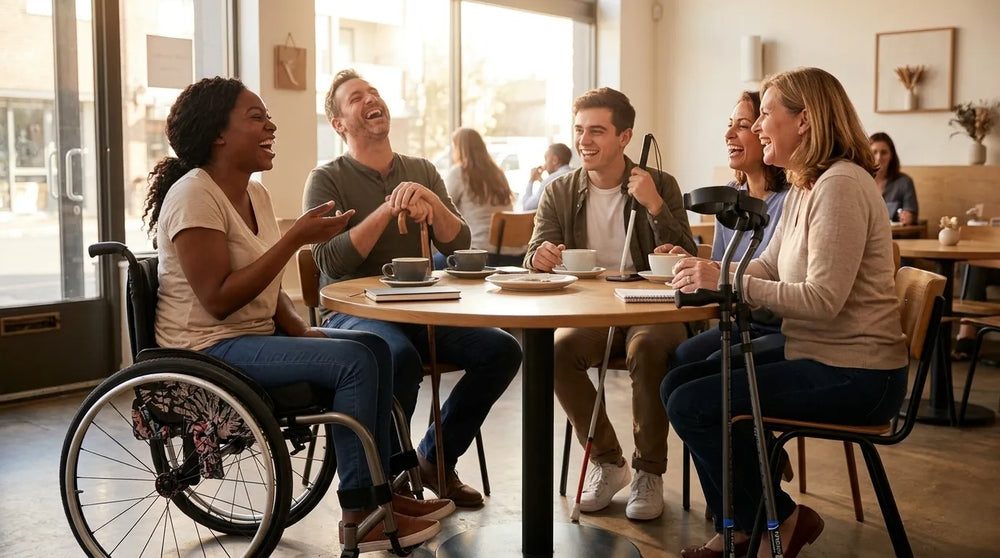
There is a particular kind of lonely that comes with a mobility aid. The people around you mean well, but they do not actually know what it is like to plan a trip around where the elevators are, or to weigh whether a place is worth the energy it will cost. The ones who do know are out there, and finding them changes things.
A good community gives you two things you cannot get anywhere else. Practical answers from people who have solved the exact problem you are facing, and the relief of not having to explain yourself. The hard part is that there is no single best group. The right one depends on your situation and on what you are actually looking for.
This guide helps you figure out which kind of community fits you, points you to specific places worth trying, and shows you how to tell a good group from a draining one before you invest your heart in it.
You are also welcome in ours. Read real stories from In-Motion users in our community, and if you are carrying a hard week, our piece on mobility and mental health is a gentle place to start.
The honest answer to “which group should I join?”
Start with two questions about yourself, because the answers point you straight to the right kind of community.
First, is your situation general or condition-specific? If your crutch use comes from a named diagnosis, a group built around that condition will give you the most relevant advice, because the people there share your body and your trajectory. If your situation is more general, a broad mobility or disability community casts a wider net and connects you with people across many conditions who face the same daily logistics.
Second, do you want practical help or emotional support? Some days you need to know how to get a wheelchair through airport security or which crutch tip grips on ice. Other days you just need someone to say that they get it. Most good communities offer both, but they lean one way, and knowing what you need this week helps you choose.
Communities worth trying, and who each one fits
Here are specific, real places to start, grouped by what they do best. Try a couple. You are not marrying the first one you join.
United Spinal Association, Peer Support Groups
Best for spinal cord injury and other wheelchair or crutch users who want structured, vetted peer support. The people there are good at the real-world navigation questions, and the program holds a higher standard than a random group does.
7 Cups, Disability Support Forum
Best when you want low-barrier, anonymous emotional support and you are not ready to join a named, public group. It is free, it runs around the clock, and no diagnosis is required to take part. A good first toe in the water.
Friends International Support Group
Best when chronic pain rides along with your mobility issues. It is a long-running, very active forum focused on living with pain, which is the part many general groups skim past.
Condition-specific organizations
Best when your crutch use traces to a specific diagnosis. The Arthritis Foundation, the National MS Society, and the major cerebral palsy organizations run communities and resources tailored to their condition, often with local chapters you can meet in person. The advice tends to be the most relevant you will find, because everyone shares your starting point.
Facebook groups
Best for day-to-day camaraderie and fast, crowd-sourced answers. There are groups for specific conditions, for new mobility aid users, and for parents. The reach is huge and replies come quickly. The trade-off is that quality varies a lot, so vet a group before you lean on it, which we cover below.
Reddit communities
Best when you want candid, unfiltered peer experience. Subreddits like r/disability and condition-specific ones are anonymous and frank, which makes them good for honest answers. Just remember to double-check any medical claims against a real clinician.
How to tell a good community from a draining one
Not every group is good for you, and the wrong one can leave you worse off than scrolling alone. Spend a little time reading before you post, and watch for a few things.
- Look at the tone. Does the group solve problems and lift people up, or does it mostly spiral into comparison and despair? A little venting is healthy. A culture of hopelessness is not.
- Check the moderation. Active, fair moderators keep a group safe from spam, sales pitches, and cruelty. A neglected group fills up with both.
- Notice how newcomers are treated. Are first questions met with kindness or with eye-rolling? You can read that in the comments before you ever introduce yourself.
- Watch for medical misinformation. Good groups share experience and point to professionals. Be wary of anywhere that pushes miracle cures or tells people to ignore their doctors.
Give yourself permission to leave a group that does not serve you. Finding your people sometimes means passing through a few rooms that are not the right fit.
A few notes on showing up well
Communities give back what people put in. You do not have to be the most active member, but a little goes a long way.
- Lurk first, then introduce yourself when you are ready. There is no rush.
- Answer a question when you can. The thing you learned the hard way last month is exactly what someone needs to hear today.
- Protect your own energy. It is fine to step back when a space gets heavy, and to come back when you have something to give.
Where In-Motion fits
We built In-Motion for people who are on crutches for the long haul, which means we hear from this community every day. If you want to read how others have navigated work and daily life on forearm crutches,our community page is full of real stories, and you can share your own. Connection is part of what keeps people moving, and you do not have to do this alone.
When to reach for more than a peer group
Peer communities are powerful, and they are not a substitute for professional care. Reach out to a doctor, therapist, or counselor if you notice a few things.
- Persistent low mood, hopelessness, or loss of interest in things you used to enjoy. Adjusting to a mobility aid can stir up real grief, and that is worth support.
- Anxiety that keeps you from leaving the house or doing things you want to do.
- Advice in a group that contradicts your medical team, especially anything urging you to stop a treatment.
If you are ever in real crisis, please reach out to a crisis line or a trusted person right away. This is a sensitive area, and if any of it is hitting close to home, it is okay to ask for help finding the right support.
The bottom line
The right community will not fix your condition, but it will make the whole thing lighter to carry. Decide whether you want condition-specific or general, whether you need practical help or a place to feel understood, and then try a couple of the options above. Read before you commit, leave what drains you, and give back when you can.
There are people out there who already understand. Finding them is one of the kindest things you can do for yourself.
Frequently asked questions
What is the best support group for someone who uses crutches?
There is no single best one. If your crutch use comes from a specific diagnosis, a condition-specific group like the Arthritis Foundation or National MS Society will be most relevant. If your situation is more general, a broad disability community or a 7 Cups forum may fit better. Try a couple and keep the ones that help.
Should I join a condition-specific group or a general one?
It depends on what you need. Condition-specific groups give the most relevant medical and daily-life advice, because everyone shares your diagnosis. General mobility and disability communities connect you with a wider range of people who face the same logistics. Many people belong to one of each.
Are Facebook groups or Reddit better for support?
They serve different needs. Facebook groups are great for fast, crowd-sourced answers and day-to-day camaraderie, though quality varies. Reddit is more anonymous and candid, which is good for honest experiences. Vet either one before relying on it, and check medical claims with a clinician.
How do I know if a support group is healthy?
Read before you post. A healthy group solves problems and lifts people up, has active and fair moderation, treats newcomers with kindness, and steers people toward professionals rather than miracle cures. If a group feels like it spirals into hopelessness, it is okay to leave.
I feel embarrassed about needing support. Is that normal?
Completely normal, and worth pushing past gently. Needing connection is not weakness, it is human, and the people in these communities felt the same way before they joined. You can start anonymously, lurk as long as you like, and introduce yourself only when you are ready.