Plantar Fasciitis and Offloading a Painful Heel: What Actually Helps
This is general information, not personal medical advice. If your symptoms are severe or not improving, talk to your doctor about your situation.
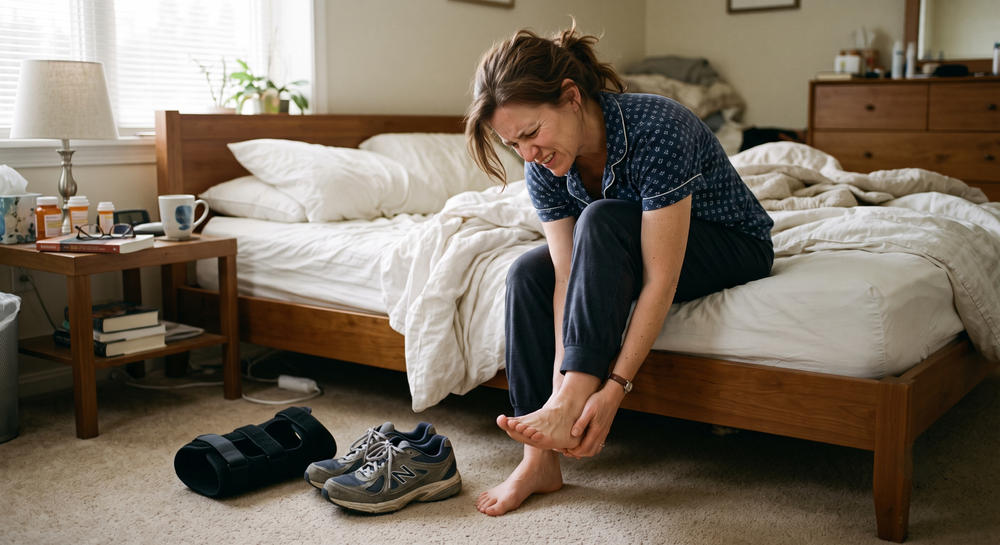
If the first few steps out of bed feel like stepping on a nail, you probably already know the name: plantar fasciitis. It is the most common cause of heel pain, and it has a frustrating personality. It gets better with the right care, but slowly, and it tends to flare up again the moment you overdo it.
Most people with plantar fasciitis do not need crutches. But when a flare is severe, or the pain makes every step punishing, taking weight off the foot for a while can be part of the answer. This guide is honest about both sides: what genuinely helps the condition heal, and when offloading the foot is worth doing.
If your heel pain came on suddenly with an injury rather than building up over time, it may be a fracture or a tear instead, so read our guides on Broken Foot Recovery and Stress Fracture Recovery.
The Honest Answer to "How Long?"
Plantar fasciitis is a patience test. About 75 percent of cases resolve on their own within a year, and even with good treatment, most people do not feel real relief for several weeks. It is not unusual for it to hang around six months or longer. Only a small share of cases, around 5 percent, ever need surgery.
That timeline is not what anyone wants to hear, but knowing it up front helps. Plantar fasciitis is not an injury you push through in a week. It is a tissue that has been overloaded, and it heals when you take the load off it and give it time, not when you tough it out.
The single biggest reason it drags on: weight-bearing pulls on the healing tissue. Every time you stand and walk on an angry plantar fascia, you tug on the exact spot that is trying to repair. That is why rest and offloading matter, and why doing too much too soon keeps restarting the clock.
Do You Actually Need Crutches?
For most people, no. Standard plantar fasciitis is managed with supportive shoes, stretching, and load management, not crutches. Reaching for crutches for a mild case can be overkill.
There are real exceptions. If a flare is severe enough that walking is genuinely painful, or if your doctor wants you off the foot to calm an acute episode down, crutches or a walking boot let you offload the heel while it settles. The same is true if the plantar fascia has actually torn, which is a sharper, more sudden injury than the usual slow burn. In those cases, taking weight off the foot for a stretch can break the cycle of constant re-irritation.
Think of offloading as a tool for the bad stretches, not a permanent strategy. You use it to get the pain under control, then you get back to gentle, supported movement, which is what actually rebuilds the tissue.
What Actually Helps
Plantar fasciitis responds to consistent, unglamorous care. The people who get better are the ones who do the boring things every day.
Take the load off, especially early. Cut back the standing and walking that flares it, and if a flare is bad, offloading with a boot or crutches for a while gives the tissue a chance to calm down.
Stretch the calf and the plantar fascia. Tight calves pull on the heel, and gentle daily stretching of the calf and the bottom of the foot is one of the most reliably helpful things you can do.
Support the arch. Good supportive shoes and arch supports or orthotics take tension off the plantar fascia while you are on your feet. Going barefoot on hard floors tends to make it worse.
Try a night splint. A splint that holds a gentle stretch overnight keeps the tissue from tightening up while you sleep, which is what makes those first morning steps so brutal.
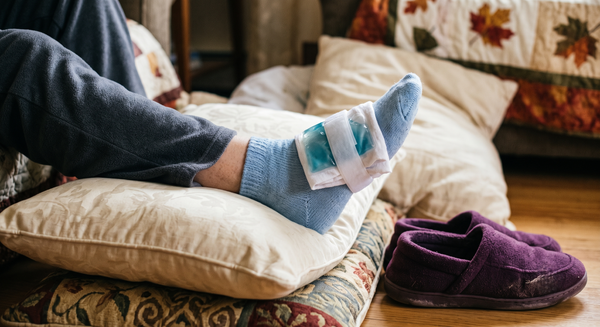
Ice and anti-inflammatories for flares. Rolling the arch over a frozen water bottle and short courses of anti-inflammatory medication can take the edge off an angry heel, as your doctor advises.
Be patient with the timeline. This is the hardest part. Relief comes in weeks, not days, and the people who keep at the routine are the ones who get there.
Getting Through a Bad Flare
When plantar fasciitis flares hard, a few adjustments make daily life bearable.
Set up a spot to elevate and rest the foot, and keep your supportive shoes by the bed so you never take those first steps barefoot.
If you are offloading with crutches or a boot, use a backpack so your hands are free and plan your movements so you are not making extra trips across the house.
Pace your day. Break up long stretches of standing, and sit for tasks you would normally stand through. The goal is to keep the total load on the heel down while it settles.
If You Do Need to Offload, the Crutches Matter
If a flare or a tear puts you on crutches for a stretch, the crutches themselves make a difference to how the experience goes. All your weight suddenly shifts to your hands and shoulders, and cheap rigid crutches send the shock of every step straight into your palms. Even a week or two of that leaves your hands sore on top of the heel you are already babying.
This is where the In-Motion crutch comes in. The spring-assist post built into the lower shaft absorbs the impact of each step and returns some of that energy on the upswing, so your hands and shoulders take less of a beating. The contoured hand grips are angled to keep your wrist in its natural position instead of kinking it back, which is where a lot of hand and wrist pain starts. It holds up to 350 pounds and comes in forearm and underarm models, so you can match it to how long you will need it.
You may only need them for the worst of a flare, but the days you do use them go better on crutches built for comfort. Shop crutches for offloading and recovery →
When to See a Doctor
Plantar fasciitis is usually manageable at home, but see a doctor if:
- The heel pain came on suddenly with a pop or a specific injury, rather than building gradually. This can mean a torn plantar fascia or a fracture, not typical plantar fasciitis.
- The pain is not improving at all after several weeks of consistent care.
- You have numbness, tingling, or burning in the foot, which can point to a nerve issue rather than the plantar fascia.
- The heel is swollen, red, or warm, or you have a fever, which can suggest something other than plantar fasciitis.
The Bottom Line
Plantar fasciitis is common, stubborn, and very treatable, but it heals on its own schedule, which is measured in weeks and months rather than days. The care that works is the unglamorous kind: take the load off, stretch, support the arch, and stay consistent.
Most people never need crutches for it. But when a flare is severe or the fascia has torn, offloading the foot for a while is a legitimate way to break the cycle and let the tissue calm down. Use it when you need it, keep up the daily routine, and give it the time it genuinely takes.
Frequently Asked Questions
Do you need crutches for plantar fasciitis?
Usually not. Most cases are managed with supportive shoes, stretching, and load management. Crutches or a walking boot are reserved for severe flares, or a torn plantar fascia, when taking weight off the foot helps calm an acute episode down.
How long does plantar fasciitis take to heal?
Slowly. About 75 percent of cases resolve within a year, and most people do not feel real relief for several weeks. It commonly lasts six months or more. Only about 5 percent of cases need surgery.
Why is plantar fasciitis worse in the morning?
The plantar fascia tightens overnight while you sleep, so the first steps in the morning stretch it suddenly and painfully. A night splint that holds a gentle stretch, and putting on supportive shoes before you stand, both help with that first-step pain.
Should I rest or keep walking with plantar fasciitis?
Reduce the standing and walking that flares it, since weight-bearing pulls on the healing tissue. That does not mean total bed rest. Gentle, supported movement is fine and helpful. It is the high-load, barefoot, hard-surface time you want to cut back.
What is the fastest way to fix plantar fasciitis?
There is no true fast fix, which is the honest answer. The combination that works best is taking the load off, stretching the calf and foot daily, supporting the arch with good shoes or orthotics, and using a night splint, kept up consistently over weeks.