Resource Center — Workers Comp
Best Crutches for a Work-Injury Recovery (and How to Get Them)
If you are going to spend weeks on crutches after a work injury, it is worth getting a pair that does not make the experience worse. Here is what actually matters in a recovery crutch, why the standard-issue pair falls short, and how to get a better one paid for.
Why the standard hospital crutches fall short
The basic aluminum underarm crutches handed out at clinics are built to be cheap, not to be lived on for weeks. They load your armpits, which can cause the nerve injury known as crutch palsy. They are hard on the hands and shoulders. Their fixed tips slip on uneven ground. For a day or two they are fine. For a real recovery they are a problem.
What to look for instead
- Forearm design. Removes the armpit pressure that causes nerve injury, and tends to be less fatiguing over time.
- Shock absorption. A spring assist absorbs each step and cuts cumulative shoulder, wrist, and elbow strain.
- Stable, articulating tips. Maintain ground contact on carpet, gravel, grass, and wet surfaces.
- Proper fit. Adjustable height and grips, with cuff sizing for your arm.
- Practical build. Light enough to use all day, strong enough for your weight, and breaks down for storage.
Forearm vs. underarm for a work injury
For very short-term use, underarm crutches are fine. For the multi-week timeline of most work injuries, forearm crutches are usually the better call, because they protect the nerves in your armpit and many people find them less tiring. If you do use an underarm crutch, never carry your weight in the armpit.
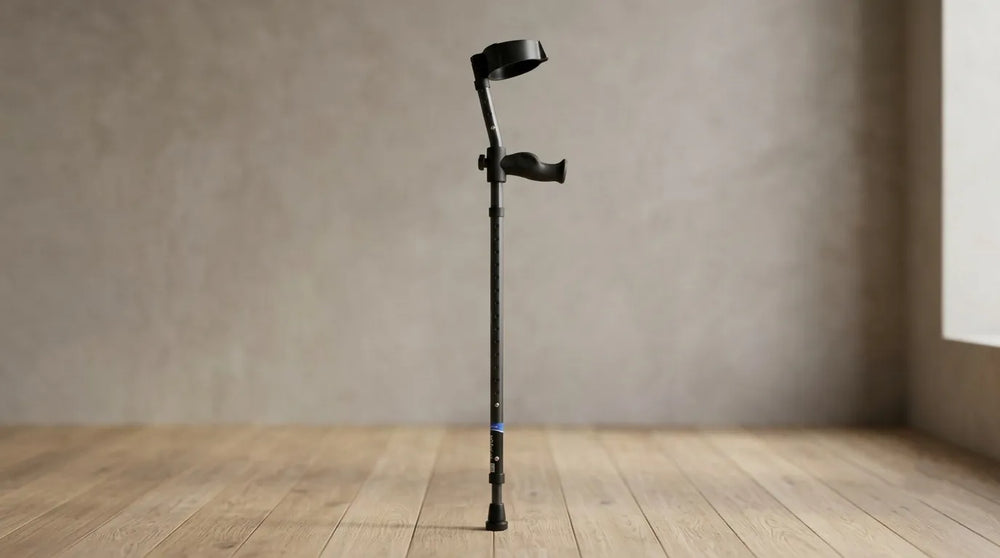
Our pick: the in-Motion forearm crutch
The in-Motion Pro forearm crutch from Millennial Medical was designed for exactly this situation. No underarm contact, so no axillary nerve pressure. A spring assist that absorbs the shock of each step to reduce fatigue. Articulating Sure Foot tips that hold 75 to 100 percent ground contact on any surface. Two cuff sizes included for a secure fit. 1.8 pounds per crutch with a 350 pound capacity, and a frame that breaks down for storage. It was developed through 34 clinical studies and is trusted by physical therapists. It is also FSA and HSA eligible, which gives you another way to pay if you prefer.
For short-term underarm use, the spring-assisted in-Motion Pro underarm crutch is the more comfortable, shock-absorbing alternative to the basic aluminum pair.
How to get them covered
Crutches are covered durable medical equipment under workers' comp, usually at no cost to you. Ask your treating physician to prescribe the in-Motion forearm crutch as medically necessary, billed under the standard forearm code. If authorization is slow, buy the pair and submit the prescription and itemized receipt for reimbursement. For the full how-to, see our post on getting the crutches you want through workers' comp.
Next step: shop the in-Motion Pro forearm crutch, or ask your provider to prescribe it.
More in this series
- Does Workers' Comp Cover Crutches? Your 2026 Guide
- Crutch Palsy: The Hidden Injury That Can Turn One Work Injury Into Two
- How to Get the Crutches You Actually Want Through Workers' Comp
- Crutch HCPCS Codes: E0110 vs. E0117 for Work Injuries
- Crutches and Return to Work: Why Mobility Quality Matters
Frequently asked questions
What are the best crutches after a work injury? Generally a forearm crutch with shock absorption, stable tips, and a good fit, such as the in-Motion forearm crutch.
Are forearm crutches better than underarm crutches? For multi-week recoveries, often yes. They avoid armpit nerve pressure and tend to be less fatiguing.
Will workers' comp pay for better crutches? Crutches are covered DME, and the forearm model is the reliably covered path, usually at no cost to you.
Can I buy the crutches myself and get reimbursed? Often yes. Keep the prescription and itemized receipt and submit them.
Are the in-Motion crutches FSA or HSA eligible? Yes, which gives you an additional way to pay if you prefer.
Coverage note: Coverage varies by state and by your specific claim and insurer. This article is general education and product information, not legal, medical, or billing advice. Confirm details with your treating provider, your claims adjuster, or your state workers' compensation board.
This guide is part of our Workers' Comp Crutch Coverage hub, where you'll find every option for getting crutches covered.