Resource Center — Workers Comp
Crutch Palsy: Symptoms, Causes, and How to Avoid This Nerve Injury
You hurt your ankle, your knee, or your foot at work. You get a pair of underarm crutches. A few weeks later your hand feels weak, your fingers tingle, or you cannot lift your wrist. That is not in your head, and it is not ordinary soreness. It can be a nerve injury called crutch palsy, and for someone already recovering from a work injury it is the last thing you need. Here is what it is, why standard crutches cause it, and how to keep one injury from becoming two.
What is crutch palsy?
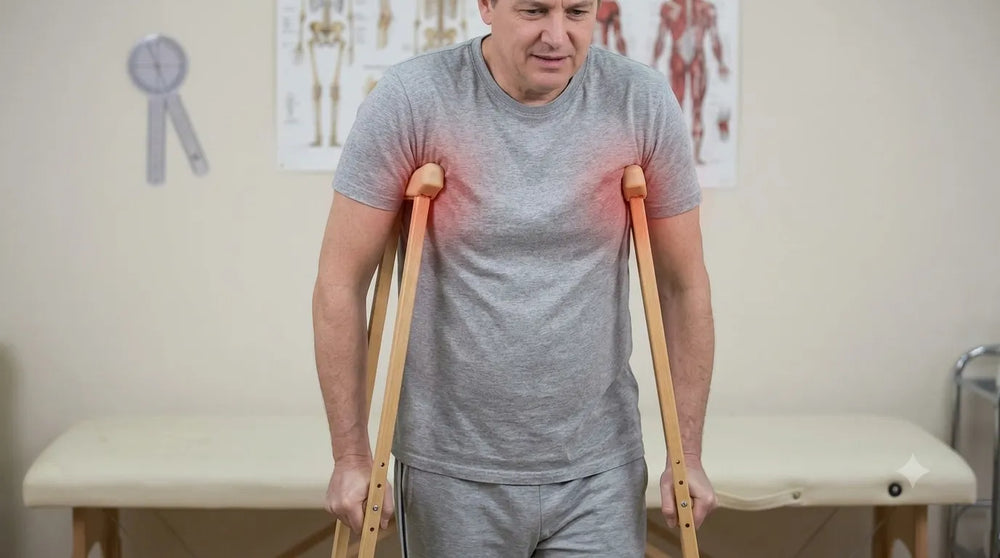
Crutch palsy, sometimes called crutch paralysis, is nerve damage caused by pressure in the armpit from leaning on underarm crutches. The armpit, or axilla, is packed with the nerves of the brachial plexus that run down your arm. Rest your body weight there for long enough and you compress them. The radial nerve is the one most often injured, with the ulnar nerve next in frequency.
The warning signs
- Wrist drop, where you cannot lift your hand upward at the wrist.
- Numbness or tingling across the back of the hand, the forearm, or the fingers.
- Weak grip or trouble straightening your fingers or thumb.
- Aching or burning in the armpit or shoulder after using the crutches.
If you notice these, stop bearing weight through your armpits and tell your provider. Most cases improve once the pressure stops, but lingering compression can lead to longer-lasting weakness.
Why this matters double when you are an injured worker
There are two reasons crutch palsy is a bigger deal for someone on a workers' comp claim. First, it is a brand new injury stacked on top of the one you are already healing, and arm and shoulder injuries are among the more expensive and slower to resolve. Second, it sets your recovery back. Staying mobile and active is part of what helps you heal and return to work, and a painful, weak arm does the opposite.
How it happens, and why cheap crutches make it worse
- Bearing weight in the armpit instead of through the hands. The pads are meant to rest against the ribcage just below the armpit, not to carry your weight.
- Crutches set too tall, which jams the pads up into the axilla.
- Using them for weeks, which is exactly the timeline of most work-injury recoveries.
- Thin, hard pads on basic aluminum crutches that concentrate pressure right on the nerves.
How to avoid it
- Carry your weight through your hands and arms, never your armpits. There should be a gap of about two fingers between the pad and your armpit.
- Get the height set correctly, ideally by a physical therapist.
- Take breaks and watch for early tingling or weakness.
- Consider a crutch design that removes the risk at the source. That is the most reliable fix of all.
The design that removes the mechanism
Forearm crutches do not load the armpit at all. Your weight goes through a cuff around your forearm and a handgrip, so the axilla, and the nerves running through it, are never under pressure. That single design difference eliminates the mechanism behind crutch palsy. It is why physical therapists often move patients to forearm crutches for anything beyond a short stint.
The in-Motion Pro forearm crutch from Millennial Medical was built around exactly this. There is no underarm contact at all, and its spring assist absorbs the shock of each step to cut the shoulder, elbow, and wrist fatigue that long-term crutch users complain about. Ergonomic grips and two included cuff sizes spread the load instead of concentrating it. At 1.8 pounds each, with a 350 pound weight capacity and articulating tips that hold their grip on uneven ground, it is designed for the weeks of real-world walking that a work-injury recovery actually involves. And because crutches are covered durable medical equipment under workers' comp, switching to a safer design usually costs you nothing.
Next step: ask your provider to prescribe the in-Motion Pro forearm crutch.
More in this series
- Does Workers’ Comp Cover Crutches? Your 2026 Guide
- How to Get the Crutches You Actually Want Through Workers’ Comp
- Crutch HCPCS Codes: E0110 vs. E0117 for Work Injuries
- Crutches and Return to Work: Why Mobility Quality Matters
- Best Crutches for a Work-Injury Recovery (and How to Get Them)
Frequently asked questions
What does crutch palsy feel like? Most often weakness lifting the wrist, called wrist drop, along with numbness or tingling in the hand or forearm and a weak grip, sometimes with aching in the armpit or shoulder.
How long does crutch palsy take to develop? It can develop over days to weeks of leaning on the armpits. The multi-week timeline of a typical work-injury recovery falls right in the danger zone.
Does crutch palsy go away? Often yes, once the pressure stops. But prolonged compression can cause longer-lasting nerve weakness, so it is best to address it early.
How do I prevent crutch palsy? Bear weight through your hands rather than your armpits, fit the crutches correctly, take breaks, and consider forearm crutches, which remove the armpit pressure entirely.
Are forearm crutches better than underarm crutches? For anything beyond very short-term use, often yes. They eliminate the axillary pressure that causes nerve injury, and many users find them less fatiguing over time.
Coverage note: This article is general education, not medical advice. Crutch palsy and nerve symptoms should be evaluated by a qualified healthcare provider. If you experience weakness, numbness, or loss of function, seek medical care promptly.