Resource Center — Recovery Guide
Broken Foot Recovery on Crutches: What to Really Expect
This guide covers general recovery ranges, not personal medical advice. Your surgeon's specific instructions always override anything you read here.
"Broken foot" sounds like one injury, but your foot has 26 bones, and which one you broke changes almost everything about your recovery. A small crack in a toe and a break through the middle of the fifth metatarsal are both a broken foot, and they are not remotely the same experience. One has you back in normal shoes in a couple of weeks. The other can keep you off the foot for months.
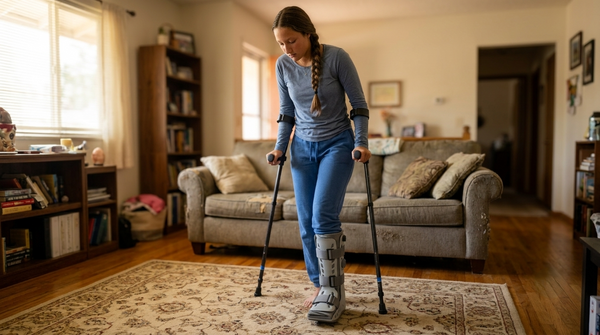
What most broken feet have in common is a stretch of time on crutches while the bone is protected from your body weight. For the common metatarsal breaks, that usually means keeping weight off the foot for at least six weeks. This guide explains why the timelines vary so much, what the crutch phase looks like, and how to get through it without punishing the rest of your body.
Recovering from something else? Try our companion guides for Broken Ankle Recovery, Foot and Ankle Surgery, and Achilles Tendon Repair.
The Honest Answer to "How Long?"
Most metatarsal fractures, the long bones in the middle of your foot, heal enough for weight-bearing in about six to eight weeks. For a stable break, you keep weight off the foot for at least the first several weeks, then progress to weight-bearing as tolerated as the pain settles, often over a three to six week window in a cast or walking boot.
But the location of the break matters enormously, and one type in particular changes the whole plan. Here is the short version of what determines your timeline:
- Toe and simple forefoot fractures: often the mildest. Many are treated with a stiff-soled shoe and weight-bearing as tolerated, with crutches for just the first few days for comfort.
- Fifth metatarsal avulsion fracture (a break at the base of the bone, on the pinky-toe side): usually heals in about six to eight weeks with immobilization.
- Jones fracture (a break in a specific zone of the fifth metatarsal): notorious for healing slowly because of poor blood supply. Without surgery it can take around 20 weeks to heal. With surgery, many patients are full weight-bearing within 7 to 10 days, which is why surgery is often recommended for active people.
- Stress fractures: small cracks from repetitive load, common in the metatarsals. Treated with protected, gradual return to weight, and rushing them is the classic way to make them worse.
The thing most people do not realize going in: two people can both have a "broken foot" and one is walking in two weeks while the other is looking at surgery and months of recovery. The bone and the exact location are what decide it, so the most important question you can ask your doctor is which bone, and where.
Realistic Timeline for a Common Metatarsal Break
Your doctor's specific instructions take priority over any general timeline. This is a typical path for a stable metatarsal fracture treated without surgery:
- Days 1 to 7: Rest, ice, and elevation to bring down swelling. Cast or walking boot applied. Weight off the foot on crutches. Pain is at its peak.
- Weeks 2 to 6: Continued protection in the boot or cast. Non-weight-bearing or limited weight-bearing on crutches, depending on the fracture and your doctor.
- Weeks 6 to 8: Repeat imaging checks healing. Gradual progression to weight-bearing as tolerated as pain allows. Crutches phase out during this window.
- Months 2 to 3: Transition out of the boot into supportive shoes. Stiffness and swelling are still normal.
- Months 3 to 4: Return to most activities, including sport for many people, once cleared.
A Jones fracture or a displaced break follows a longer and often surgical path, so if that is your diagnosis, expect the numbers above to stretch out and lean on your surgeon's specific plan.
The Rules That Matter Most
A broken foot heals on the same principle as any fracture: protect it until the bone can carry load, then add weight gradually. The foot adds one twist, which is that it is very easy to cheat because the foot feels usable long before the bone is ready.
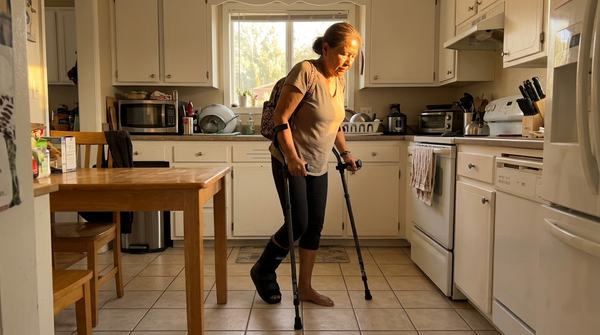
When you are told non-weight-bearing, that includes the sneaky little weight. Standing on the foot to reach a cabinet, or resting it down in the shower, still loads the bone. The metatarsals in particular can shift or refracture if you get impatient.
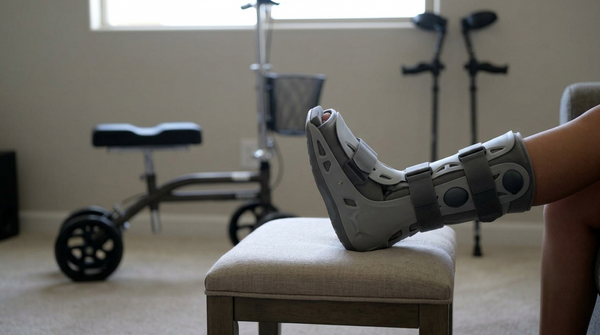
Wear the boot or cast exactly as prescribed, including the parts that feel like overkill. If you are told to sleep in the boot, sleep in the boot. The immobilization is doing quiet work you cannot feel.
Elevate early and often. Foot fractures swell, and swelling slows healing and makes the boot feel tight and miserable. Get the foot above heart level whenever you sit down, especially the first two weeks.
Do not self-clear yourself back to walking because the pain faded. Pain drops well before the bone is solid. The follow-up X-ray is what tells you it is safe, not a good afternoon.
Take stress fractures seriously even though they sound minor. They are the injury people most often push through, and pushing through is exactly how a small crack becomes a full break.
Setting Up Your Home for the Crutch Phase
A metatarsal break can keep you on crutches for six weeks or more, so a little setup pays off for weeks.
Keep your daily life on one floor if you can. Stairs on crutches are slow and are where most falls happen. Set up a base downstairs if your bedroom is up.
Make the bathroom safe. A shower chair, a non-slip mat, and a handheld shower head take the risk out of getting clean on one foot.
Build an elevation spot. A couch or recliner with pillows, a charger, and water within reach, so you can keep the foot up without constantly getting up.
Use a backpack for everything. Your hands are busy on crutches, and a backpack moves your phone, a water bottle, or a plate from room to room.
Clear the floor. Rugs, cords, and clutter are trip hazards. Walk your main routes and clear them before you are moving on crutches.
Why Crutch Choice Matters for a Foot Fracture
Foot fractures often mean weeks on crutches, and standard underarm crutches make those weeks harder than they need to be. Every bit of weight that used to go through your foot now goes through your hands, wrists, and shoulders. By the second week, sore palms and aching shoulders are common, along with the tingling that comes from leaning on the underarm pads. That underarm pressure can even irritate a nerve, a problem known as crutch palsy.
We built the In-Motion crutch to make a long recovery easier on the rest of your body. The spring-assist post in the lower shaft absorbs the impact of each step and returns some of that energy as you move, so your hands and shoulders are not taking the full jolt thousands of times a day. The ergonomic hand grips are angled to keep your wrist neutral rather than kinked, which is where a lot of the hand and wrist pain starts. It supports up to 350 pounds. It comes in forearm and underarm models so you can pick what fits your recovery.
When you are going to be on crutches for six weeks or more, the crutches are not a minor purchase. They are what carries you through the whole thing. Shop crutches for broken foot recovery →
When to Call Your Doctor
Call your doctor or seek care right away if you notice:
- Calf pain, swelling, warmth, or tenderness. This can signal a deep vein thrombosis, a blood clot, which is a risk when a lower limb is immobilized.
- Sudden shortness of breath or chest pain. Call 911. This can mean a pulmonary embolism.
- Numbness, tingling, or a color change in the toes. A cast or boot may be too tight, or circulation may be affected.
- Pain that spikes or returns after it had been improving. This can mean the bone has shifted.
- New redness, warmth, or drainage if you had surgery. This can indicate infection.
- Fever above 101 degrees Fahrenheit.
The Bottom Line
A broken foot is not one injury with one timeline. It is a whole family of injuries, and the bone you broke decides whether you are back in shoes in two weeks or on crutches for months. The most useful thing you can do is find out exactly which bone and where, because that answer tells you what recovery to expect.
Whatever the diagnosis, the crutch phase rewards patience. Protect the bone, keep the foot elevated, resist the urge to test it early, and let the follow-up imaging be your green light. Do that, and most broken feet heal fully and get you back to everything you did before.
Frequently Asked Questions
How long will I be on crutches with a broken foot?
For a common metatarsal break, usually about six to eight weeks before you are cleared for weight-bearing, with crutches phasing out toward the end of that window. Milder toe fractures may need crutches for only a few days, while a Jones fracture or a displaced break can take considerably longer.
Can I walk on a broken foot?
Not during the protected phase, unless your doctor specifically cleared you for weight-bearing in a boot or stiff shoe. The foot often feels usable before the bone is ready, and walking too early is a common cause of setbacks and refractures.
What is a Jones fracture and why is it a big deal?
It is a break in a specific zone of the fifth metatarsal that has a poor blood supply, so it heals slowly and unpredictably. Without surgery it can take around 20 weeks. Many active patients choose surgery because it gets them back to full weight-bearing much faster.
Do I need a cast or is a boot enough?
It depends on the fracture. Many stable metatarsal breaks are managed in a walking boot, which is easier to live with than a cast. Displaced or unstable breaks may need a cast or surgery. Your doctor decides based on your imaging.
Why do my hands and shoulders hurt more than my foot?
Because your arms are now carrying the weight your foot used to. It is one of the most common complaints on standard crutches, and it gets worse the longer you are on them. Crutches that fit well, keep your wrist neutral, and absorb impact make a real difference over a multi-week recovery.
How can I keep swelling down?
Elevate the foot above heart level whenever you can, especially in the first couple of weeks, and use ice as directed. Swelling is normal, but keeping it in check helps healing and makes the boot far more comfortable.