Resource Center — Medical Solutions
Walking Aids Compared: Crutches, Canes, Walkers, Knee Scooters, and Wheelchairs
If you're facing surgery, recovering from an injury, or managing a condition that affects your walking, someone has probably told you that you need a mobility aid. What they usually don't tell you is which one. Canes, crutches, walkers, knee scooters, and wheelchairs solve different problems, and the wrong choice slows recovery, causes new pain, or both.
This guide compares the five main walking aids, explains who each one actually fits, and gives you the questions that decide the choice. Your provider's recommendation comes first. This is the context that helps you have that conversation well.
The Honest Answer: Weight-Bearing Status Decides Most of It
Before comparing features, answer one question: how much weight can you put on the affected leg? Your surgeon or physical therapist will give you a specific status, and it narrows the field immediately.
Non-weight-bearing (no weight at all on the affected leg) means crutches, a knee scooter, or a wheelchair. A cane or standard walker won't work because both assume the leg can carry part of your load. Partial weight-bearing opens up walkers and crutches used with a modified gait. Full weight-bearing with pain or balance trouble points toward a cane or walker.
The second question is duration. A two-week recovery forgives an imperfect choice. A three-month recovery, or a permanent condition, does not.
Canes
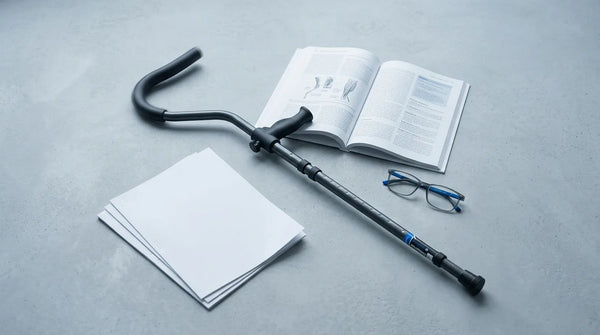
A cane adds a point of contact for balance and takes a modest share of load off one leg, roughly 10 to 25 percent. It's the right tool for mild balance problems, arthritis pain, or late-stage recovery when you're mostly walking normally but want insurance.
A cane is the wrong tool for any real weight-bearing restriction. If you're leaning hard on a cane, you've outgrown it in the wrong direction, and your wrist will tell you first.
Crutches
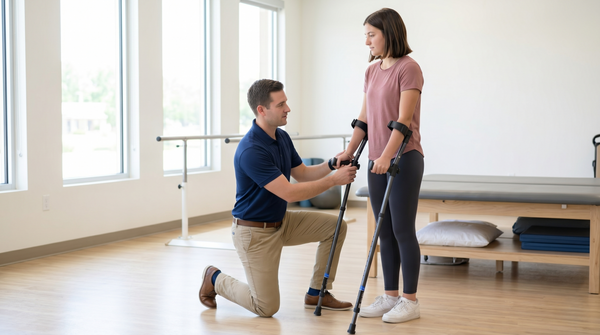
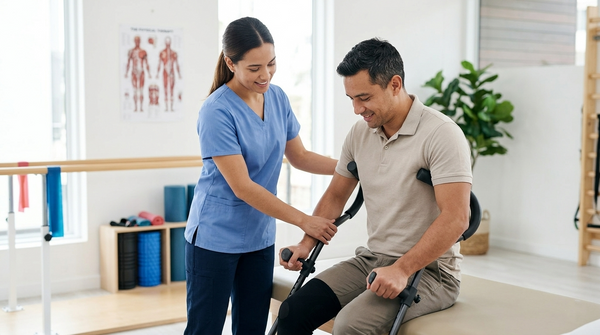
Crutches are the standard answer for non-weight-bearing and partial weight-bearing recoveries. They're the most versatile aid on this list: stairs, tight spaces, curbs, and car trips are all manageable on crutches in a way they aren't with a walker or scooter.
The catch is upper-body load. Conventional crutches transmit every ground strike into your hands, wrists, and shoulders, and over a multi-week recovery that cumulative load causes real problems, from wrist pain to nerve compression. If you'll be on crutches more than a couple of weeks, the crutch itself matters. Spring-assisted crutches absorb impact at the ground, and ergonomic handles keep wrists in neutral alignment. The In-Motion line was developed over three years specifically around this cumulative-load problem, in both underarm and forearm styles.
Within crutches there's a second choice, underarm versus forearm, and it mostly comes down to how long you'll use them. Our full forearm vs. underarm comparison walks through that decision, and the sizing guide covers fit.
Walkers
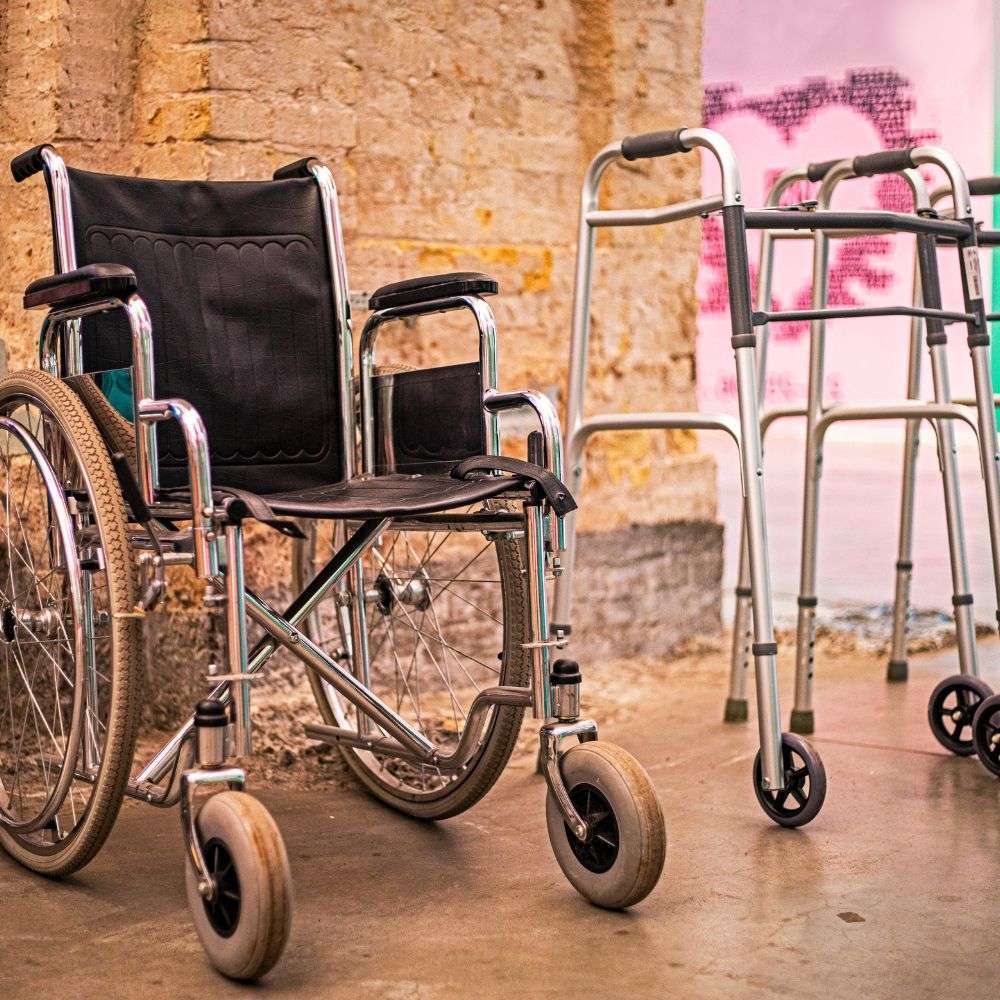
A walker gives you the most stability of any standing aid: four points of contact and a frame you can rest weight on. It's the right choice for balance impairment, generalized weakness, or older adults recovering from surgery where a fall would be catastrophic.
The tradeoffs are speed and terrain. Walkers are slow, awkward on stairs (most can't do them at all), and hard to use in tight bathrooms and narrow hallways. Rolling walkers with seats help for longer distances but add bulk. If you have the upper-body strength and balance for crutches, they'll get you around faster and into more places.
Knee Scooters
For non-weight-bearing recoveries below the knee (foot surgery, ankle fractures, Achilles repair), a knee scooter is often the most comfortable option for distance. You rest the affected leg on a padded platform and roll, which spares your hands and shoulders entirely and moves faster than crutches on flat ground.
The limits are the flip side: scooters can't do stairs, struggle on grass, gravel, and steep ramps, and take up real space in a car trunk. Most people who love their knee scooter also keep crutches for stairs and tight spaces. If you're weighing purchase against a short recovery, renting a knee scooter often makes more sense than buying.
Wheelchairs
A wheelchair is the right call when standing itself is the problem: bilateral injuries, severe weakness, long distances that would exhaust any standing aid, or conditions where fatigue is the limiting factor. Many people use a wheelchair for outings and a standing aid at home. That's not a failure of either tool. It's using each one where it works.
For temporary needs, wheelchair rental avoids buying equipment you'll only need for a season.
Matching the Aid to Your Situation
- Foot or ankle surgery, non-weight-bearing: knee scooter for distance, crutches for stairs and tight spaces. Many patients use both.
- Knee or hip surgery: crutches (or a walker for older patients or anyone with balance concerns), transitioning to a cane late in recovery.
- Long-term or permanent mobility condition: forearm crutches are the long-haul standard, sized and fitted properly. A wheelchair for distance days.
- Balance or weakness without a weight-bearing restriction: cane for mild cases, walker for anything more.
- Two affected legs, or fatigue-limited conditions: wheelchair, full or part time.
Renting vs. Buying
Short recovery, bulky equipment: rent. Long recovery or equipment you'll touch every day for months: buy, and buy the version that fits your body. Our renting vs. buying guide covers the math in detail.
The Bottom Line
Start with your weight-bearing status and your timeline. Those two facts eliminate most of the options before preferences even enter the picture. Then match the aid to your actual terrain: stairs favor crutches, distance favors wheels, balance problems favor frames.
And if the answer is crutches for more than a couple of weeks, invest in the pair that won't wreck your hands. Recovery is hard enough without your equipment adding an injury of its own.
Shop ergonomic In-Motion crutches →