in-Motion Forearm crutches for travel

Resource CenterTips/Tricks

Tips/Tricks

Summer Travel on Crutches: Airports, Hotels & Beach

Nobody plans to be on crutches in June. But here you are, and summer isn't waiting. The good news: traveling on crutches is absolutely doable. The bad news: it requires a little more planning than you're probably used to. Get it right, and you'll barely notice the inconvenience. Get it wrong, and you'll spend half the trip exhausted, sore, and hunting for somewhere to sit. Here's what actually works.

Airports: The Part Most People Underestimate

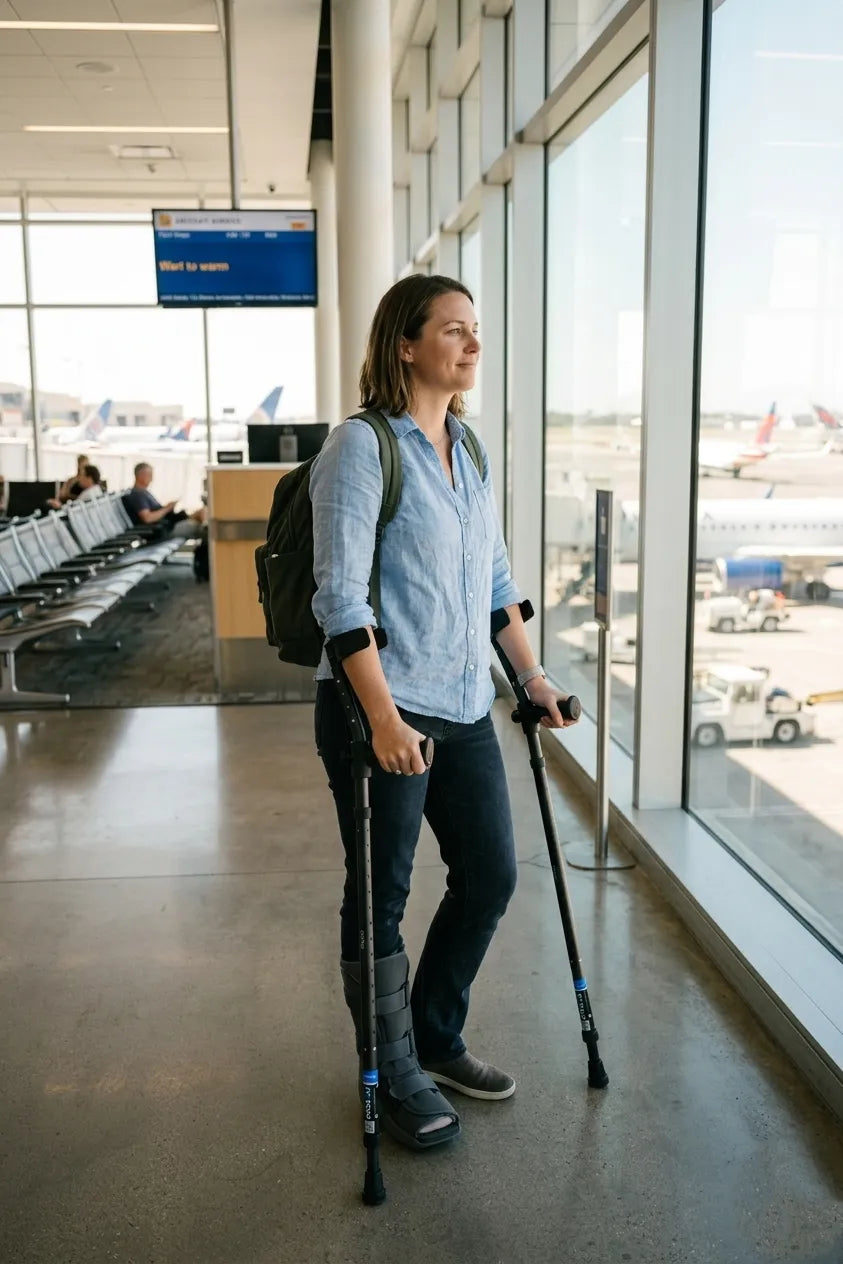
Airports are crutch-unfriendly by design. Long walks, hard floors, heavy bags, security theater, none of it is built with you in mind. A few things to know going in: Request a wheelchair assist, even if you don't need one. This isn't about pride. It's about your shoulders, your wrists, and the half-mile between the security checkpoint and Gate C42. Call the airline before your trip and ask for wheelchair assistance. They'll meet you curbside, push you to the gate, and get you on the plane first. Your upper body will thank you on day three of the trip. TSA and crutches. You can keep your crutches through security. They'll swab them, you'll walk through the scanner (or get a pat-down if you can't stand without them), and that's it. The process is slower than normal but rarely a problem. Budget an extra 15–20 minutes. Gate-checked bags are your friend. You can't maneuver through a packed overhead bin on crutches. Check your bag at the gate, it's free, it comes back to you at the jetbridge, and you don't have to fight for space. Aisle seats on the plane. Book one. Getting in and out of a window seat on crutches is miserable. If you already have a non-aisle seat, call the airline, most will move you without issue when you explain the situation.

Hotels: What to Book, What to Ask

"Accessible room" doesn't always mean what you think it means. Some hotels use the term to mean grab bars in the bathroom. Others mean full roll-in showers. Ask specifically before you book. What to request:
  • Roll-in shower or walk-in shower with a bench (bathtubs are hard on crutches)
  • Ground floor or elevator access.  Confirm the elevator is working before arrival
  • Room close to the elevator, not at the end of a long hallway
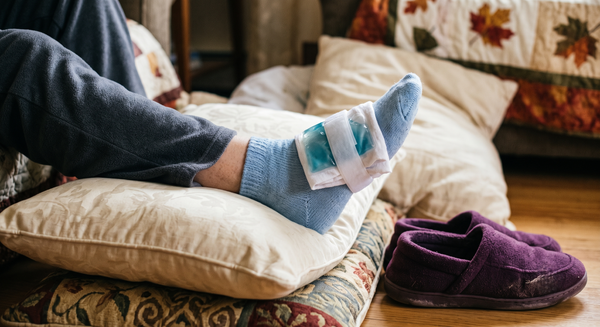
  • Refrigerator in the room (for ice packs if you're still managing swelling)

Breakfast and dining. Carrying a tray through a buffet line on crutches is nearly impossible. Ask hotel staff for help, or sit down and have them bring food to you. Most places are happy to do this, you just have to ask. Checkout timing. Give yourself more time than usual. Packing up, navigating to the lobby, loading a car.  Everything takes longer. If checkout is at 11:00, start at 9:30.

Beach: Harder Than It Looks

Sand is the enemy of crutches. The tips sink, your balance goes, and what should be a five-minute walk to the water turns into an exhausting workout. A few workarounds: Beach wheelchairs. Many beaches, especially in tourist areas, offer free beach wheelchair loans. These have wide, balloon-like tires that roll over sand easily. Call the local parks department or beach management ahead of time to reserve one. Availability varies. Boardwalk beaches. If you have flexibility on destination, look for beaches with boardwalk access all the way to the water. You can stay on the boards, find a spot at the edge, and avoid the sand problem entirely. Stay at the edge. If you do go onto the sand, go as little as possible. Set up right at the transition from the hard path to the soft sand. You'll still get the sun, the view, and the experience, without the exhausting trek. Crutch tip covers. There are rubber crutch tip attachments designed for soft surfaces. They're not magic, but they do help stabilize on uneven ground. Worth throwing in your bag.

General Travel Tips Worth Knowing

Pack light. One checked bag, one small carry-on you can strap across your body. Backpacks work well you need both hands for the crutches. Rolling suitcases are difficult to manage simultaneously with crutches on any surface that isn't perfectly flat. Rent a car with hand controls if needed. If you can't drive your own vehicle, rental companies can arrange hand-control vehicles with advance notice. Call at least two weeks ahead these aren't available at every location or on short notice. Travel insurance. If you're still early in recovery, consider it. A $100 policy buys you a lot of peace of mind if something changes with your health before departure. Sightseeing on crutches. Cobblestones, museum marble floors, uneven sidewalks these all eat energy fast. Plan for shorter distances than you normally would, build in real rest time, and don't let the sightseeing ambition outpace what your body can handle that day.

Before You Go

Talk to your surgeon or PT before any trip that involves significant walking. They'll know where you are in recovery better than anyone, and they might have specific restrictions or, more likely, they'll just tell you to listen to your body and take breaks. The trip is worth planning for. Recovery doesn't have to mean staying home.

Related Recovery Guides